


Niacinamide Irritation: Triage and a 5 Step Barrier Plan
Niacinamide can absolutely irritate your skin, especially at high concentrations or when your barrier is already compromised. If your face is burning, red, or bumpy after using it, stop the product immediately, strip your routine down to a gentle cleanser and a barrier moisturizer, and give your skin one to two weeks to recover. Seek urgent care only if you notice swelling, blistering, or a rapidly spreading rash.
TL;DR:
- High concentrations of niacinamide, especially above 5%, or compromised skin barriers increase the risk of burning, redness, and bumps.
- Contamination with nicotinic acid from low-quality sources can trigger flushing and irritation unrelated to pure niacinamide itself.
- Symptoms occurring within minutes, persistent redness, or localized bumps indicate irritation, not allergy or purging, requiring immediate cessation and a simplified routine.
- During recovery, use a fragrance-free cleanser and barrier moisturizer for one to two weeks, avoiding actives, hot water, and sun exposure to reduce symptoms.
- Reintroduce niacinamide gradually starting at 1-2% after patch testing, increasing slowly, and postponing combination with acids or retinoids until tolerance improves.
Table of Contents
- What Niacinamide Is and How Much Is in Your Products
- Why Niacinamide Sometimes Burns or Turns Skin Red
- Is It Irritation, Purging, or an Allergy?
- What to Do Right Now to Calm Niacinamide Irritation
- How to Bring Niacinamide Back Without Triggering It Again
- Barrier-Supporting Alternatives if Niacinamide Isn’t for You
- Why Cellure Builds Barrier-First Formulas for Reactive Skin
- A Gentler Way Back to Healthy Skin
- What the Research Actually Backs Up
- Sources
- FAQ
What Niacinamide Is and How Much Is in Your Products
Niacinamide is a form of vitamin B3 (also called nicotinamide) used in serums, moisturizers, and spot treatments to support hydration, tone, and the skin’s barrier. It’s one of the most common actives on skincare shelves, and for good reason: it’s water-soluble, pairs well with most other ingredients, and has decades of formulation history behind it.
Concentration varies a lot by product type:
- 1% to 5%: standard in daily moisturizers and lightweight serums
- Often found in concentrated treatment serums targeting tone and texture
- Higher concentrations marketed as “intensive” formulas, which may trigger reactions in some users
A safety assessment published in the International Journal of Toxicology concluded niacinamide is generally safe at typical use concentrations and isn’t a frequent sensitizer, with clinical testing showing no significant irritancy up to 5% in most trials. That’s the baseline. It just doesn’t hold for everyone, at every strength, on every barrier.
Why Niacinamide Sometimes Burns or Turns Skin Red
Concentration is the biggest variable. The safety data supports niacinamide broadly, but it doesn’t mean every formula at every strength suits every face.
A damaged barrier changes the equation entirely. If you’ve been exfoliating aggressively, using retinoids, or dealing with dry winter air, your skin’s outer layer is already compromised, and niacinamide can sting on contact where it wouldn’t have a month earlier. Layering makes things worse: combining niacinamide with strong acids, retinoids, or heavily fragranced products in the same routine can amplify irritation, even when each product is fine on its own.
There’s also a formulation issue most people never hear about. Low-purity niacinamide can carry traces of nicotinic acid (niacin), and that contamination is a known trigger for flushing and irritation that has nothing to do with niacinamide itself. Reputable manufacturers test for purity; budget suppliers don’t always bother.
Common irritation triggers, ranked by how often they show up in complaints:
- High concentration relative to your skin’s tolerance
- Compromised barrier from exfoliants, retinoids, or weather
- Layering with acids or fragrance in the same session
- Nicotinic acid contamination from low-purity sourcing
- Preservative sensitivity in a specific formula
Evidence syntheses on niacinamide show mixed redness outcomes that depend heavily on the rest of the formula, not niacinamide in isolation. Some multi-ingredient products increase redness in trials even though niacinamide alone tends to calm it.
Is It Irritation, Purging, or an Allergy?
Telling these apart matters because the fix is different for each one.
- Irritation shows up fast: burning or stinging within minutes of application, persistent redness that doesn’t fade overnight, small inflamed bumps concentrated where you applied the product, and a tight, raw feeling.
- Purging is unlikely to be the real explanation here. True purging comes from ingredients that speed up cell turnover, like retinoids or exfoliating acids, pushing existing congestion to the surface faster. Niacinamide doesn’t work that way, so a breakout after starting niacinamide is almost always irritation or a reaction to something else in the formula, not purging.
- Allergic contact dermatitis looks different and more serious: hives, localized swelling, blistering, a rash that spreads beyond the application area, or symptoms like difficulty breathing.
If you’re seeing bumps and redness that stay confined to where you applied product and calm down once you stop, that’s irritation. If the reaction spreads, swells, or comes with systemic symptoms, stop guessing and see a dermatologist. Anything involving breathing difficulty or facial swelling needs urgent medical attention, not a wait-and-see approach.
What to Do Right Now to Calm Niacinamide Irritation
Stop the niacinamide product immediately, and pull back any other actives you’re using at the same time, including exfoliants, retinoids, and vitamin C. Simplify your entire routine down to two steps: a gentle, non-foaming cleanser and a barrier-repair moisturizer with minimal ingredients.
- Cleanse once daily with a fragrance-free, pH-balanced cleanser
- Apply a barrier moisturizer morning and night
- Skip active ingredients entirely for at least one to two weeks
- Avoid hot water, physical scrubs, and sun exposure on the affected area
Most irritation calms down within one to two weeks of this reset. Improvement looks like less redness each day, no new bumps forming, and a gradual return of normal skin texture without tightness. If burning persists past that window or gets worse, that’s a signal to loop in a dermatologist rather than keep waiting it out.
Pro Tip: Over-the-counter 1% hydrocortisone cream can help with short-term redness and itching, but treat it as a bridge, not a fix. Use it for a few days at most, and if you need it longer than that, see a dermatologist instead of relying on it indefinitely.
Red flags that mean skip the home care and get medical attention: severe swelling, difficulty breathing, blistering, or a rash spreading rapidly beyond where you applied the product.
How to Bring Niacinamide Back Without Triggering It Again
Once your skin has fully calmed down, a careful reintroduction can tell you whether niacinamide is genuinely the problem or whether something else in that specific formula was the culprit.
- Patch test first. Apply a small amount of the product to your inner forearm or behind your ear and leave it for 48 to 72 hours, checking for redness, bumps, or itching before it ever touches your face.
- Start low and slow. If the patch test is clear, choose a formula at 1% to 2% niacinamide and apply it every other night, layered over moisturizer rather than directly onto bare skin.
- Increase gradually. If a week passes with no reaction, move to nightly use. Only consider a higher concentration weeks later, and only if your skin has stayed calm the whole time.
- Respect layering rules. Keep niacinamide separate from strong acids and retinoids while you’re rebuilding tolerance. Once your skin is stable, you can reintroduce those one at a time.
- Stop again if symptoms return. A repeat reaction at a lower concentration and slower pace is a stronger signal that niacinamide itself, not the formula, is the issue. That’s the point to bring in a dermatologist.
Barrier-Supporting Alternatives if Niacinamide Isn’t for You
Not every face needs niacinamide to get firmer, more even-toned skin, and plenty of ingredients get you there with less risk of reaction.
Barrier-first ingredients like ceramides, panthenol (vitamin B5), glycerin, and hyaluronic acid work by reinforcing the skin’s outer layer and holding onto moisture, which is often what compromised skin needs more urgently than an active ingredient. For active redness, centella asiatica, aloe vera, and colloidal oats are well-documented calming options that soothe without the sting.
When you’re shopping for a replacement, prioritize:
- Fragrance-free formulas (fragrance is a top irritant even in otherwise gentle products)
- Short ingredient lists with minimal preservative load
- High-purity, reputable manufacturing over bargain-bin pricing
If redness and inflammation keep recurring regardless of what you use, that pattern points toward something like rosacea or another underlying inflammatory condition, and that’s a conversation for a dermatologist, not a serum swap.
Why Cellure Builds Barrier-First Formulas for Reactive Skin
Cellure formulates its serums and repair kits around clinically supported bioactive ingredients designed for cellular repair rather than just surface-level results. That approach matters most for skin that’s already reactive: a formula built to support the barrier, using ingredients like peptides and polynucleotides at levels chosen for tolerability, gives sensitive skin room to recover instead of another ingredient to fight through.
The philosophy is straightforward. Repair the foundation first, then layer in actives once skin can actually tolerate them. For anyone who’s just been burned, literally, by a product that promised more than their skin could handle, that order of operations is the whole point.
A Gentler Way Back to Healthy Skin
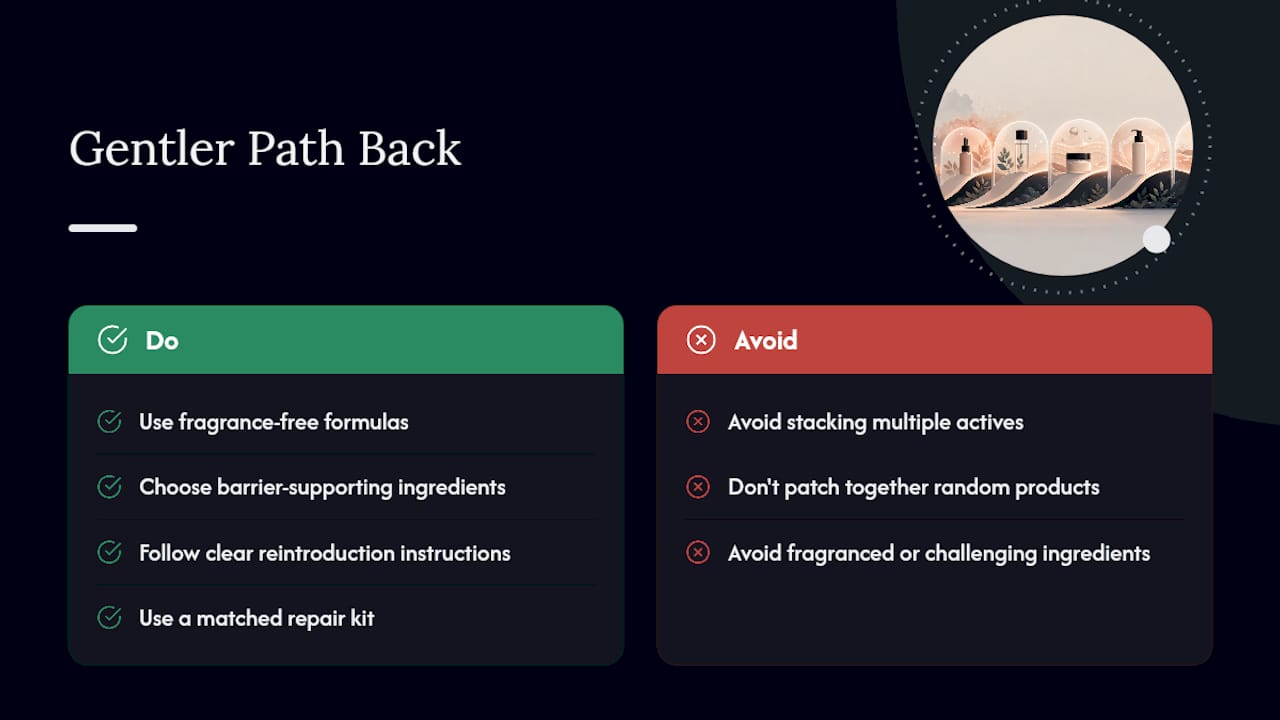
If your skin just went through a niacinamide reaction, the last thing you need is another round of guesswork with random serums pulled off a shelf. Cellure’s Complete Skin Repair Kit is built specifically for this moment: matched, barrier-first actives with clear instructions, so you’re not stacking ingredients blind while your skin is still healing.
Look for what actually matters after irritation: fragrance-free formulas, ingredients chosen to support the barrier rather than challenge it, and clear guidance on how and when to bring actives back into your routine. A kit that spells that out removes the trial-and-error that got you into this situation in the first place.
If you’re ready to stop patching together random products and want a guided path back to calm, even skin, check out the Complete Skin Repair Kit and see whether it fits where your skin is right now.
What the Research Actually Backs Up
For deeper reading beyond this article, the CIR safety assessment on niacinamide covers the clinical safety data in full, and the medically reviewed breakout guidance walks through the exact triage steps referenced above.
This article is general information, not a substitute for advice from a qualified doctor. Consult a qualified healthcare professional about your own circumstances before acting on anything here.
Sources
- Final report of the safety assessment of niacinamide and niacin
- Stop Niacinamide Breakouts Now! Medically Approved Steps to Fix Skin | Ubie Doctor’s Note
- Cosmetic
- What to know about niacinamide skin care - WebMD
FAQ
How do I know if my skin doesn’t like niacinamide?
Watch for burning or stinging within minutes of applying it, redness that lingers overnight, and small bumps concentrated where you applied the product. If those symptoms fade within a day or two of stopping the product, it’s irritation, not an allergy.
What does niacinamide irritation actually look like?
It typically presents as localized redness, a tight or raw feeling, and tiny inflamed bumps confined to the application area, sometimes with a burning sensation right after applying the product.
How do I get rid of a niacinamide rash?
Stop the product immediately, drop every other active in your routine, and stick to a gentle cleanser plus a barrier moisturizer for one to two weeks. Most reactions calm down in that window; if the rash spreads or blisters, see a dermatologist instead of waiting it out.
Why is my skin burning after using niacinamide?
Burning usually means the concentration was too high for your current skin tolerance, your barrier was already compromised, or the product contained an impurity like nicotinic acid. A high-purity, lower-strength formula reintroduced slowly after patch testing is the safest way to figure out which one it was.
Can vitamin C serum cause the same kind of burning as niacinamide?
Yes. Vitamin C, especially L-ascorbic acid at higher concentrations, is known to cause burning and redness on its own, and combining it with niacinamide in the same routine can compound irritation on compromised skin.
Recommended
Share