


48–72 Hour Barrier Plan to Calm Redness After Tretinoin
If tretinoin left your face red and stinging, pause the retinoid, strip your routine down to a gentle cleanser and a ceramide moisturizer, then seal it in with an occlusive at night. Reduce frequency instead of stopping outright if the redness is mild. Wear sunscreen every morning without exception, and get medical attention fast if you see blistering, oozing, or facial swelling.
TL;DR:
- Redness from tretinoin usually results from moving too quickly and can often be managed by reducing application frequency and reinforcing the skin barrier.
- Applying a moisturizer with ceramides, niacinamide, and humectants, along with sealing with petrolatum, effectively restores barrier function during irritation.
- The open sandwich method, applying tretinoin directly after moisturizer with a short wait, may reduce irritation without losing effectiveness.
- Severe reactions like blistering, oozing, or swelling require stopping tretinoin and urgent medical attention, while mild irritation typically improves within days.
- Consistent use of ceramide-rich moisturizers and daily sunscreen are critical for long-term tolerance and to prevent barrier breakdown during retinoid therapy.
Table of Contents
- Immediate Steps To Soothe Redness After Tretinoin
- How Do You Adjust Tretinoin Dosing To Stop The Burn?
- Which Ingredients Actually Repair The Skin Barrier?
- When Does Redness Cross Into A Medical Problem?
- Why Barrier-First Care Beats Symptom Masking
- Do Diet And Lifestyle Affect Tretinoin Redness?
- Building A Barrier That Doesn’t Break Down Again
- Does Skin Type Change How You Should Treat Redness?
- What The Evidence Actually Supports
- Recovering With Cellure’s Complete Skin Repair Kit
- Sources
Immediate Steps To Soothe Redness After Tretinoin
The first 48 to 72 hours decide whether irritation resolves quickly or spirals into something that keeps you off tretinoin for weeks. Your skin barrier is compromised right now, which means water is escaping faster than usual and outside irritants are getting in more easily. The goal is simple: stop the bleeding, so to speak, and give your skin room to recover.
Here’s the sequence dermatology guidance and product labeling both point to:
- Cleanse gently, once a day at most. Use a fragrance-free, low-foaming cleanser and lukewarm water. Skip the washcloth and any scrubbing.
- Pat dry completely. Don’t rub. Applying anything to damp, half-dried skin increases absorption and irritation risk, which is exactly why tretinoin labeling advises waiting at least 20 minutes after washing before applying anything active.
- Apply a humectant and ceramide moisturizer. Look for hyaluronic acid or glycerin paired with ceramides, not a single-note “hydrating” product.
- Seal at night with an occlusive. A thin layer of petrolatum or a slugging-style balm over moisturizer locks in water while you sleep.
- Reintroduce tretinoin only once redness visibly calms. That might be two nights, or it might be ten.
Stop everything else in your routine that isn’t a moisturizer. That means no AHAs, no BHAs, no vitamin C serum, no benzoyl peroxide, no retinol boosters layered on top. Every one of those competes with your skin’s ability to repair its own barrier, and stacking them during a flare is one of the more common mistakes people make trying to “fix” irritation faster.
Cool compresses (a clean, damp washcloth, ten minutes tops) can take the edge off burning. Skip ice packs or prolonged cold exposure. Extreme temperature swings irritate already-inflamed skin rather than calm it. If your skin is flaking or visibly inflamed, hold off on makeup for a day or two. Foundation and powder trap heat and friction against skin that needs to breathe. Some readers also ask about dressings or bandages. Skip them unless a clinician recommends one. Occlusive skincare products do the sealing job without the adhesive irritation.
Pro Tip: Keep a travel-size tube of plain petrolatum in your nightstand. It sounds too basic to matter, but it’s the single most reliable overnight barrier repair tool dermatologists reach for, and it costs less than almost anything else in your routine.
How Do You Adjust Tretinoin Dosing To Stop The Burn?
Most tretinoin redness isn’t a sign you’re allergic or that the product is wrong for you. It’s a sign you’re moving faster than your skin’s turnover cycle can handle. The fix is almost never permanent discontinuation. It’s a slower climb back up.
Think of it as a ladder, not a light switch:
- Full stop until visible redness and flaking calm down, typically several days to a week.
- Twice weekly once skin looks normal, applying a pea-sized amount.
- Every other night for two to three weeks if that’s tolerated without new irritation.
- Nightly only once your skin has shown it can handle the every-other-night pace without flaring.
The “sandwich” technique gives you two ways to buffer the retinoid itself. A full sandwich means moisturizer, then tretinoin, then more moisturizer once it’s absorbed, which cushions the skin on both sides. An open sandwich means moisturizer first, a short wait, then tretinoin applied directly with no moisturizer layered on top afterward. Dermatology Times reported on trial data showing the open sandwich method reduces irritation without measurably blunting the retinoid’s activity, which makes it the better default for most people rebuilding tolerance. A full sandwich sacrifices a bit more potency for comfort, useful if your skin is especially reactive.
Stick to a pea-sized amount for the whole face, never more, and keep it away from the corners of your mouth, nostrils, and eye area, where mucosal tissue reacts faster. Never apply more than once daily regardless of how tolerant your skin feels on a good day.
Retinization, the adjustment period where skin builds tolerance, typically runs four to twelve weeks. Persistence at a gentler pace usually preserves the long-term benefit better than pushing through visible inflammation does. If irritation keeps recurring even at reduced frequency after a full titration attempt, that’s worth raising with your prescriber. Sometimes the answer is a lower concentration, sometimes it’s a different retinoid entirely.
Which Ingredients Actually Repair The Skin Barrier?
Not every “calming” product on the shelf is doing real work. Some ingredients rebuild the lipid matrix your barrier depends on; others just feel nice for twenty minutes and evaporate. Knowing the difference matters more when your skin is compromised than at any other time in your routine.
Ingredients worth reaching for:
- Ceramides restore the lipid matrix that retinoids temporarily disrupt, directly addressing the structural problem rather than masking it.
- Niacinamide reduces visible redness and supports the skin’s own ceramide production, making it one of the few actives that’s both a soother and a repair agent.
- Panthenol (provitamin B5) is a humectant with a genuinely soothing effect on irritated, tight-feeling skin.
- Hyaluronic acid pulls water into the surface layers, which matters when transepidermal water loss is elevated.
- Peptides and polynucleotides support the skin’s repair signaling during recovery, useful once the acute redness has settled and you’re rebuilding resilience.
- Centella asiatica (madecassoside), allantoin, and bisabolol are worth adding specifically for redness reduction if your skin still looks flushed after the basics are in place.
Retinoids accelerate keratinocyte turnover and can trigger cytokine-mediated inflammation that shows up as erythema and stinging, and that inflammatory process is exactly what barrier-focused ingredients are designed to counter rather than simply hide.
For genuinely severe barrier loss, an occlusive like plain petrolatum earns its reputation. It physically blocks water evaporation, which is the core mechanism behind reducing transepidermal water loss during a bad flare.
What to avoid entirely until skin normalizes: AHAs and BHAs, benzoyl peroxide, physical scrubs, and any toner with a high alcohol content. All four strip or abrade a barrier that’s already thin.
When shopping for products during recovery, filter for fragrance-free formulas with a short, ceramide-forward ingredient list rather than a dozen actives competing for attention. Gentle, barrier-focused skincare built around fewer, better-chosen ingredients tends to outperform anything marketed as a multitasking miracle serum. Save the multitasking formulas for once your skin has fully recovered.
When Does Redness Cross Into A Medical Problem?
Most tretinoin irritation is uncomfortable, not dangerous, and it resolves with the steps above. But a smaller subset of reactions needs a clinician, not a moisturizer.
Severe irritation, including blistering, persistent burning, or significant crusting, means stopping tretinoin and contacting a healthcare provider. Management at that point may include reduced frequency or full discontinuation until skin recovers.
Watch for these signs specifically:
- Blistering or open, oozing skin
- Burning that feels intense rather than mild and transient
- Redness spreading rapidly beyond the areas where you applied product
- Facial swelling
- Fever alongside any skin symptoms
Mild irritation should visibly improve within a few days of stepping back your routine. If redness persists or worsens after one to two weeks despite consistent barrier care, that’s your signal to get evaluated rather than wait it out. A clinician may recommend a temporary or permanent pause, a short course of topical steroid if the reaction looks like allergic or irritant contact dermatitis, or referral if what looks like tretinoin irritation is actually rosacea or a low-grade infection. Facial swelling paired with any breathing difficulty is an emergency room situation, not a wait-and-see one.
Why Barrier-First Care Beats Symptom Masking
Tretinoin works by speeding up cell turnover, and that same mechanism temporarily thins the stratum corneum and increases water loss through the skin. Research on topical retinoid mechanisms ties this process to cytokine release, which is the biological reason irritated tretinoin skin looks inflamed rather than just dry.
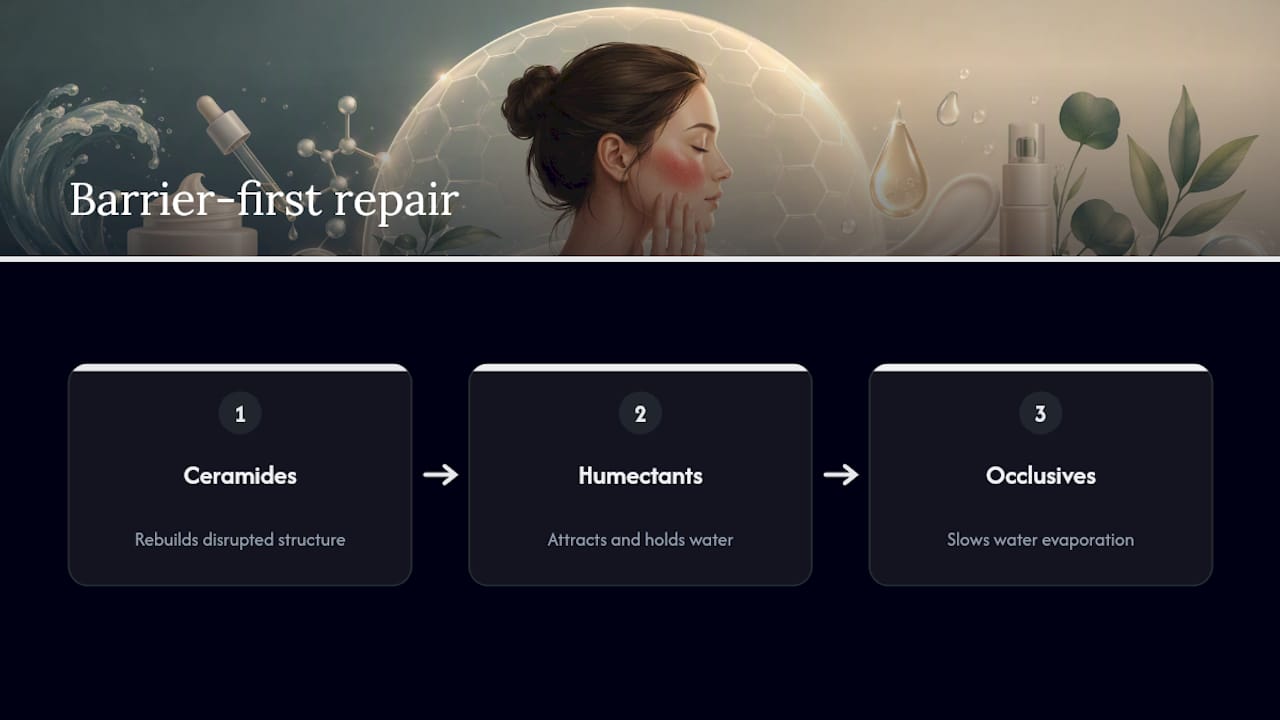
That’s why a ceramide, humectant, and occlusive approach outperforms simply layering on a soothing serum and hoping. Ceramides rebuild the actual structure that’s been disrupted. Humectants address the water-loss side of the equation. Occlusives buy time by physically slowing evaporation while the other two do their work. None of that masks symptoms; each piece targets a specific mechanism in the same cascade.
Cellure’s barrier-repairing ingredient guide breaks down how ceramides, peptides, and polynucleotides support this kind of structural recovery, which is worth understanding before you reach for whatever’s marketed as “calming” that week. Once redness has settled, reintroduce tretinoin gradually and keep your prescriber looped in, especially if you’re on a prescription-strength formulation rather than an over-the-counter retinol.
Do Diet And Lifestyle Affect Tretinoin Redness?
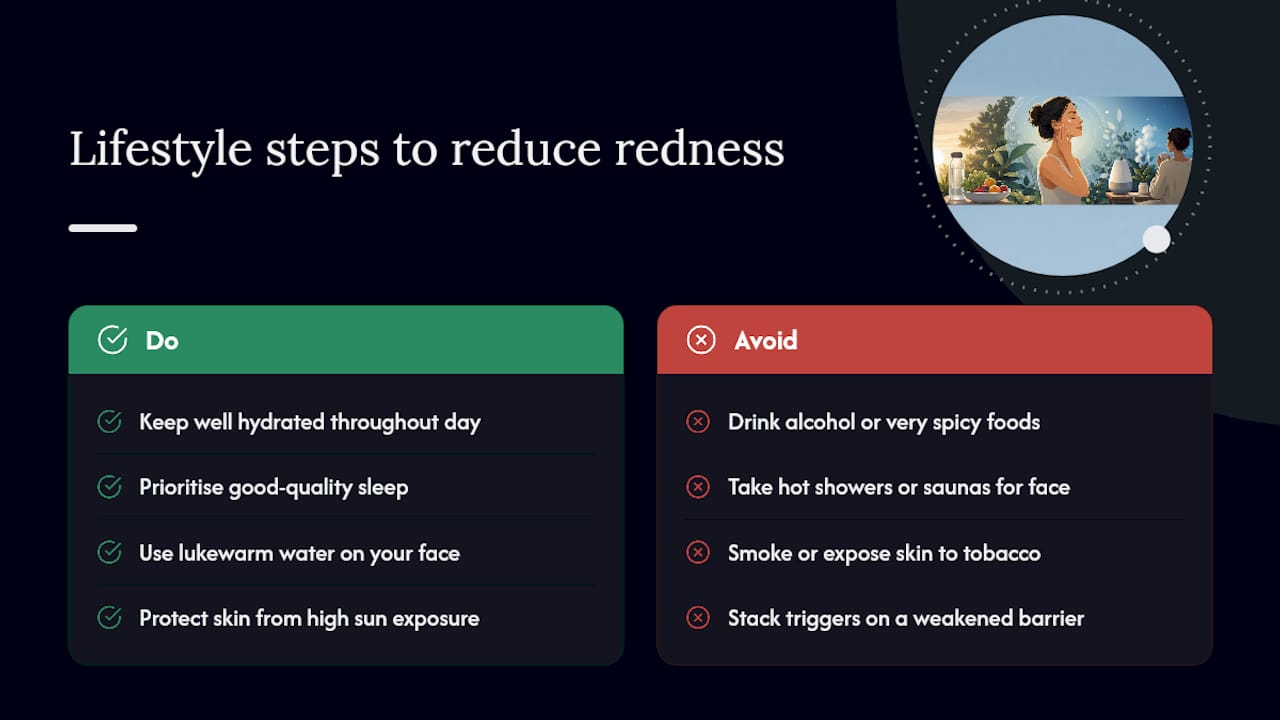
What you eat and how you live doesn’t cause tretinoin irritation, but it can turn the dial up or down on how visible and persistent that redness gets. Alcohol and very spicy foods are common flare triggers for people prone to facial flushing, and stacking either on top of an already-compromised barrier tends to make redness linger longer.
Hydration matters more than most people assume during retinization. A dehydrated body shows it on the skin first, and skin that’s already losing water faster than normal because of tretinoin has less margin for error. Sleep quality plays a similar role. Cortisol spikes from poor sleep are linked to inflammatory skin responses generally, which compounds whatever irritation tretinoin is already causing.
Hot showers and saunas feel good but work against you here. Heat dilates blood vessels and worsens visible redness temporarily, and it also strips lipids from a barrier that’s already struggling to hold onto them. Stick to lukewarm water on your face specifically, even if the rest of your shower runs hotter.
Smoking and high sun exposure both independently damage skin barrier function over time, and either one on top of active tretinoin irritation slows recovery. None of this means overhauling your entire life to use a retinoid. It means recognizing that redness which seems to flare after wine, poor sleep, or a hot yoga class isn’t your imagination. It’s your skin telling you its margin for tolerance is thinner than usual right now.
Building A Barrier That Doesn’t Break Down Again
Getting through one bad flare is the short game. The long game is building a barrier resilient enough that the next dose increase, the next new active, or the next dry winter doesn’t send you back to square one.
That starts with treating ceramide-rich moisturizer as a permanent fixture, not a rescue product you abandon once redness fades. Skin barrier lipids need consistent replenishment, especially on a retinoid, which continuously accelerates turnover even once your skin has adapted. Layering in barrier-repairing skincare as a baseline, rather than an emergency measure, keeps transepidermal water loss lower on an ongoing basis.
Space out actives deliberately. Once tretinoin tolerance is established, introducing something like vitamin C or an exfoliating acid on alternating nights, rather than layering everything daily, keeps cumulative irritation from building back up. Rebuilding tolerance after a flare also tends to go faster the second time, since your skin has already partially adapted to the retinoid’s turnover rate.
Sunscreen deserves a permanent spot here too. Retinoid use increases photosensitivity and thins the stratum corneum, which raises UV vulnerability well beyond the acute irritation phase. Skipping SPF on a “good skin day” undoes a lot of the repair work you did during the bad ones.
Does Skin Type Change How You Should Treat Redness?
Not everyone’s redness after tretinoin looks or behaves the same, and your baseline sensitivity should shape how aggressively you titrate back up.
If you have naturally oily or resilient skin, you likely tolerate a faster titration ladder and can move from every-other-night back to nightly within a couple of weeks without much drama. Your barrier tends to bounce back quicker, and heavier occlusives at night can feel greasy without adding real benefit, so a lighter ceramide cream may be enough.
If you have dry or naturally sensitive skin, or a background of eczema or rosacea, expect a slower climb. Twice-weekly application might need to hold for three or four weeks before every-other-night feels comfortable, and skipping the occlusive step is a bigger mistake for you than it is for oilier skin types. Rosacea-prone skin in particular needs extra caution. What looks like tretinoin irritation can sometimes be a rosacea flare triggered or worsened by the retinoid, which is a distinction worth raising with a dermatologist rather than guessing at home.
Combination skin often needs a split approach: standard titration on the cheeks, where dryness shows up first, with a longer pause on the nose and forehead if oiliness masks early irritation there before it becomes visible elsewhere. There’s no universal timeline that fits every skin type. There’s only the general ladder, adjusted to how your specific skin has responded so far.
What The Evidence Actually Supports
Most of the advice circulating about tretinoin redness treats it like a cosmetic inconvenience to be masked with the right serum. That framing undersells what’s actually happening. Redness is a legible signal about barrier function, and the smartest response is mechanistic, not decorative.
Where I think the conventional wisdom falls short is the instinct to either “push through” irritation to preserve results, or panic and quit tretinoin altogether. Neither serves you well. The buffering and titration approach exists precisely because it’s not binary. You can dial the dose down, protect the barrier aggressively, and still end up at full nightly tolerance in a few months.
If I had to rank priorities, ceramide replenishment and consistent SPF beat every trendy “calming” ingredient on the market. Those two do the structural work; everything else is support staff. Frequency reduction paired with the sandwich technique is underrated compared to how often people default to just stopping tretinoin cold and never restarting it. That’s the real failure mode: not the irritation itself, but abandoning a treatment that was working because nobody explained how to titrate back into it properly.
— Sara
Recovering With Cellure’s Complete Skin Repair Kit
A curated recovery routine takes the guesswork out of what to layer, when, while your skin rebuilds tolerance. The Complete Skin Repair Kit is built around ceramides, peptides, tranexamic acid, hyaluronic acid, and polynucleotides, targeting exactly the three things tretinoin redness disrupts: barrier lipids, hydration, and calm, even-toned skin.
During an active flare, use the hydrating and calming steps of the kit in the morning under sunscreen, and add the richer, peptide-forward layer at night, following with an occlusive if your skin still feels tight or raw. As redness fades and you resume titrating tretinoin, the same kit works as a maintenance routine on off-nights, keeping your barrier reinforced between retinoid applications rather than scrambling to repair it after each one. If you’re using prescription-strength tretinoin, check with your prescriber before combining any new actives, and treat severe reactions as a medical issue first, skincare second. For a straightforward next step, add the kit to your routine and start the morning and evening sequence tonight.
Sources
For primary references on dosing, warnings, and adverse effects, consult:
- Tretinoin gel (microsphere) prescribing information — DailyMed
- Drugs
- NCBI — mechanisms and effects of topical retinoids
This article is general information, not a substitute for advice from a qualified doctor. Consult a qualified healthcare professional about your own circumstances before acting on anything here.