


Does Topical EGF Actually Improve Acne Scars?
Clinical trials, including split-face studies and a recent meta-analysis, show topical epidermal growth factor can measurably improve atrophic acne scars, mostly by speeding recovery and refining texture after procedures like fractional CO2 laser or microneedling. The effect is real but modest: EGF works best as an adjunct that supports healing and collagen remodeling, not as a substitute for deep scar correction. Safety data across these trials has generally been favorable, with mild, transient side effects.
TL;DR:
- EGF improves atrophic acne scars mainly when used after procedures like laser or microneedling, with modest but consistent effects on skin texture and scar grading.
- Application timing is crucial: immediately after procedures for 7 days or twice daily for 8 to 12 weeks for standalone use, with stable formulations being more effective.
- EGF works by promoting cell proliferation and collagen production but cannot address deeply tethered scars without additional structural treatments.
- Safety profiles are generally favorable, with lower hyperpigmentation risk observed, but product stabilization and sun protection remain essential.
Table of Contents
- What the Clinical Evidence on EGF Acne Scars Shows
- How EGF Works at the Cellular Level to Remodel Scars
- What Do the Trials and Meta-Analysis Actually Report?
- How Should EGF Be Applied for Best Results?
- Why Formulation and Delivery Matter More Than Concentration
- Is EGF Safe for All Skin Types After Acne Scarring?
- When Does EGF Make Sense for Your Scars?
- What the Research Gets Right, and What It Doesn’t, About EGF
- A Kit Built Around What the EGF Research Actually Supports
- Where to Read the Original Research
- Sources
What the Clinical Evidence on EGF Acne Scars Shows
The research behind EGF acne scars treatment isn’t a single study. It’s a growing stack of pilot trials, split-face comparisons, combination-therapy studies, and now a pooled meta-analysis, all converging on a similar story: EGF helps, particularly when paired with a procedure that already creates micro-injury for it to work through.
The evidence ladder looks like this:
- Pilot studies tested standalone topical EGF serums over 8 to 12 weeks and reported improvement in investigator global assessments and scar grading, including a pilot study specifically in skin of color.
- Split-face randomized trials applied EGF to one side of the face after fractional CO2 laser and a placebo to the other, directly comparing outcomes on the same patient.
- Microneedling-adjunct trials paired EGF with microneedling and found additive benefits over microneedling with a placebo, based on randomized double-blind data.
- A systematic review and meta-analysis pooled 12 randomized controlled trials to generate an aggregate efficacy and safety picture.
The headline outcomes across these trials center on a consistent set of measurements: ECCA scores (a French acronym for the scar grading scale used widely in dermatology), VSS (Vancouver Scar Scale), investigator global assessment (IGA), Antera 3D imaging for skin texture, and melanin index for pigment changes.
By the numbers: the meta-analysis combining rhEGF with fractional CO2 laser found significantly reduced ECCA and VSS scores compared with laser alone, along with a lower relative risk of post-treatment hyperpigmentation (RR = 0.41) across the pooled trial population of 1,044 patients.
The caveats matter as much as the results. Many individual trials enrolled small cohorts, several dozen patients at most. A large share of the published trial geography clusters in East Asia and China, which raises questions about how well findings generalize across different skin types and climates. Follow-up periods vary from a few weeks to three months, and formulations differ from trial to trial, so “EGF” in one study isn’t necessarily chemically identical to “EGF” in another.
How EGF Works at the Cellular Level to Remodel Scars
EGF doesn’t fill a scar the way a dermal filler does. It works upstream, by telling skin cells to behave differently.
When EGF binds its receptor on keratinocytes, it activates two intracellular signaling cascades: PI3K/AKT and ERK/MAPK. Both pathways push keratinocytes to proliferate and migrate faster, which is exactly what’s needed after a laser or microneedling session opens up the skin’s surface. Faster keratinocyte turnover means faster wound closure and shorter recovery windows.
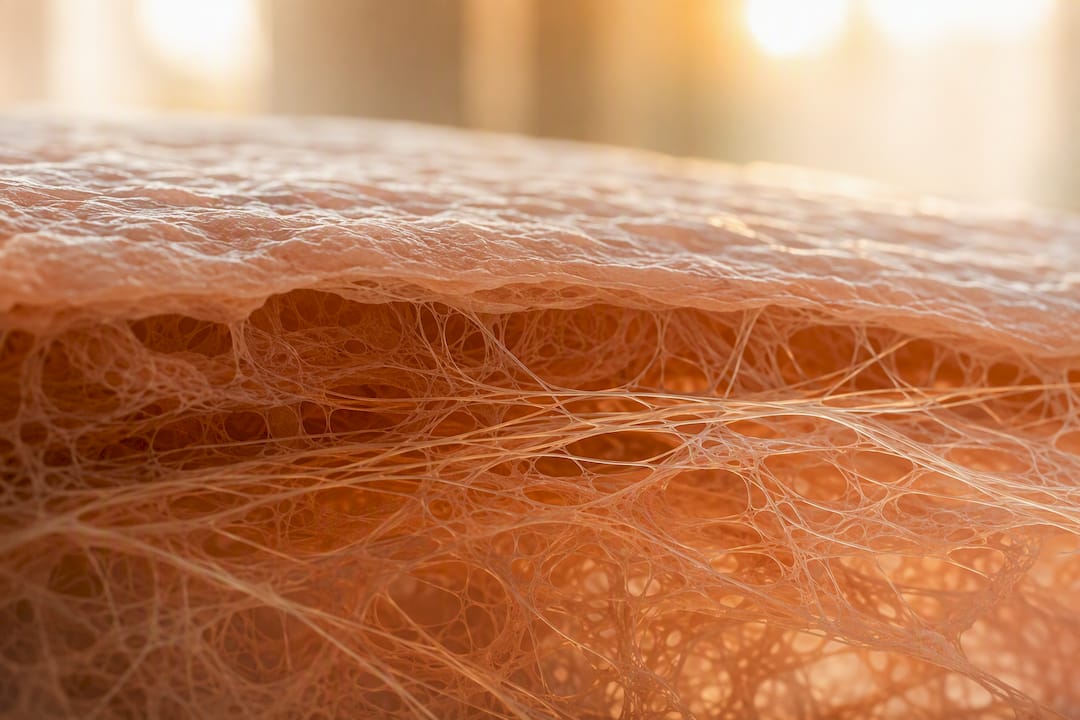
Beneath the surface, EGF also upregulates TGF-β1 along with collagen I and III and elastin. That’s the mechanistic link to actual scar remodeling: more structural collagen and elastin in the dermis translates to firmer, smoother-looking skin over time, which is why trials measure texture with tools like Antera 3D rather than relying on eyeballing alone.
This is also why EGF has real limits. It’s a pro-healing signal, not a structural material. Deep, tethered scars, the kind where scar tissue has fused to underlying structures, involve fibrous bands that EGF’s signaling can’t dissolve or replace. EGF can make the surrounding tissue healthier and more responsive to other treatments, but it isn’t built to undo mechanical tethering on its own. That distinction shapes almost every practical recommendation later in this article.
What Do the Trials and Meta-Analysis Actually Report?
The most cited split-face trial applied EGF to one side of the face immediately following fractional CO2 laser resurfacing and tracked outcomes over three months. Results favored the EGF-treated side: improved epidermal thickness, decreased melanin index, and better overall clinical scar appearance compared with placebo. Because each patient serves as their own control, split-face design controls for a lot of individual variability, skin tone, healing capacity, sun exposure, that would otherwise muddy the results.
The 2024–2026 meta-analysis takes that single-trial signal and asks whether it holds up across a larger, pooled population. It does, largely. Combining rhEGF with fractional CO2 significantly reduced ECCA and VSS scores relative to laser alone, and the reduction in hyperpigmentation incidence was one of the more striking findings, since post-laser hyperpigmentation is one of the biggest complaints patients have after ablative resurfacing.
Here’s what stands out from the pooled data:
- Texture and pore appearance improved consistently across trials, likely reflecting the keratinocyte and collagen effects described in the mechanism above.
- Scar score improvements (ECCA, VSS) were statistically significant but modest in absolute magnitude, not dramatic reversals.
- Recovery metrics, like faster crust shedding and quicker epithelial closure, showed up reliably in split-face comparisons.
- GRADE certainty for the pooled findings ranged from very low to moderate, meaning the overall direction of effect is trustworthy but the precision of any single number should be held loosely.
That GRADE range is worth sitting with. It doesn’t mean the effect is fake. It means trial heterogeneity, differing EGF concentrations, application schedules, and outcome measures, limits how confidently anyone can quote an exact percentage improvement. The guideline reviews on topical growth factors echo this: promising direction, but standardization across products and protocols is still catching up to the underlying biology.
How Should EGF Be Applied for Best Results?
Trial protocols cluster around two distinct use cases, and the distinction matters for anyone trying to replicate results at home or in-office.
Post-procedure application. In split-face trials following fractional CO2 laser or microneedling, EGF was typically applied immediately after the procedure, then continued twice daily for about seven days. The logic here ties directly back to the mechanism: laser and microneedling create temporary microchannels in the skin, and applying EGF while those channels are open lets more of the active ingredient reach living tissue instead of sitting on top of dead stratum corneum.
Standalone topical regimens. Pilot studies testing EGF serum without a paired procedure used a longer runway, typically twice daily for 8 to 12 weeks, before scoring improvement on IGA and scar grading scales. This slower approach reflects the fact that without micro-injury to aid penetration, EGF has to work through intact skin, which takes longer to show visible change.
Trials also incorporated supportive aftercare: some used occlusion (covering the area after application to boost absorption), and nearly all emphasized sun avoidance and daily SPF, since freshly treated skin is more vulnerable to UV-triggered pigment changes.
A simple checklist to bring to a conversation with a dermatologist or aesthetic provider:
- Confirm whether EGF will be used post-procedure or as a standalone regimen, since the frequency and duration differ.
- Ask about the specific product’s stability data and storage requirements.
- Set a realistic duration, seven days for post-procedure use, 8 to 12 weeks for standalone use, before evaluating results.
- Watch for irritation, and pause use if redness or stinging persists beyond normal post-procedure sensitivity.
- Schedule a follow-up assessment using an objective measure, not just a mirror check, if possible.
Pro Tip: Apply EGF serum to clean, slightly damp skin right after a procedure or your evening cleanse. Damp skin helps the formula spread evenly and may improve initial absorption before it has a chance to evaporate off the surface.
Why Formulation and Delivery Matter More Than Concentration
Not all EGF serums are created equal, and the reason has nothing to do with how much EGF is listed on the label.
EGF is a protein. Proteins denature, meaning they lose their functional shape, when exposed to heat, light, or unstable pH. A serum that lists a high EGF concentration but ships in a clear bottle left on a truck in July may deliver a fraction of that stated potency by the time it reaches skin. Pharmacologic reviews on growth factor delivery are blunt about this: stabilization and packaging often matter more than the number on the front label.
What actually affects whether EGF reaches its target receptors intact:
- Encapsulation or nanoparticle delivery systems that shield the protein from surface degradation before it penetrates.
- Opaque, airtight packaging that limits light and oxygen exposure, since both accelerate protein breakdown.
- Supporting actives, hyaluronic acid, peptides, or polynucleotide carriers, that can improve overall skin hydration and receptivity, making the environment more favorable for EGF to act.
- Clear storage guidance from the manufacturer, since shipping heat and open-air exposure are common, avoidable ways potency gets lost before a patient ever applies the product.
Read the fine print for stability and delivery method before comparing EGF percentage between products. A well-encapsulated 2% formula can outperform an unstable 5% one.
Is EGF Safe for All Skin Types After Acne Scarring?
Across the trials reviewed, EGF’s safety profile skews favorable. The most commonly reported adverse events were transient erythema and mild crusting, both expected after ablative procedures regardless of whether EGF was added, and several trials noted no allergic reactions at all in either the treatment or placebo arms.
The pigment question deserves special attention, since post-inflammatory hyperpigmentation (PIH) is a real concern for anyone with medium to deep skin tones undergoing resurfacing. Here, the data actually leans encouraging: the meta-analysis found a lower relative risk of hyperpigmentation (RR = 0.41) in the EGF combination arm compared with laser alone. That’s a meaningfully lower incidence, though the GRADE certainty behind that number still sits in the low-to-moderate range, so it should inform a conversation with a provider rather than settle it outright.
Practical precautions worth following regardless of skin tone:
- Patch test any new EGF product on a small area before full-face application, especially post-procedure when skin barrier function is already compromised.
- Use conservative application volumes immediately after a procedure in higher Fitzpatrick skin types, where pigment response to inflammation tends to be more pronounced.
- Maintain rigorous sun protection for at least several weeks post-treatment, since UV exposure is the single biggest driver of PIH regardless of what topical is used.
- Have a pigment management plan in place (tranexamic acid or similar brightening actives) if PIH has been an issue in past procedures.
When Does EGF Make Sense for Your Scars?
EGF earns its place in a scar-treatment plan when the goal is refining texture, tightening pore appearance, evening pigment, and shortening downtime after a procedure. It’s a supporting player for surface-level and shallow rolling scars, not a solo fix for deep, boxcar, or ice-pick scars with real tethering.
For those deeper structural scars, subcision, dermal fillers, or surgical revision remain the tools that actually address the tethering itself. EGF still has a role there, applied afterward to support healing and collagen turnover, but it’s an adjunct to the structural fix, not a replacement for it.
A short decision framework:
- Scar type: Surface texture and shallow rolling scars respond best; deep tethered scars need structural intervention first.
- Downtime tolerance: Standalone regimens take 8 to 12 weeks; post-procedure use is shorter but tied to recovery from the primary treatment.
- Budget: Standalone topical use is the lower-cost entry point; combination protocols with laser or microneedling carry procedure costs on top of product cost.
- Clinician experience: Post-procedure EGF protocols work best under a provider who has run them before and can time application to the treatment window.
- Need for combination therapy: If scars are mixed in depth and type, a layered plan (procedure plus EGF aftercare) usually beats any single approach alone.
For more on when a daily serum is enough versus when a procedure is warranted, see this comparison of serums and procedural options.
What the Research Gets Right, and What It Doesn’t, About EGF
The biggest misconception about EGF acne scars treatment is that it should behave like a filler. It shouldn’t, and expecting that leads to disappointment even when the product is genuinely well-formulated. What the trial data actually supports is narrower and, frankly, more useful: EGF helps skin heal better and faster after controlled injury, and that improved healing shows up as better texture, less lingering redness, and lower rates of post-inflammatory pigment change.
What gets underweighted in most consumer coverage is the formulation question. A meta-analysis can show a real pooled effect, but that effect was measured using specific, often pharmaceutical-grade formulations under controlled storage. A shelf-stable consumer serum that skips encapsulation isn’t automatically delivering the same biology, regardless of what the label claims. Cellure builds its regenerative formulas around that gap, pairing EGF with stabilizing delivery systems and complementary actives like polynucleotides and peptides rather than relying on concentration claims alone. Anyone shopping for an EGF product should ask about stabilization and storage before asking about percentage, and anyone with deep or tethered scarring should talk to a dermatologist about structural options before expecting a topical to close that gap alone.
— Sara
A Kit Built Around What the EGF Research Actually Supports
Cellure’s Complete Skin Repair Kit puts the trial-informed principles above into a single regimen: stabilized EGF paired with supporting actives like peptides and polynucleotides, packaged to protect a protein active that degrades fast when exposed to heat or light.
It’s built for readers in a specific situation, someone recovering from microneedling or a resurfacing procedure, or someone working through post-acne texture and pigment issues without a procedure on the calendar. The kit doesn’t promise to erase deep scarring overnight, because the evidence doesn’t support that claim for any topical. What it delivers is the same category of benefit the trials measured: better texture, more even tone, and support for the skin’s own remodeling process. If you’re deciding between committing to a full protocol or just adding one active, read how a full cellular repair regimen fits together, then start with the Complete Skin Repair Kit on Cellure’s site to see current formulation details and application guidance.
Where to Read the Original Research
For readers who want to check the primary sources directly, start with the split-face RCT on EGF and fractional CO2 laser for controlled, same-patient comparison data. The systematic review and meta-analysis of 12 RCTs offers the strongest pooled efficacy and safety picture available. For pigment-focused outcomes in skin of color, see the pilot study on topical EGF serum. Round out the reading with the clinical guideline review on topical growth factors for broader safety context.
This article is general information, not a substitute for advice from a qualified doctor. Consult a qualified healthcare professional about your own circumstances before acting on anything here.
Recommended
Share