


Daily Serum vs Procedure: Your Anti-Aging Guide
TL;DR:
- Daily serums deliver active ingredients gradually to improve skin hydration and tone, while professional procedures create deeper structural changes. Combining both enhances skin rejuvenation, with serums supporting recovery and maintaining results. Rushing application of serums post-procedure can cause irritation, so proper timing is essential.
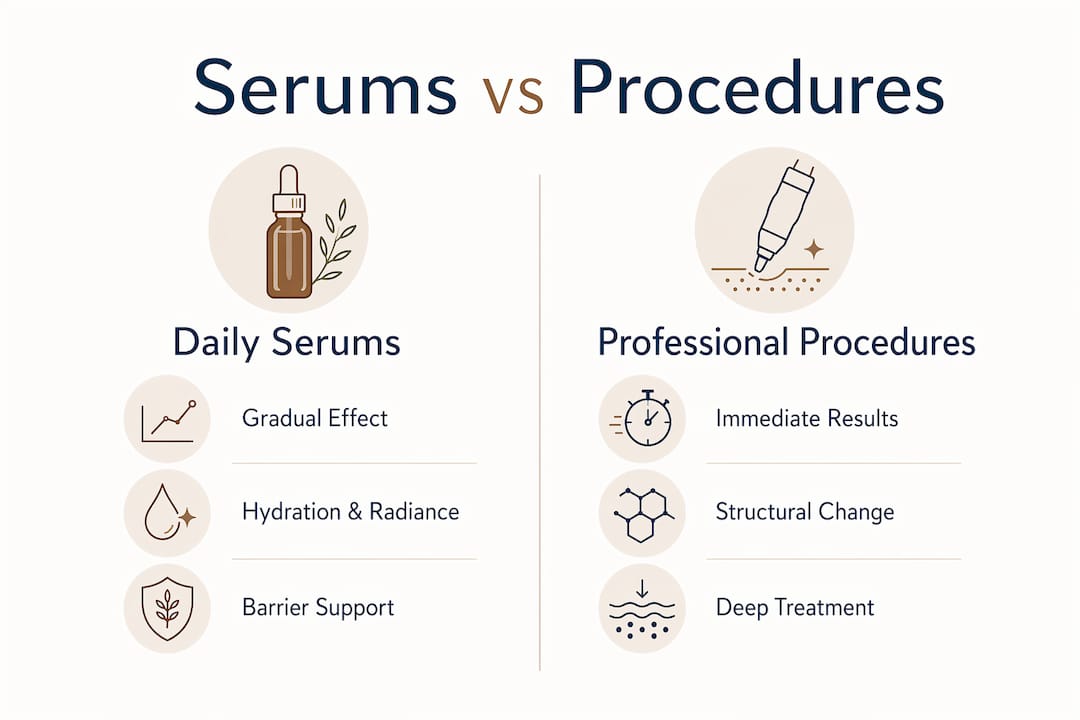
Daily serums and professional skin procedures serve distinct but complementary roles in anti-aging skincare. Understanding the role of daily serum vs procedure is the foundation of any effective rejuvenation plan. Serums deliver concentrated bioactive ingredients to the skin every day, building gradual improvements in hydration, tone, and firmness. Professional procedures like laser resurfacing, microneedling, and Botox create controlled, intensive changes that serums simply cannot replicate. The smartest anti-aging approach uses both, with each doing the job it does best.
What is the role of daily serum vs procedure in skin rejuvenation?
A daily serum is a lightweight, highly concentrated formula designed to deliver active ingredients deeper into the skin than a standard moisturizer. Serums work because their small molecular size allows penetration past the outer skin barrier, reaching the layers where collagen production and cellular repair actually happen. Common anti-aging actives include vitamin C, peptides, retinol, tranexamic acid, and antioxidants. Each targets a specific concern, from oxidative damage to loss of firmness.
The daily serum benefits build over time, not overnight. Vitamin C serums show hydration and radiance improvements in 2–4 weeks, while tone correction and dark spot fading take 8–12 weeks of consistent daily use. That timeline means commitment matters more than any single application. Skipping days resets progress.
Serum timing also shapes results. Day serums defend against UV and pollution, while night serums use ingredients like retinol to drive repair and renewal while you sleep. This is not a marketing distinction. It reflects real differences in how skin behaves across a 24-hour cycle. Running the wrong serum at the wrong time reduces its effectiveness.
Pro Tip: Apply your vitamin C serum in the morning after cleansing and before moisturizer. This antioxidant protection stacks with your SPF and gives you the strongest defense against daily environmental damage.
The key ingredients to look for in an anti-aging serum include:
- Peptides: Signal the skin to produce more collagen and improve firmness
- Vitamin C: Neutralizes free radicals and fades discoloration over 8–12 weeks
- Retinol: Accelerates cell turnover and reduces fine lines, best used at night
- Tranexamic acid: Targets uneven tone and hyperpigmentation with a gentler profile than hydroquinone
- Antioxidants: Protect against oxidative stress from UV, pollution, and blue light
Understanding cellular repair mechanisms helps you choose the right actives for your specific aging concerns.
What are professional skin procedures and how do they work?
Professional procedures create change at a level no topical product can reach on its own. Botox (onabotulinumtoxin A) relaxes the muscles that cause expression lines. Laser resurfacing removes damaged outer skin layers and triggers collagen remodeling. Microneedling creates controlled micro-injuries that stimulate the skin’s natural repair response. Chemical peels accelerate cell turnover by dissolving the bonds between dead skin cells.
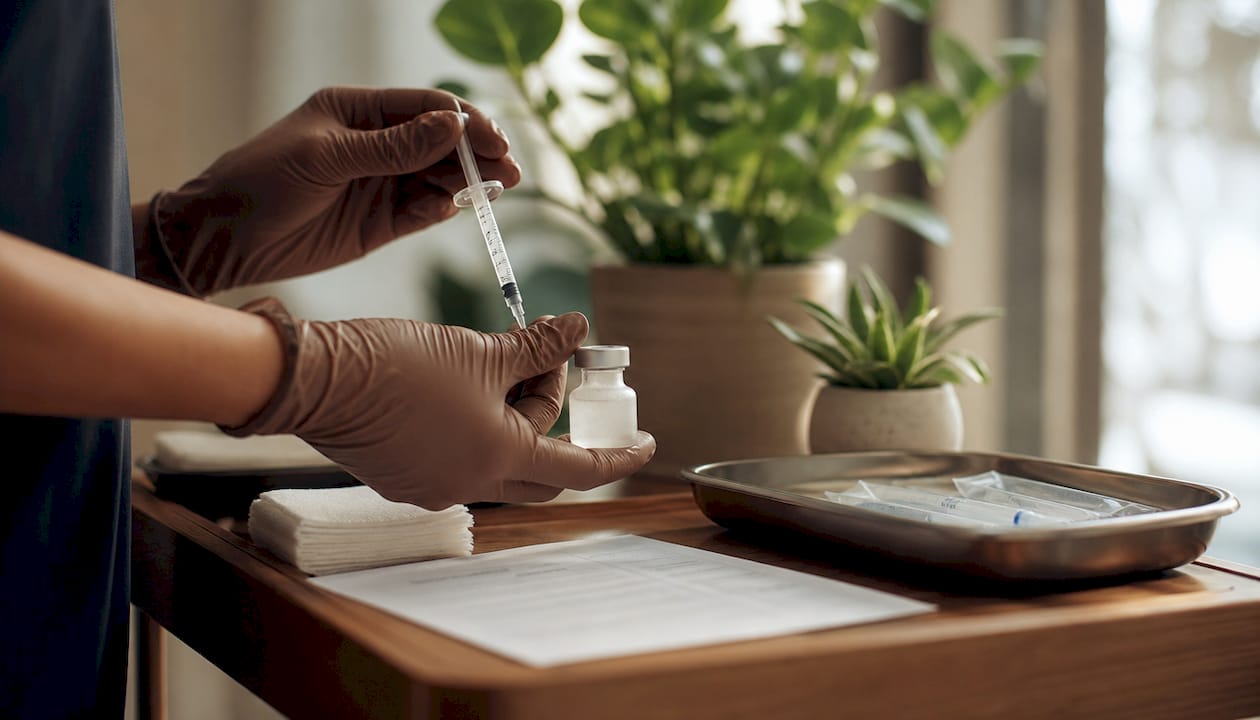
The procedural skincare importance lies in speed and depth. A single laser session can produce visible tightening within days. A series of microneedling treatments remodels dermal collagen over months. These are structural changes that a serum, applied to the surface, cannot replicate. That is not a flaw in serums. It is simply a different mechanism.
GHK-Cu peptide treatments illustrate the contrast well. Professional mesotherapy requires 4–6 sessions every 2–4 weeks for meaningful dermal remodeling, while topical GHK-Cu serum is applied once or twice daily for maintenance and recovery support. The procedure drives the structural change. The serum sustains it.
Pro Tip: Always consult a licensed dermatologist or aesthetic physician before booking any procedure. The right treatment depends on your skin type, depth of concern, and medical history. A professional assessment prevents mismatched treatments and wasted money.
Key professional procedures and their primary mechanisms include:
- Botox (BTX-A): Relaxes facial muscles to reduce dynamic wrinkles; results visible within 3–7 days
- Laser resurfacing: Removes damaged skin layers and stimulates collagen; downtime varies by intensity
- Microneedling: Creates micro-channels to trigger repair; a series of 3–6 sessions is standard
- Chemical peels: Dissolve dead skin cells and improve tone; depth determines recovery time
- Mesotherapy: Injects active compounds directly into the dermis for targeted remodeling
Procedures require professional supervision because the margin for error is narrow. Depth, device settings, and skin preparation all affect outcomes and safety.
How do daily serums complement professional procedures?
The most compelling evidence for combining serums with procedures comes from clinical research. A double-blind randomized trial found that using a neuropeptide serum twice daily alongside Botox injections significantly improved wrinkle reduction and overall skin quality compared to Botox alone. Benefits were measurable as early as 2 weeks post-procedure. That is a meaningful acceleration of visible results.
The same study confirmed improvement across 18 facial attributes over a 10-week period, with no tolerability concerns. This matters because it shows serums are not just maintenance tools. They actively enhance what procedures achieve. The neuropeptide serum and BTX-A combination improved forehead wrinkles, fine lines, smoothness, and radiance beyond what either approach delivered alone.
Post-procedure skin also has specific needs that serums address directly. After treatments like laser or chemical peels, the skin barrier is compromised. Hydration drops, sensitivity rises, and the risk of irritation increases. Serums formulated with barrier-restoring ingredients like peptides and ceramides help the skin recover faster and hold onto the results longer.
| Post-procedure need | Serum role | Key ingredients |
|---|---|---|
| Barrier restoration | Rebuild lipid barrier and reduce sensitivity | Ceramides, peptides |
| Hydration | Replenish moisture lost during treatment | Hyaluronic acid, glycerin |
| Collagen support | Sustain remodeling triggered by procedure | GHK-Cu peptides, growth factors |
| Brightening maintenance | Prevent post-inflammatory pigmentation | Vitamin C, tranexamic acid |
Pro Tip: Wait until your skin has fully closed and healed before reintroducing active serums post-procedure. Your dermatologist will give you a specific timeline. Rushing this step risks irritation and can undo the results you paid for.
Serum application techniques matter most in the post-procedure window. Apply with clean hands using gentle pressing motions rather than rubbing. Avoid anything with fragrance, alcohol, or exfoliating acids until the skin barrier is fully restored. Cellure’s formulations with peptides and polynucleotides are designed for exactly this kind of gentle cellular repair, supporting recovery without stressing compromised skin.
What are the limits of relying on serums or procedures alone?
Serums alone cannot produce the structural changes that procedures deliver. A vitamin C serum will brighten and protect, but it will not lift sagging tissue or erase deep dynamic wrinkles. Growth factor serums lack the robust peer-reviewed trial data that vitamin C and retinoids carry, and should be treated as gradual adjuncts to a complete routine rather than standalone solutions. Pairing them with retinoids and SPF is the clinically supported approach.
Procedures without daily serum support also underperform. The collagen remodeling triggered by microneedling or laser needs ongoing maintenance to hold. Without daily hydration, antioxidant protection, and barrier support, results fade faster. Procedures are investments. Serums protect that investment.
The risks of mismatched timing are real. Regular serums applied too soon after microneedling can cause severe irritation or infection. Microneedling creates open micro-channels in the skin. A serum formulated for intact skin can drive irritants directly into the dermis. Only sterile, procedure-specific formulations are safe in that window.
Common mistakes to avoid when combining serums and procedures:
- Applying regular serums immediately after invasive treatments before the skin has healed
- Expecting serums to replicate the depth of change that procedures create
- Skipping daily serum use between procedure sessions and losing maintenance benefits
- Using fragrance or alcohol-based serums on post-procedure skin
- Treating growth factor serums as a replacement for proven actives like retinol and SPF
The comparison of skincare methods is not about choosing one over the other. It is about knowing what each does and when to use it. Beauty professionals who advise clients on pairing daily serums with aesthetic procedures consistently report better long-term outcomes when both are used with intention and proper timing.
Key Takeaways
Daily serums and professional procedures work best together: serums sustain and enhance procedural results, while procedures create structural changes no topical product can replicate alone.
| Point | Details |
|---|---|
| Serums build gradually | Vitamin C and peptide serums show measurable results in 2–12 weeks with consistent daily use. |
| Procedures go deeper | Botox, laser, and microneedling create structural changes that surface-applied serums cannot match. |
| Combined use outperforms either alone | Clinical trials show neuropeptide serums used with Botox improve 18 skin attributes beyond Botox alone. |
| Post-procedure timing is critical | Regular serums applied too soon after invasive treatments risk irritation or infection. |
| Daily maintenance protects your investment | Ongoing serum use sustains collagen remodeling and slows the return of signs of aging between procedures. |
What I’ve learned from watching people combine both approaches
Most people come to this question looking for permission to skip one or the other. They want to know if a good serum is enough, or if they can skip daily skincare once they’ve had a procedure. The honest answer is that neither approach is optional if you want lasting results.
What I find most interesting is how the evidence shifts expectations. The 10-week neuropeptide serum trial did not just show that serums help after Botox. It showed that the combination outperformed Botox alone on nearly every measured attribute. That reframes the serum from a nice-to-have into a clinical tool.
The part people underestimate is formulation. Not every serum belongs on post-procedure skin. I’ve seen people reach for their usual vitamin C or exfoliating serum right after a peel and wonder why their skin reacted badly. The skin barrier after a procedure is not the same organ it was before. It needs different support. Choosing science-backed ingredients for the right phase of recovery is the skill that separates good outcomes from great ones.
My practical advice: treat your daily serum routine as the foundation and your procedures as periodic investments that accelerate what the serum is already building. Consistency with serums between sessions is what makes each procedure more effective than the last.
— Sara
Cellure’s Complete Skin Repair Kit: built for both phases
Cellure designed the Complete Skin Repair Kit for people who take both daily serum benefits and procedural skincare seriously. The kit combines peptides, polynucleotides, and tranexamic acid in formulations gentle enough for compromised post-procedure skin and effective enough for daily anti-aging maintenance. Every component is chosen for its clinical backing, not its marketing appeal.
Whether you are in recovery after a treatment or building your daily serum routine from scratch, the kit gives you a complete, coordinated system. The ingredients work together to restore the barrier, support collagen, and protect against the environmental damage that undoes procedural results. Cellure’s formulations are suitable for all skin types, including sensitive skin navigating the post-procedure window.
FAQ
What is the main difference between a daily serum and a professional procedure?
A daily serum delivers active ingredients to the skin surface for gradual, ongoing improvement in hydration, tone, and firmness. A professional procedure creates structural changes in deeper skin layers that topical products cannot reach.
How soon after a procedure can I use my regular serum?
Regular serums should not be applied until the skin barrier has fully healed, which varies by procedure type. Applying standard serums too soon after microneedling or laser treatments risks irritation and infection through open micro-channels.
Do serums actually improve Botox results?
Yes. A double-blind clinical trial found that a neuropeptide serum used twice daily alongside Botox improved wrinkle reduction and skin quality across 18 facial attributes compared to Botox alone, with benefits visible at 2 weeks.
How long does a daily serum take to show results?
Hydration and radiance improvements from vitamin C serums appear in 2–4 weeks. Tone correction and dark spot fading take 8–12 weeks of consistent daily application.
Can I rely on serums alone instead of getting procedures?
Serums cannot replicate the depth of structural change that procedures like laser resurfacing or microneedling create. They are most effective as daily maintenance tools that sustain and enhance procedural results, not as replacements for them.