


What Is Progressive Skin Renewal? A Science-Backed Guide
TL;DR:
- Progressive skin renewal stimulates the skin’s natural repair systems while maintaining low inflammation, avoiding aggressive resurfacing. It involves three stages: foundational maintenance, corrective therapies, and advanced interventions, adjusted based on skin healing response. The Cellure Complete Skin Repair Kit aligns with this approach, targeting cellular and microenvironmental repair for lasting rejuvenation.
Progressive skin renewal is a staged, low-inflammation program that stimulates the skin’s natural regenerative systems rather than forcing rapid resurfacing. The immediate recommendation for adults dealing with early-to-moderate aging signs: start with foundational maintenance, add corrective actives only after the barrier is stable, and advance to clinical interventions only when your skin’s healing response confirms it’s ready. Research published in the EMBO Journal frames modern rejuvenation as systems reprogramming, a shift from surface-only treatments toward restoring the skin’s homeostatic equilibrium across multiple biological layers. Dr. Carol Eisenstat’s laser ladder paradigm operationalizes that science clinically. Cellure’s Complete Skin Repair Kit is built around the same principle.
Table of Contents
- What Is Progressive Skin Renewal and How Does It Work Biologically?
- How the Ladder Approach Structures Your Skin Renewal Program
- Who Benefits and Who Should Pause?
- A Practical 4-Step Starter Routine for Progressive Renewal
- What Results Can You Realistically Expect and When?
- How Progressive Renewal Keeps Your Skin Safer
- The Cellure Complete Skin Repair Kit Fits Directly Into This Approach
- Key Takeaways
- Why a Gradual Approach Is the Only Honest One
- Useful Sources
What Is Progressive Skin Renewal and How Does It Work Biologically?
The core claim is straightforward: progressive skin renewal avoids the barrier-damaging trauma linked to aggressive resurfacing by working with the skin’s own repair cycles instead of overriding them. Where aggressive procedures force rapid turnover through ablation or deep chemical injury, a progressive approach keeps inflammation low and gives the microenvironment time to stabilize between interventions.
At the cellular level, the EMBO Journal’s systems-reprogramming framework identifies multiple simultaneous targets that a well-designed renewal program should address:
- Keratinocyte turnover: restoring the natural shedding cycle, which slows significantly after age 50
- Fibroblast activation: stimulating collagen and elastin production in the dermis without triggering chronic inflammation
- Mitochondrial function: supporting cellular energy metabolism so repair processes run efficiently
- Senescent cell clearance: reducing the accumulation of dysfunctional cells that drive chronic low-grade inflammation and ECM breakdown
Microenvironment remodeling ties these targets together. Senescent cells release pro-inflammatory signals that degrade the extracellular matrix; clearing them while simultaneously restoring ECM components is what separates a genuine renewal program from a surface-only exfoliation routine.
Pro Tip: Watch for three early signals that your routine is supporting cellular rewiring: a steady reduction in chronic background redness, improved skin barrier strength and hydration, and gradual texture improvements that persist between treatments.
How the Ladder Approach Structures Your Skin Renewal Program
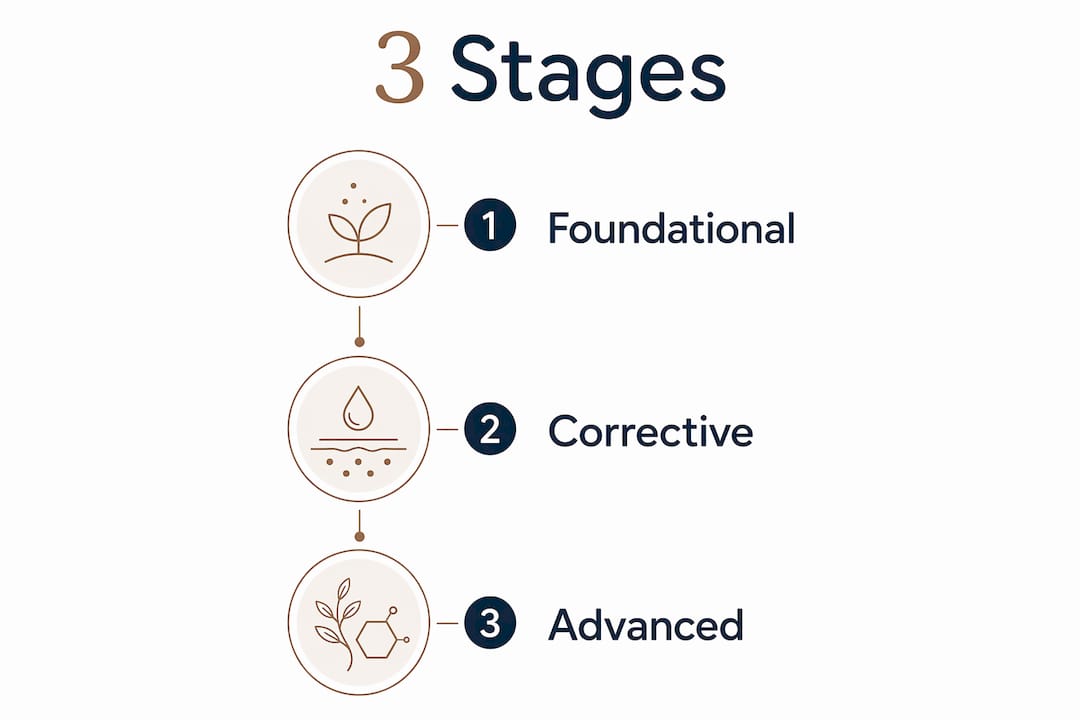
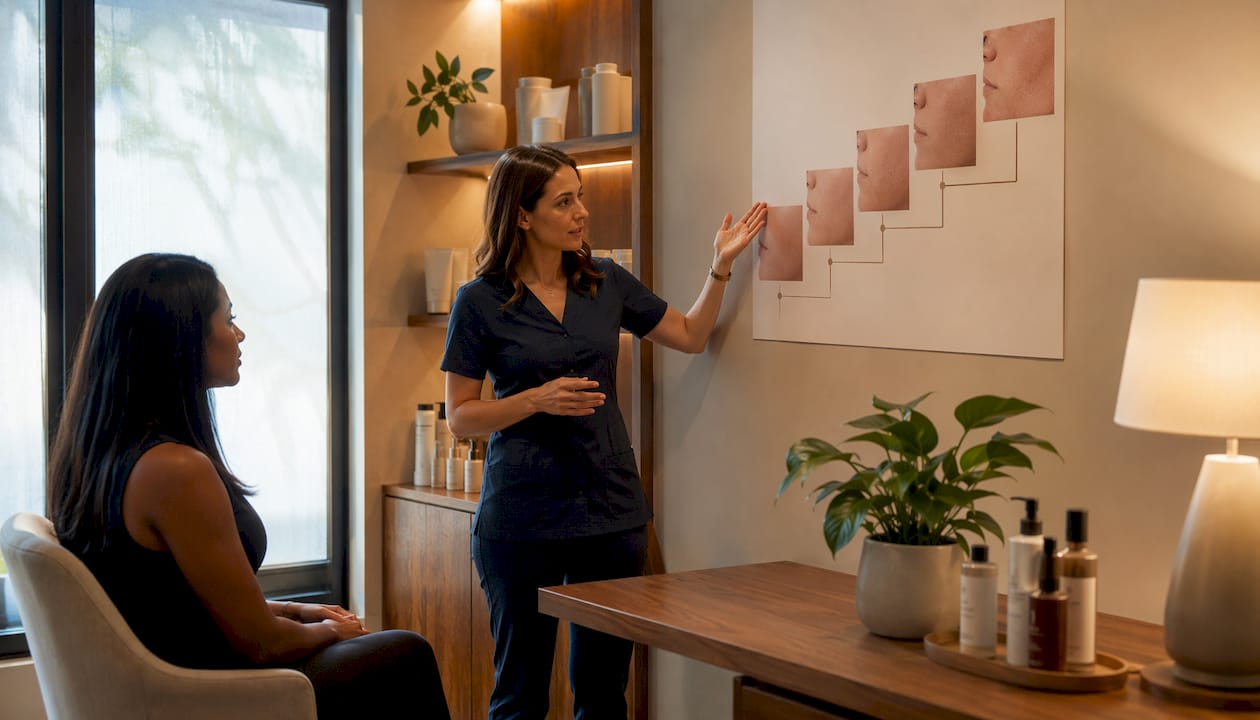
Dr. Carol Eisenstat’s laser ladder is the clearest clinical model for organizing a progressive program. It moves through three stages, and some people stay at Stage 1 for years without ever needing to advance.
Stage 1: Foundational maintenance
The goal here is barrier stability and consistent cellular turnover. Topical actives carry most of the work:
- Peptides for fibroblast signaling and firmness support
- Tranexamic acid for pigment modulation and anti-inflammatory action
- Polynucleotides (PDRN/PN) for wound-healing support and regenerative signaling
- Barrier actives (hyaluronic acid, ceramides, niacinamide) to maintain hydration and reduce transepidermal water loss
Cellure’s Complete Skin Repair Kit maps directly to this stage, combining peptides, tranexamic acid, and polynucleotides in a single coordinated system. The science of these three actives is covered in depth on Cellure’s blog for readers who want the full mechanistic picture.
Stage 2: Corrective therapies
Once the barrier is stable and healing velocity is consistent, corrective modalities become appropriate. These include progressive microneedling for collagen remodeling, light chemical peels, and non-ablative laser treatments. Multi-depth protocols that sequence stimulation from deep dermis to surface can deliver layered regeneration while controlling downtime. Spacing matters: many staged protocols place more intensive sessions months apart to allow collagen remodeling and minimize cumulative inflammation.
Stage 3: Advanced interventions
Ablative resurfacing, deeper peels, and fractional laser procedures belong here. These are selective, not routine, and only appropriate when Stages 1 and 2 have been completed and a clinician confirms the skin’s healing capacity supports them.
Timeline: Most people see meaningful corrective results within a few months at Stage 1 before considering Stage 2. Advancement is guided by healing velocity, not a fixed calendar.
Pro Tip: Keep a skin journal: log treatment dates, products used, and how your skin healed. Practitioners use this record to assess readiness for deeper modalities. Your healing pattern is more informative than any fixed timeline.
Who Benefits and Who Should Pause?
Progressive skin renewal suits a wide range of adults, but it isn’t universally appropriate without some self-screening.
Good candidates:
- Adults with early-to-moderate signs of aging (fine lines, uneven tone, mild laxity)
- Sensitive-skin individuals who have reacted poorly to aggressive treatments
- Anyone prioritizing cellular repair with minimal downtime
- People with higher Fitzpatrick skin types (III–VI) who face elevated hyperpigmentation risk from aggressive procedures
Pause or consult a clinician first if you have:
- Active skin infection or open wounds in the treatment area
- Recent ablative laser or deep chemical peel (within 3–6 months)
- Uncontrolled inflammatory skin disease (active rosacea flare, eczema, psoriasis)
- Pregnancy (certain actives, including high-dose retinoids, require medical guidance)
- A history of keloid scarring
When you do consult a dermatologist or cosmetic physician, bring your skin journal, a list of all current topicals and their concentrations, and any patch-test results. That information cuts consultation time and gives the clinician a real baseline to work from.
A Practical 4-Step Starter Routine for Progressive Renewal
-
Cleanse and support the barrier (AM and PM). Use a gentle, pH-balanced cleanser followed immediately by a barrier-supporting moisturizer containing hyaluronic acid and ceramides. This step is non-negotiable before any active is introduced.
-
Apply targeted daytime actives (AM). After moisturizer, apply a peptide serum or a tranexamic acid formula. Tranexamic acid is well-tolerated in daylight and doubles as a pigment-modulating agent. Always follow with SPF 30 or higher.
-
Apply targeted nighttime actives (PM). Polynucleotides and higher-concentration peptide formulas work well overnight when the skin’s repair cycle is most active. If you’re introducing a new active, start every other night for the first two weeks before moving to nightly use.
-
Weekly gentle renewal. Once per week, add a mild exfoliating step: an enzyme mask or a low-concentration AHA (glycolic or lactic acid at 5–8%). This supports keratinocyte turnover without disrupting the barrier you’ve been building.
Pro Tip: Patch-test every new active on the inner forearm for 48 hours before applying it to your face. Note any redness, itching, or swelling in your skin journal. This is especially important for tranexamic acid and polynucleotides if you haven’t used them before.
What to expect: At 2 weeks, hydration and texture typically improve noticeably. By 6 weeks, pigmentation often begins to even out and fine lines appear softer. At 12 weeks, firmness and overall tone are measurably improved in most adults following the routine consistently.
What Results Can You Realistically Expect and When?
Progressive renewal produces cumulative, durable results. The step-by-step rejuvenation guide on Cellure’s site maps this progression in practical detail.
| Timepoint | Expected Changes | How to Measure |
|---|---|---|
| 1 month | Improved hydration, reduced tightness, early texture smoothing | Side-by-side photos in consistent lighting |
| 3 months | Visible pigmentation improvement, softer fine lines, more even tone | Validated skin tone scale or dermatologist assessment |
| 6 months | Measurable firmness gains, reduced pore appearance, sustained barrier stability | Skin elasticity assessment; compare photo series |
| 12 months | Structural improvement in collagen density, durable tone correction, reduced laxity | Clinical evaluation; consider Stage 2 readiness |
Track progress with standardized photos taken in the same lighting and position every four weeks. A skin journal entry alongside each photo set gives you the context to understand what drove improvements or setbacks.
How Progressive Renewal Keeps Your Skin Safer
The safety advantage of a staged approach is cumulative. By keeping inflammation low at each step, you reduce the risk of postinflammatory hyperpigmentation (PIH), barrier disruption, and the delayed healing that can follow aggressive procedures.
Common, expected reactions during progressive renewal:
- Mild transient redness after introducing a new active (typically resolves within 24 hours)
- Light flaking during the first 1–2 weeks of an exfoliating step
- Temporary increased sensitivity when first adding polynucleotides or higher-peptide formulas
Less common but important risks:
- Postinflammatory hyperpigmentation, particularly in Fitzpatrick types III–VI; managed by conservative ramp-up and consistent SPF use
- Delayed healing if multiple actives are introduced simultaneously; managed by adding one new product at a time
- Contact sensitization to a specific ingredient; managed by patch-testing before full application
Pause all active treatments and consult a clinician if you experience: severe or prolonged erythema lasting more than 48 hours, signs of infection (warmth, swelling, pus), atypical scarring, or any reaction that does not resolve with barrier support alone. Do not attempt to push through these signals.
This article is general information, not medical advice. Confirm any treatment plan with a qualified dermatologist or cosmetic physician for your specific situation.
The Cellure Complete Skin Repair Kit Fits Directly Into This Approach
The Complete Skin Repair Kit from Cellure contains the three actives that anchor Stage 1 of the ladder: peptides for fibroblast signaling and firmness, tranexamic acid for pigment control and anti-inflammatory support, and polynucleotides for regenerative repair. That’s not a coincidence. The kit was formulated around the same staged, low-inflammation philosophy this article describes.
Use the kit within the 4-step starter routine above: the peptide formula in Step 2 (AM), the polynucleotide serum in Step 3 (PM), and the barrier support products as your morning and evening base. Patch-test each component individually before using the full kit together. Most adults following this protocol report visible hydration and texture improvement within the first month, with tone and firmness gains building through months 3–6. Cellure also offers a subscription option for consistent supply. Start with the Complete Skin Repair Kit, log your results in a skin journal, and use those notes to guide your next step.
Key Takeaways
Progressive skin renewal works because it targets cellular and microenvironmental drivers of aging in stages, keeping inflammation low enough for durable, compounding results.
| Point | Details |
|---|---|
| Core definition | A staged, low-inflammation program that restores homeostatic equilibrium rather than forcing rapid resurfacing. |
| The ladder structure | Three stages: foundational maintenance, corrective therapies, advanced interventions; advance only when healing velocity confirms readiness. |
| Key actives | Peptides, tranexamic acid, and polynucleotides address firmness, pigment, and regenerative repair at Stage 1. |
| Realistic timeline | Hydration and texture improve early on; pigmentation and firmness gains build progressively with consistent use over time. |
| Cellure starter path | The Complete Skin Repair Kit maps directly to Stage 1; patch-test each component and track results in a skin journal. |
Why a Gradual Approach Is the Only Honest One
The skincare industry has a long history of overselling speed. “Dramatic results in one treatment” is a real promise for some ablative procedures, but it comes with real trade-offs: downtime, inflammation risk, and a barrier that needs weeks to recover. For most adults, that trade-off isn’t worth it when a staged program can deliver comparable structural improvement over six to twelve months with a fraction of the risk.
What the EMBO Journal’s systems-reprogramming research makes clear is that durable rejuvenation isn’t about surface turnover. It’s about restoring the conditions under which the skin can repair itself. That takes time, the right actives, and a willingness to let the process compound. The people who get the best long-term results aren’t the ones who pushed hardest. They’re the ones who stayed consistent.
Useful Sources
- Skin aging: mechanisms, evaluation, and rejuvenation — The EMBO Journal
- A Progressive Approach to Skin Health and Skin Renewal — Line Eraser MD
- Progressive VS Aggressive: Two Methods of Skin Treatment — Andy Millward
- Microneedling for Acne Scars — Skin Couture
- Skin Resurfacing Treatments — American Board of Cosmetic Surgery
- Laser Erbium-YAG Resurfacing — StatPearls, NCBI Bookshelf
- Skin Regeneration: The Science and How to Boost It — Healthline
- Cellure — Complete Skin Repair Kit and active ingredient science