


What Is a Treatment Kit in Skincare? Your Guide
TL;DR:
- Skincare treatment kits are purpose-built systems designed to target specific skin concerns, not just gift sets or bundles.
- They contain products formulated to work synergistically, with consistent use over 6 to 12 weeks producing visible results.
If you’ve ever stood in a skincare aisle wondering what is a treatment kit in skincare and whether you actually need one, you’re not alone. These multi-product sets have exploded in popularity, yet most people confuse them with basic gift sets or starter bundles. They’re neither. A skincare treatment kit is a curated, purpose-built system designed to address a specific skin concern, whether that’s loss of firmness, uneven tone, or accelerated aging. Understanding how they work, what goes inside them, and how to use them properly can change the results you get from your entire routine.
Table of Contents
- Key Takeaways
- What is a treatment kit in skincare and why does it matter
- What to include in treatment kits: the core components
- How to choose the right kit for your skin concerns
- How to use skin treatment kits effectively
- Treatment kits vs. standalone products
- My honest take on treatment kits after years with skincare
- Discover Cellure’s treatment kits for aging skin
- FAQ
Key Takeaways
| Point | Details |
|---|---|
| Treatment kits have a defined purpose | Each kit targets a specific concern like aging, brightening, or repair, not general skincare. |
| Components work together | Products in a kit are formulated to complement each other for better absorption and results. |
| Results take consistent effort | Visible skin improvement typically requires 6 to 12 weeks of regular, daily use. |
| Choosing the right kit matters | Match ingredients to your skin type and primary concern before buying any treatment set. |
| Kits suit beginners and focused routines | They remove the guesswork around product pairing, which benefits anyone building or simplifying a routine. |
What is a treatment kit in skincare and why does it matter
A skincare treatment kit is a set of products, typically two to five items, formulated to work together toward a single skin goal. This is the key difference between a treatment kit and a random bundle of products. The individual items in a treatment kit are selected because they build on each other. The cleanser preps the skin. The serum delivers the active ingredient. The moisturizer seals everything in. Each step amplifies what came before it.
Compare that to buying three separate serums from three different brands. Each one might be excellent on its own, but they were not designed with each other in mind. Layering them can dilute their effects or, in some cases, cause irritation when active ingredients conflict.
Treatment kits are built around specific purposes. The most common include:
- Hydration and repair: Restoring the skin barrier after damage from environmental stressors, over-exfoliation, or harsh products
- Anti-aging and rejuvenation: Targeting loss of firmness, volume, and skin density with actives like peptides and polynucleotides
- Brightening and tone correction: Addressing hyperpigmentation, dark spots, and dullness using ingredients like tranexamic acid or vitamin C
- Sensitive skin calming: Reducing chronic redness and inflammation while rebuilding the barrier
- Post-procedure recovery: Soothing and protecting skin after treatments. For example, post-procedure recovery kits typically include a gentle cleanser, a barrier-supporting moisturizer, and UV protection.
Understanding the purpose behind the kit is also what makes it different from a gift set. Gift sets are assembled for presentation value. Treatment kits are assembled for clinical coherence.
What to include in treatment kits: the core components
The anatomy of a well-designed treatment kit follows a consistent logic: prepare, treat, protect. Every product has a role, and nothing in a well-built kit is redundant.
Here’s how the typical components break down:
| Product Type | Primary Role | What to Look For |
|---|---|---|
| Cleanser | Removes impurities without disrupting the barrier | Gentle, pH-balanced, sulfate-free |
| Skin treatment essence or serum | Delivers concentrated actives deep into skin | Peptides, tranexamic acid, niacinamide, retinol |
| Moisturizer | Locks in hydration and supports barrier recovery | Ceramides, hyaluronic acid, squalane |
| Exfoliant | Removes dead cells to improve absorption | AHAs for texture, PHAs for sensitive skin |
| SPF | Prevents UV damage and protects treatment results | SPF 30 or higher, zinc oxide preferred |
| Targeted treatment | Addresses a specific concern like dark spots or wrinkles | Active concentration matched to concern severity |
The skin treatment essence or serum is usually the centerpiece of the kit. It carries the highest concentration of actives and determines what concern the kit actually treats. Everything else in the kit serves to either prepare the skin to receive those actives or protect the results they create.
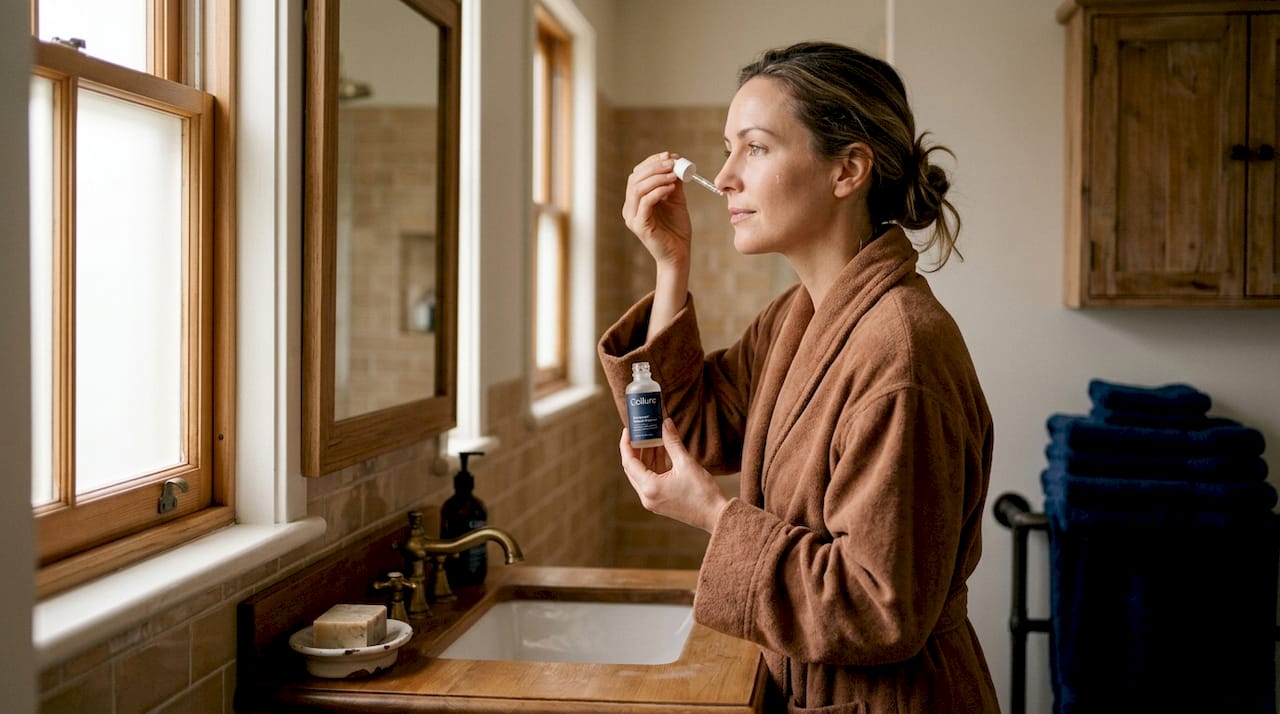
Variations exist depending on skin type and concern. A brightening kit might swap the targeted treatment for a vitamin C concentrate. An anti-aging kit focused on cellular repair might include polynucleotide-based serums that support regeneration at a deeper level. Sensitive skin kits often exclude exfoliants entirely and lean into calming ingredients like bisabolol or centella.
Pro Tip: When evaluating what to include in treatment kits, check whether the active ingredients share a compatible pH range. Vitamin C and retinol, for example, work at different pH levels. A good kit solves this by scheduling them into AM and PM use rather than layering them in the same step.
How to choose the right kit for your skin concerns
Matching a kit to your skin is a two-step process: know your skin type, then know your primary concern. Most people make the mistake of choosing based on the most visible symptom without accounting for their underlying skin type. A brightening kit formulated for oily skin, for example, will likely feel too stripping on dry or mature skin.
Start by identifying your baseline. Ask yourself:
- Is your skin dry, oily, combination, or sensitive?
- Is your concern primarily texture, firmness, tone, or hydration?
- Are you dealing with a single issue or multiple concerns that overlap?
- Do you have any ingredient sensitivities to retinol, fragrance, or acids?
From there, match ingredients to concerns. For loss of firmness and volume, look for kits built around peptides, which signal collagen production, or polynucleotides, which support skin repair at a cellular level. For uneven tone, tranexamic acid and niacinamide are among the most studied options. For texture and dullness, gentle AHA-based kits often deliver visible improvement.
Reading ingredient lists is worth the extra minute. The active ingredient you’re targeting should appear in the first half of the list, not near the bottom where concentrations are negligible. A guide to choosing serums for aging skin can help you match ingredient types to your specific concerns if you’re newer to decoding skincare formulations.
If you’re focused on aging-related concerns specifically, look at the clinical language around each kit. Words like “cellular repair” and “regenerative” signal that a brand is working at the structural level of the skin, not just the surface. Cellure, for instance, builds its kits around bioactive ingredients chosen for their ability to support renewal below the surface.
Pro Tip: Avoid choosing the best skincare treatment set based solely on reviews from people with different skin types. A five-star anti-aging kit on oily skin may underperform significantly on dry or post-menopausal skin. Filter reviews by your skin type whenever the platform allows it.
How to use skin treatment kits effectively
Knowing how to use skin treatment kits is just as important as choosing the right one. Even a perfectly matched kit produces poor results if applied in the wrong order or with inconsistent frequency.
Follow this sequence for a standard morning routine:
- Cleanse with the kit’s cleanser. Use lukewarm water, not hot, which strips the barrier.
- Apply the essence or serum to slightly damp skin to improve absorption of water-binding actives.
- Layer from thinnest to thickest if the kit includes multiple treatment steps. Watery serums go before heavier creams.
- Apply moisturizer while the serum is still slightly damp to lock it in.
- Finish with SPF in the morning. This step protects every active ingredient you just applied. Skipping it undoes much of the kit’s work.
For evening routines, the same layering principle applies. If your kit includes a retinol or peptide treatment, apply it after cleansing and before your moisturizer. Give each layer 30 to 60 seconds to absorb before adding the next.
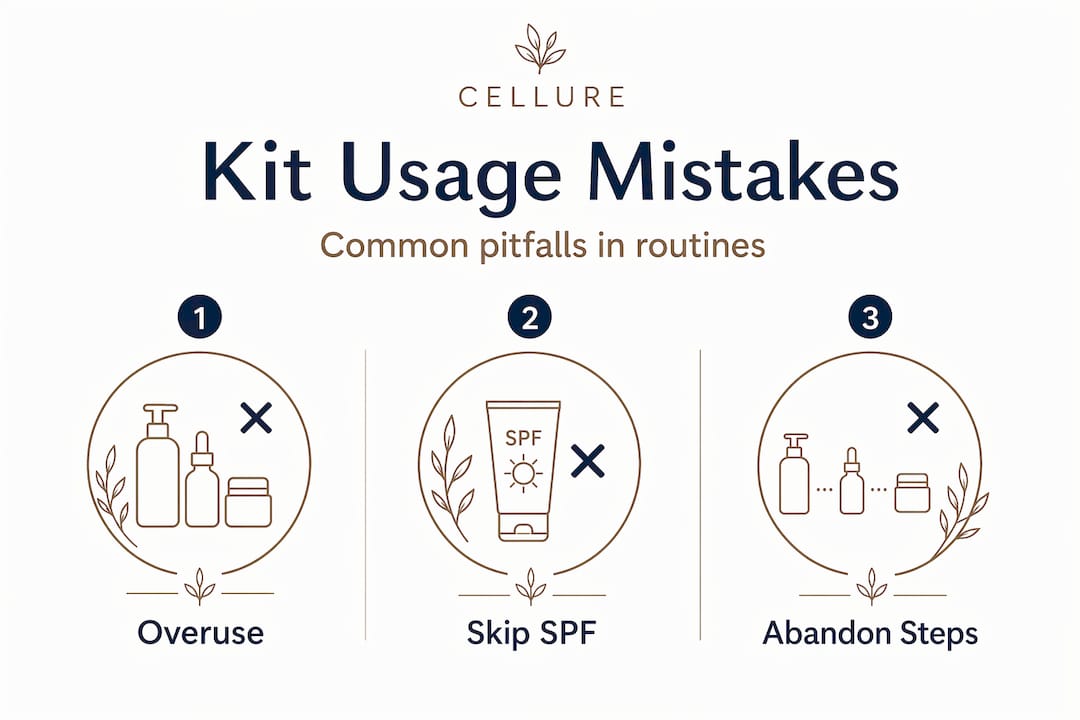
The most common mistakes people make with treatment kits are using too much product, skipping SPF during the day, and abandoning the routine too early. Visible improvement typically requires six to twelve weeks of consistent use. Skin renews in cycles, and actives need repeated exposure to drive measurable change.
Track your results by taking photos in consistent lighting every two to three weeks. What you feel day to day and what your skin is actually doing are often different. Photography removes the guesswork.
A skin renewal checklist can help you build the habit structure around a kit if you’re prone to skipping steps or losing momentum in the first few weeks.
Treatment kits vs. standalone products
The question of whether to use a full kit or build your own routine from individual products comes down to where you are in your skincare knowledge.
| Factor | Treatment Kit | Standalone Products |
|---|---|---|
| Ease of use | Ready to use, no pairing decisions needed | Requires understanding of compatibility |
| Formulation synergy | Products designed to work together | May conflict or overlap in coverage |
| Customization | Limited to what the kit offers | Fully customizable to unique needs |
| Cost | Usually better value as a set | Costs add up quickly when buying separately |
| Best for | Beginners, focused concerns, simplified routines | Advanced users with well-defined, multi-issue needs |
The convenience argument for kits is real. A well-balanced kit avoids the common pitfall of over-complicating routines with too many specialized products. For someone new to addressing aging concerns, starting with a purpose-built kit is almost always more effective than trying to self-assemble from scratch.
The case for standalone products makes more sense once you know your skin deeply and have specific, layered needs that no single kit covers. At that point, customizing with targeted actives alongside a complementary collagen-supporting supplement can add another dimension to your results. Research on collagen types and benefits can inform how to support your skin from the inside while a treatment kit works from the outside.
My honest take on treatment kits after years with skincare
I’ll be direct: for a long time, I dismissed treatment kits as a marketing convenience. I assumed that serious skincare meant building your own routine from carefully selected individual products. I was wrong, and it took watching clients consistently underperform with self-assembled routines to change my mind.
What I’ve learned is that formulation coherence matters more than most people realize. When a brand designs products to work together, they account for pH compatibility, absorption timing, and ingredient interaction in ways that are nearly impossible to replicate when mixing products from different lines. The results from a well-designed kit often outpace what I expected from the individual ingredients alone.
I’ve also noticed that people stick with kits longer. When everything is in one place and the routine is clear, consistency goes up. And consistency, more than any single ingredient, is what drives visible skin change.
One myth worth addressing: kits are not just for beginners. Some of the most effective anti-aging regimens I’ve seen are kit-based, particularly those built around regenerative ingredients like polynucleotides and peptides. The argument that “serious” skincare means building from scratch is, frankly, outdated.
My advice: start with the reasons kits work for aging skin before you make a decision either way. Your skin does not care about how sophisticated your product selection process feels. It cares about what you actually put on it, consistently.
— Sara
Discover Cellure’s treatment kits for aging skin
If you’re ready to move from understanding to action, Cellure has built its product range around exactly the science this article covers. Every kit is formulated with clinically supported bioactive ingredients, including peptides, polynucleotides, and tranexamic acid, designed to work together rather than independently.
Cellure’s skin repair kits are built for adults who want targeted results on firmness, tone, and skin density, not a generic routine. The products are gentle enough for sensitive and mature skin while delivering the concentration of actives that real regeneration requires. If you’re serious about addressing signs of aging with a structured, synergistic approach, explore the full Cellure treatment range and find the kit matched to your skin’s specific needs.
FAQ
What is a treatment kit in skincare?
A treatment kit is a set of products formulated to work together toward a specific skin goal, such as anti-aging, brightening, or barrier repair. Unlike random bundles, each item in a treatment kit is chosen because it complements the others for better absorption and results.
How long does it take to see results from a skincare treatment kit?
Results typically appear after six to twelve weeks of consistent daily use, as skin renewal operates in biological cycles. Tracking progress with regular photos in consistent lighting helps reveal changes that are easy to miss day to day.
What are the key products to include in treatment kits for aging skin?
A strong anti-aging kit should include a gentle cleanser, an active serum with peptides or polynucleotides, a barrier-supporting moisturizer, and daily SPF 30 or higher. These four elements address the core needs of aging skin: repair, renewal, hydration, and UV protection.
Are treatment kits better than buying products separately?
For most people, especially those newer to targeting aging concerns, treatment kits offer better formulation synergy and consistency than self-assembled routines. Advanced users with very specific multi-issue needs may benefit from customizing with individual products alongside a core kit.
How do you use skin treatment kits correctly?
Apply products from thinnest to thickest texture, cleanse first, follow with your serum or skin treatment essence, then moisturizer, and always finish with SPF in the morning. Giving each layer 30 to 60 seconds to absorb before adding the next improves efficacy noticeably.