


Step by Step Serum Application: Get It Right Every Time
TL;DR:
- Proper serum application involves applying 2 to 4 drops to slightly damp, clean skin, pressed in gently for optimal absorption. Layer products from thin to thick, waiting about 30 seconds between each step, and always seal with moisturizer and SPF in the morning for maximum effectiveness. Correct technique and timing are more critical than the serum’s ingredients in achieving visible skin improvements.
Step by step serum application is the methodical process of dispensing, warming, and pressing serum onto clean skin in a precise sequence to maximize absorption and deliver active ingredients where they work best. Most people own good serums. Far fewer apply them correctly. The difference between a serum that transforms your skin and one that sits on the surface comes down to technique, timing, and layering order. Dermatologists like Dr. Verma and Dr. Shotter consistently point to application method as the deciding factor in whether ingredients like vitamin C, peptides, or tranexamic acid actually reach their target depth in the skin.
What you need before starting serum application
Good results start before the serum bottle is even opened. Your skin must be clean and slightly damp, not soaking wet and not bone dry. A slightly damp surface allows the serum’s water-based formula to spread more evenly and penetrate the outer skin layer faster. Skipping this step is one of the most common reasons people feel their serum “isn’t doing anything.”
Here is what you need ready before you begin:
- Gentle cleanser: Removes surface oil, sunscreen residue, and debris so nothing blocks absorption.
- Toner (optional but helpful): Balances skin pH and adds a layer of hydration that primes the surface. Apply and let it absorb before reaching for your serum.
- Your serum: Choose a dropper or pump format. Dropper bottles give you precise control over dosage.
- Clean hands: Your fingertips are the best application tool. They warm the product and allow gentle, even pressing.
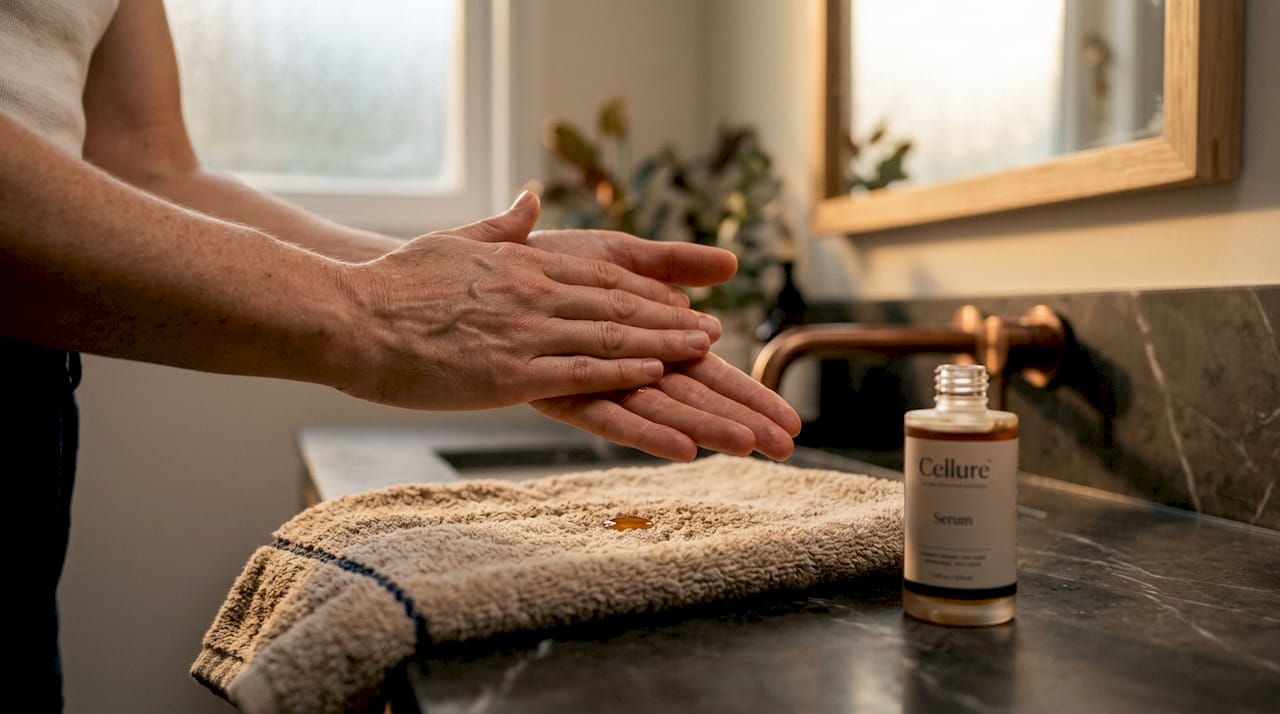
One preparation step most guides skip: warm the serum before it touches your face. After dispensing the correct amount into your palm, press both hands together for three to five seconds. This brings the formula to skin temperature, which helps it spread without dragging and reduces the shock of a cold product on reactive skin.
| Item | Why it matters |
|---|---|
| Gentle cleanser | Clears the skin surface so serum contacts skin directly |
| Toner | Adds light hydration and balances pH for better serum uptake |
| Serum (dropper or pump) | Delivers active ingredients; dropper allows precise dosing |
| Clean, warm hands | Warms product and enables gentle pressing technique |
| Slightly damp skin | Improves serum spreadability and absorption speed |
How to apply serum step by step
This is where technique separates results from wasted product. Follow this sequence every time.
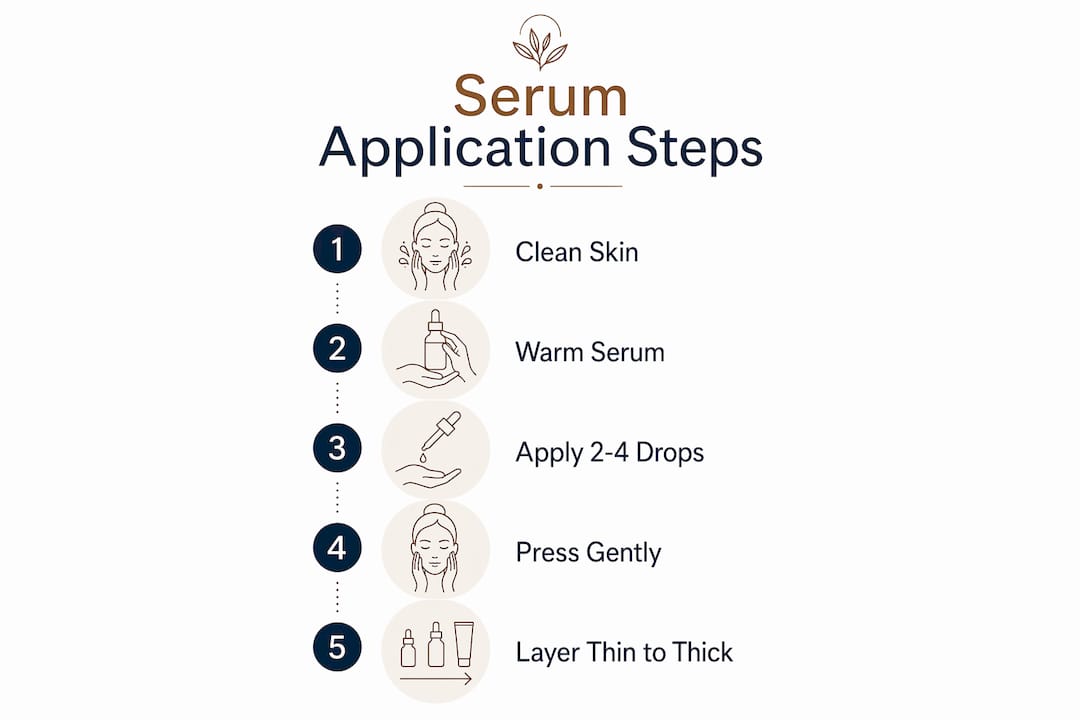
- Cleanse your face with a gentle cleanser and pat skin until it is damp, not dry.
- Apply toner if it is part of your routine. Wait until it has absorbed and skin feels slightly damp but not wet.
- Dispense 2 to 4 drops of serum into your palm. Garnier and Glamour both recommend this amount as sufficient for full-face coverage without waste.
- Warm the serum by pressing both palms together for a few seconds.
- Press and pat the serum onto your face starting at the center and working outward. Cover your forehead, nose, cheeks, chin, and then extend down to your neck and décolleté.
- Never rub. Rubbing creates friction that disrupts the skin barrier and pushes product off the skin rather than into it.
- Wait 30 to 60 seconds before moving to the next product. Experts Dr. Verma and Dr. Shotter advise using a tactile cue rather than a strict timer: when your skin no longer feels wet or sticky, it is ready for the next layer.
- Apply moisturizer to seal the serum in and prevent moisture loss.
- Finish with SPF in the morning as your final step.
If you use more than one serum, the thinnest-to-thickest layering rule applies without exception. A lightweight vitamin C serum goes on before a thicker peptide serum. This order keeps lighter, water-based formulas in contact with the skin surface first, where they absorb before a denser product creates a barrier on top.
Pro Tip: If you use a vitamin C serum in the morning, apply it on slightly damp skin before moisturizer and SPF. This maximizes antioxidant protection and absorption at the same time.
Here is a quick comparison of correct versus incorrect technique so you can spot what to fix:
| Technique | Incorrect method | Correct method |
|---|---|---|
| Amount | Pumping 6 to 8 drops for “better coverage” | 2 to 4 drops warmed in palms |
| Skin condition | Applying to fully dry skin | Applying to slightly damp skin |
| Motion | Rubbing in circular motions | Gentle pressing and patting |
| Layering order | Thick serum before thin serum | Thin to thick, lightest formula first |
| Wait time | Applying moisturizer immediately after | Waiting until skin is no longer sticky |
For a deeper look at serum layering order and timing, Cellure’s guide breaks down the logic behind each step with specific product pairings.
What are the most common serum application mistakes?
Most serum problems trace back to a short list of fixable errors. Knowing what they are saves you product, money, and frustration.
- Using too much serum. Applying more than 2 to 4 drops does not increase results. It leaves a sticky residue on the skin surface and wastes a product that is often expensive per milliliter.
- Applying to dry skin. Fully dry skin has a tighter surface structure. Serum applied to dry skin sits on top longer before absorbing, which reduces how much active ingredient reaches the deeper layers where it does its work.
- Rubbing instead of pressing. Aggressive rubbing breaks down the skin barrier over time and physically moves product away from where you placed it. Pressing keeps the formula in place and drives it in.
- Layering too fast. Pilling happens when you apply a second product before the first has absorbed. The two formulas ball up on the surface instead of sinking in. The fix is patience: 30 seconds between lighter layers, up to 3 minutes before sunscreen.
- Mismatching textures. Heavier silicone-rich moisturizers applied directly over a water-based serum that has not fully absorbed will trap the serum on the surface rather than letting it penetrate. Match your layering to the thin-to-thick principle and let each layer set before adding the next.
Pro Tip: If you notice your products pilling, slow down. The problem is almost never the products themselves. It is the timing between them. Add a 30-second pause after each layer and the pilling will stop.
For those with reactive skin, Cellure’s sensitive skin serum guide covers gentle application techniques that reduce irritation without sacrificing results.
What to do after applying serum
Serum is not a standalone product. It is the targeted treatment step in a larger routine, and what you apply after it determines how much of that treatment your skin actually keeps.
The correct morning sequence runs: cleanser, toner, serum, moisturizer, then sunscreen as the final step. SPF must always be last in the morning routine. Applying moisturizer or anything else on top of sunscreen dilutes the UV filter and reduces its protection factor. Sunscreen is the seal on everything underneath it, including your serum.
Your post-serum steps in the morning:
- Moisturizer: Apply once serum is no longer sticky. Choose a formula that complements your serum texture. A water-based serum pairs well with a lightweight gel moisturizer. A richer peptide serum can support a slightly heavier cream.
- Sunscreen: Apply as the absolute last step. Wait 1 to 3 minutes after moisturizer before applying SPF to allow full absorption.
- At night: Drop sunscreen from the sequence entirely. Your nighttime routine ends with moisturizer or a dedicated night cream. Some people add a facial oil as the final step at night, which goes on after moisturizer.
The tactile cue system works here too. When your moisturizer no longer feels wet on the skin, your face is ready for SPF. This approach is more reliable than counting seconds, especially when your routine changes with seasons or product formulas. For a full breakdown of routine sequencing for aging skin, Cellure’s guide covers morning and evening steps in detail.
Key takeaways
Correct serum application requires clean, slightly damp skin, 2 to 4 drops of product pressed in gently, and a strict thin-to-thick layering order with 30-second pauses between each step.
| Point | Details |
|---|---|
| Skin prep matters | Apply serum to slightly damp skin for faster, deeper absorption. |
| Dose correctly | Use 2 to 4 drops per application; more product does not mean better results. |
| Press, never rub | Patting and pressing keeps serum in place and protects the skin barrier. |
| Layer thin to thick | Apply the lightest serum first; wait until skin is no longer sticky before the next layer. |
| Seal and protect | Follow serum with moisturizer, then SPF as the final morning step. |
Why the method matters more than the product
I have tested dozens of serums over the years, and the single biggest variable in whether a formula delivers visible results is not the ingredient list. It is how the person applies it. I have seen people spend significant money on peptide and tranexamic acid serums and then rub them in like a hand cream, wondering why their skin looks the same after three months.
The shift I notice most in my own routine is the difference between applying serum to damp versus dry skin. On damp skin, the product spreads in seconds and the skin looks visibly plumper within minutes. On dry skin, the same formula sits on the surface and the finish looks dull. That single change, keeping skin slightly damp before application, is the highest-return adjustment most people can make without buying anything new.
Layering order is the second thing I would push anyone to get right. The thin-to-thick rule is not arbitrary. It reflects how different molecular weights move through the skin. A lightweight vitamin C formula has small molecules that need direct skin contact to absorb. Put a thicker serum on first and you have physically blocked the path. I have found that following this order consistently, even when I am tired and rushing, produces noticeably better skin texture over weeks compared to applying products in random order.
Patience is the hardest part. Waiting 30 seconds between layers feels pointless until you stop doing it and watch your products pill. Consistency and technique compound over time. The skin you see in three months reflects the habits you build today.
— Sara
Build your routine with Cellure
Knowing the correct serum application steps is only half the equation. The other half is using formulas built to work within that routine. Cellure’s Complete Skin Repair Kit is designed around the exact layering logic covered in this guide. Each serum in the kit is formulated with bioactive ingredients including peptides and polynucleotides that absorb efficiently on slightly damp skin and layer cleanly without pilling. The kit takes the guesswork out of building a serum routine from scratch, giving you a sequenced set of products that work together from the first application. If you are ready to put the right technique behind the right formulas, the Complete Skin Repair Kit is the place to start.
FAQ
How much serum should I use per application?
Use 2 to 4 drops or a pea-sized amount per application. More product does not improve results and often leaves a sticky residue that interferes with the next layer.
Should I apply serum to wet or dry skin?
Apply serum to slightly damp skin, not soaking wet and not fully dry. Slightly damp skin allows the formula to spread evenly and absorb faster into the outer skin layer.
How long should I wait between serum and moisturizer?
Wait until your skin no longer feels wet or sticky, typically 30 to 60 seconds for lighter serums. This tactile cue is more reliable than a fixed timer and prevents product pilling.
Can I use two serums at the same time?
Yes. Apply them in thin-to-thick order, starting with the lightest, most watery formula first. Wait 30 seconds between each serum before applying the next to prevent pilling and allow each layer to absorb.
When should I apply sunscreen in my routine?
Sunscreen is always the final step in the morning routine, applied after moisturizer. Applying anything on top of SPF reduces its UV protection, so nothing goes over it in your morning sequence.