


Heal Over Exfoliated Skin in 2–4 Weeks With a Ceramide First Routine
If your face stings when you apply plain moisturizer, stop every acid, scrub, and retinoid today. Switch to a bare-minimum routine: a gentle cleanse (only if needed), a bland moisturizer, and sun protection. Let tolerability, not the calendar tell you when your skin is ready for anything more.
TL;DR:
- Stop all acids, retinoids, scrubs, and harsh cleansers immediately to prevent further barrier damage and focus on gentle, minimal skincare.
- Use a fragrance-free moisturizer with ceramides, cholesterol, and humectants, and apply petrolatum to dry, cracked areas for effective barrier repair.
- Continue sun protection with a mineral sunscreen and avoid chemical formulas if the skin is raw or sensitive, delaying application until irritation subsides.
- Wait at least three to five days of irritation-free routine before reintroducing active products, starting with once-weekly use and patch testing.
- Seek dermatologist care if redness, pain, or peeling persist beyond two to four weeks or if signs of infection appear.
Table of Contents
- What Does Over-Exfoliated Skin Look and Feel Like?
- What Should You Stop Right Now?
- Which Moisturizers Actually Rebuild the Skin Barrier?
- Do You Still Need Sunscreen on Irritated Skin?
- How Long Does It Take to Heal a Damaged Skin Barrier?
- When Is It Safe to Restart Exfoliation?
- Where Do Targeted Serums Fit After the Barrier Heals?
- Can Diet and Hydration Speed Up Skin Repair?
- What Mistakes Make Over-Exfoliation Worse?
- What Are the Best Soothing Ingredients Beyond Moisturizer?
- How Do You Manage Redness, Peeling, and Sensitivity Day to Day?
- Over-the-Counter Options vs. When You Need a Dermatologist
- A Note From Sara
- How Cellure Supports Skin Once the Barrier Is Stable
- Sources
- FAQ
What Does Over-Exfoliated Skin Look and Feel Like?
Over-exfoliation announces itself fast, and it usually feels worse than it looks. The clearest signal is a stinging or burning sensation when you apply products that never used to bother you, including plain moisturizer or even water.
Watch for this cluster of symptoms:
- Persistent redness that doesn’t fade between applications
- A tight, raw feeling across the cheeks, nose, or forehead
- Flaking or peeling that looks patchy rather than smooth
- New breakouts, bumps, or a rash-like texture
- Sudden sun sensitivity, where a few minutes outside leaves skin flushed
The tolerability test is the fastest way to confirm the diagnosis: if a fragrance-free moisturizer or plain water stings on contact, your barrier is still reactive, no matter how “fine” your skin looks in a mirror. Some cases go further and need faster attention. Raw or open skin, deep cracks, a spreading rash, fever, or any sign of pus or infection means you should call a dermatologist rather than try to self-treat.
What Should You Stop Right Now?
The fastest way to heal over-exfoliated skin is to remove every product and tool that’s still injuring the barrier, then give it something calm to work with.
Stop these immediately:
- AHAs, BHAs, and PHAs, including toners, serums, and treatment pads
- Physical scrubs, exfoliating brushes, or cleansing devices
- Retinoids and retinol, even “gentle” or encapsulated versions
- Alcohol-based toners or astringents
- Harsh foaming or sulfate-heavy cleansers
Once you’ve cleared the offending products, the first-aid steps are simple. Use a cool (not icy) compress for a few minutes to calm active burning. Rinse with lukewarm water, never hot. Cleanse only if there’s makeup, sunscreen, or debris to remove, and use your fingertips instead of a washcloth. Pat skin dry with a soft towel rather than rubbing, and resist picking at any flaking skin, since that pulls away partially healed tissue underneath.
A short course of over-the-counter hydrocortisone (1%) can calm inflammation for a few days if redness is significant, but it isn’t meant for long-term use. If pain is sharp, skin cracks open, or nothing improves within a few days, a dermatologist visit is worth the appointment.
Pro Tip: Keep your entire recovery routine under three products for at least a week. Every extra step is another chance to reintroduce a stinging ingredient by accident.
Which Moisturizers Actually Rebuild the Skin Barrier?
Barrier repair depends on layering three ingredient types that do different jobs, not just slathering on “more moisturizer.” Humectants like glycerin and hyaluronic acid pull water into the outer skin layer. Emollients like ceramides and fatty acids fill in the gaps between skin cells, smoothing the surface. Occlusives like petrolatum and dimethicone sit on top and physically block water loss.
A randomized controlled trial testing a topical pseudo-ceramide (pCer) spray found that twice-daily use over four weeks improved stratum corneum water content, reduced transepidermal water loss, and reduced visible scaling in people with impaired, sensitive skin barriers. A 2024 randomized study reported the same pattern of improvement, which makes ceramide-containing formulas one of the better-supported choices when your barrier is compromised rather than just dry.
Practical selection rules that matter more than marketing claims:
- Pick fragrance-free formulas; fragrance is a leading trigger for reactive skin
- Check the ingredient list for ceramides, cholesterol, or fatty acids, not just “barrier repair” on the label
- Reserve occlusive patching (a thin layer of petrolatum-based ointment) for the driest, most cracked spots overnight
- Choose textures you can actually apply without wincing. If a lotion stings, a thicker balm often does not
The American Academy of Dermatology notes that petrolatum is among the most effective ingredients at cutting transepidermal water loss, which is why it shows up in nearly every dermatologist-recommended recovery ointment.
Do You Still Need Sunscreen on Irritated Skin?
Yes, and skipping it is one of the more common mistakes people make while healing. A compromised barrier is more prone to pigment changes and discomfort when exposed to UV light, so sun protection isn’t optional just because it’s uncomfortable right now.
If sunscreen stings on application, don’t force it. Try these instead:
- Stay in the shade during peak hours, roughly 10 a.m. to 4 p.m.
- Wear a wide-brimmed hat and UPF-rated clothing for real coverage
- Delay sunscreen application until basic moisturizer stops stinging, then patch test
- Once tolerated, try a bland, fragrance-free mineral sunscreen (zinc oxide or titanium dioxide) rather than a chemical formula, which tends to be gentler on reactive skin
When you do apply sunscreen, pat it on gently and never rub it directly into raw or open patches.
How Long Does It Take to Heal a Damaged Skin Barrier?
Mild irritation, the kind that’s uncomfortable but not raw, often improves within a few days of stopping actives and switching to a bland routine. More significant barrier disruption, marked by persistent redness, burning, or visible peeling, typically takes two to four weeks or longer to fully settle.
Judge your progress by tolerability trends, not a fixed date on the calendar. If plain moisturizer stopped stinging three days ago and redness is fading, you’re likely ahead of the average timeline. If you’re still reacting to basic products after two to four weeks, or you notice pain, a spreading rash, or signs of infection, that’s your cue to see a dermatologist rather than wait it out longer.
When Is It Safe to Restart Exfoliation?
Rushing back into actives is the single most common way people re-injure skin that was just starting to recover. Wait for three to five consecutive days where water, cleanser, moisturizer, and sunscreen all apply without any stinging or discomfort before introducing anything active again.
- Pick one product to reintroduce, not a stack of three
- Start at once weekly, not daily, regardless of what the label suggests
- Patch test on a small area (like your jawline) 24 hours before applying it to your whole face
- Watch for returning redness or stinging over the following two applications before increasing frequency
Never combine a leave-on acid with an exfoliating cleanser, and never layer multiple actives in the same session. That stacking is exactly what causes over-exfoliation in the first place, and it’s easy to fall back into once skin looks normal again.
Where Do Targeted Serums Fit After the Barrier Heals?
The minimal routine above is the whole job during active recovery. Once your skin passes the tolerability test consistently for several days, that’s the window where more targeted formulas can support what your barrier has already rebuilt, not replace the repair work itself.
Some skincare brands formulate serums, including peptide, tranexamic acid, and polynucleotide-based options, for exactly this kind of layered introduction: patch test first, add one product at a time, and never combine a new active with anything else that could sting. Products aimed at hydration and calming tend to be tolerated sooner than brightening or firming actives, which are better saved for a fully stable barrier. For more on the biology behind this staging, see Cellure’s guide to skin barrier repair.
Can Diet and Hydration Speed Up Skin Repair?
What you eat and drink won’t undo the effects of over-exfoliation on its own, but it removes obstacles to the repair your skin is already trying to do. Skin cells rebuild the barrier using lipids and proteins, and both come from what you consume.
Adequate water intake supports overall skin hydration, though drinking extra water won’t compensate for a stripped topical barrier the way a ceramide-rich moisturizer will. Dietary fats matter more directly: omega-3 fatty acids, found in fish, walnuts, and flaxseed, contribute to the same lipid pathways that ceramides and fatty acids support topically. Protein intake matters too, since skin cell turnover depends on amino acids for building new tissue.
A few practical habits help during active recovery:
- Limit alcohol and very salty foods temporarily, since both can worsen dehydration and puffiness in already-inflamed skin
- Add a source of omega-3s a few times a week rather than relying on supplements alone
- Keep consistent water intake through the day instead of large amounts at once
None of this replaces the topical routine. Think of diet and hydration as removing friction from the process, while your moisturizer and sun protection do the actual barrier rebuilding.
What Mistakes Make Over-Exfoliation Worse?
The biggest mistake is treating irritation with more product instead of less. Dermatologists consistently point out that the instinct to “fix” reactive skin by adding a new serum or treatment usually backfires, since it introduces another potential irritant before the barrier has stabilized.
Other common missteps include:
- Switching products too fast. Trying a new “soothing” item every day or two makes it impossible to tell what’s helping and what’s still irritating you
- Over-cleansing. Washing your face multiple times a day to “start fresh” strips away the little protection that’s left
- Using hot water. It feels good in the moment but increases water loss and inflammation
- Testing tolerance with makeup or SPF too soon. Layering products before skin tolerates plain moisturizer restarts the reaction cycle
- Ignoring the neck and other exfoliated areas. People focus recovery on the face and forget that a body scrub or chemical peel pad caused the same damage elsewhere
The pattern behind nearly every mistake is impatience. Skin that’s actively healing needs fewer decisions made about it, not more creative ones.
What Are the Best Soothing Ingredients Beyond Moisturizer?
Beyond the humectant, emollient, and occlusive framework, a handful of specific soothing ingredients show up repeatedly in dermatology-backed skincare for a reason: they calm without adding exfoliating or sensitizing risk.
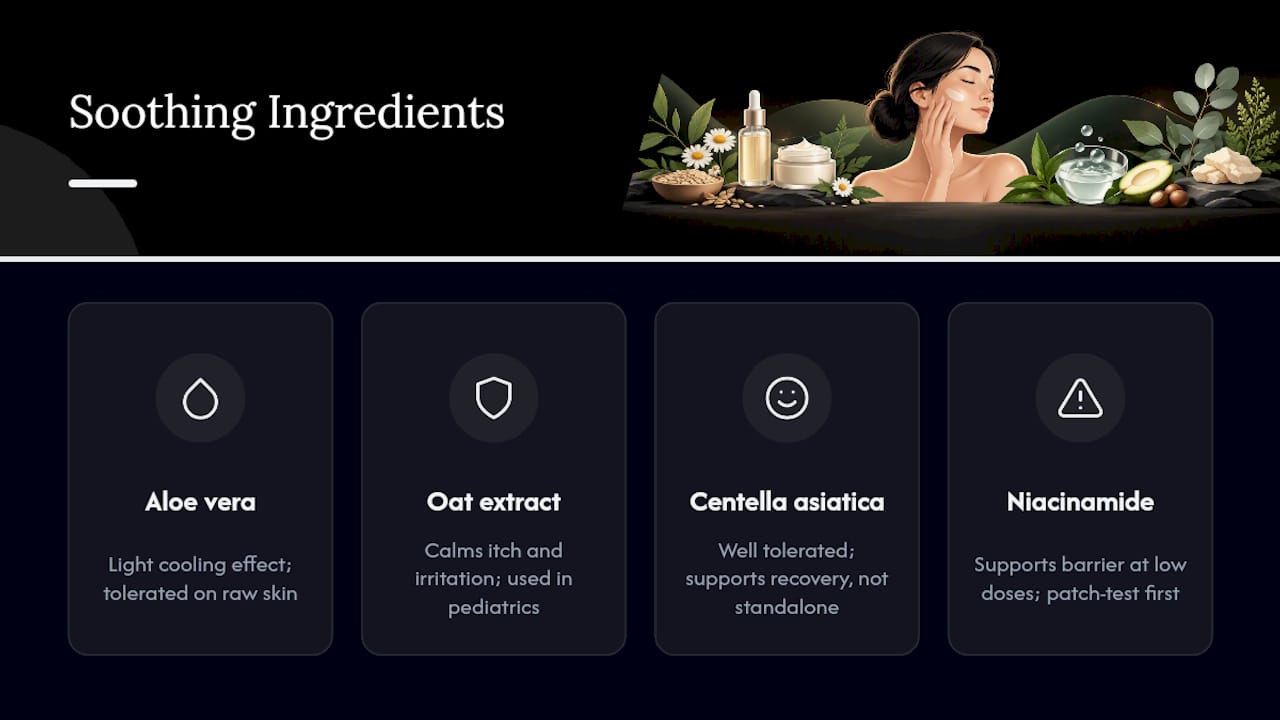
Aloe vera offers a light, cooling effect that many people tolerate even on raw or stinging skin, making it a reasonable first layer before a heavier moisturizer. Oat extract (often listed as colloidal oatmeal) has a long track record for calming itch and irritation, and it’s gentle enough that it’s used in pediatric eczema products. Centella asiatica (sometimes called cica) shows up in a lot of recovery-focused formulas because it’s well tolerated by reactive skin, though it works best as a supporting ingredient rather than a standalone fix. Niacinamide at low concentrations can help support barrier function, but it’s worth patch testing first since higher concentrations sometimes sting compromised skin.
The common thread across all of these: they add moisture or calm without any exfoliating action, unlike some “gentle” acids marketed for sensitive skin. Read labels carefully, since a product can list aloe vera prominently while still containing a low-dose acid further down the ingredient list.
How Do You Manage Redness, Peeling, and Sensitivity Day to Day?
Redness, peeling, and heightened sensitivity are three separate symptoms, and each responds a little differently to care. Redness usually calms fastest with cool compresses and consistent, undisturbed moisturizing. Resist the urge to check on it constantly by touching your face, since that mechanical irritation extends the timeline.
Peeling skin should never be picked, scrubbed, or helped along manually, even though it’s tempting once the edges start to lift. Let it shed on its own while keeping the area moisturized; picking removes cells that are still partially attached to healthy tissue underneath. A humidifier at night can help if peeling seems worse in dry indoor air.
Sensitivity, meaning that stinging reaction to products that used to feel fine, is the metric to track most closely. It typically fades gradually rather than resolving all at once. If sensitivity spikes rather than improves after a few days of the minimal routine, something in your remaining products, even a “gentle” cleanser, may still be too much for your current barrier state. Simplify further before adding anything back.
Over-the-Counter Options vs. When You Need a Dermatologist
Most cases of over-exfoliation respond well to over-the-counter care: a bland moisturizer, a short course of 1% hydrocortisone for inflammation, and consistent sun protection. These products handle the majority of mild to moderate cases within the recovery windows already described.
Professional care becomes the better option when over-the-counter steps stop being enough. A dermatologist can prescribe stronger barrier-repair formulations with ingredients like urea or higher-concentration ceramides, and can rule out conditions that mimic over-exfoliation, such as contact dermatitis or a fungal infection, which won’t improve with moisturizer alone no matter how long you wait.
Signs it’s time to book that appointment: pain that doesn’t ease with basic care, a rash that spreads rather than shrinks, any sign of infection like pus or warmth, or simply no meaningful improvement after two to four weeks of consistent minimal care. A dermatologist visit at that point isn’t overreacting. It’s the appropriate next step when self-care has done what it can.
A Note From Sara
Most over-exfoliated skin heals with a genuinely simple reset: stop the actives, moisturize consistently, protect from sun, and wait. Let tolerability, not the calendar tell you when to move forward. If your skin isn’t responding after a few weeks, that’s not a sign you’re doing it wrong. It’s a sign to bring in a dermatologist.
— Sara
How Cellure Supports Skin Once the Barrier Is Stable
Recovery itself stays simple: strip back to the basics, protect from sun, and give your barrier time. Cellure’s role starts after that groundwork is done, when your skin passes the tolerability test and you’re ready to support repair at a deeper level.
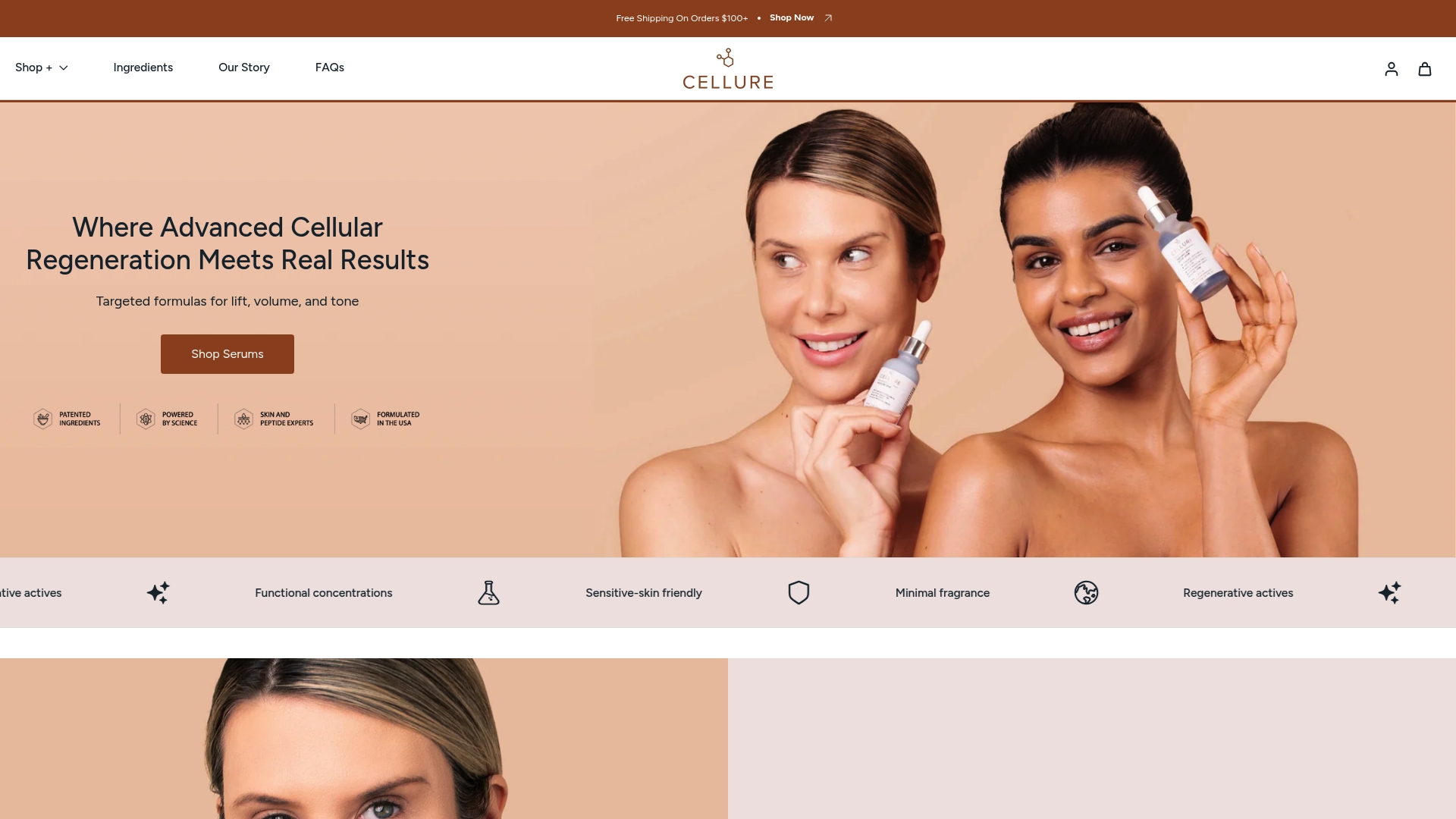
Cellure’s VOLUFILINE SERUM, PEPTIDE HYDRO LIFT SERUM, and TRANEXAMIC ACID PEPTIDE SERUM are each formulated with bioactive ingredients aimed at cellular repair rather than mechanical exfoliation, which makes them suited to the phase after basic barrier recovery, not during it. The Peptide Hydro Lift Serum tends to be the gentler starting point for hydration and calming, since it leans on humectant and peptide support rather than active brightening agents. Tranexamic Acid Peptide Serum, aimed at tone, is worth holding off on until your skin has passed several consecutive days of full tolerability. Patch test any new serum on your jawline first, introduce just one at a time, and never layer it with another active on the same day. The serums are offered as one-time purchases, and a lineup of repair-focused options is available on the best-sellers collection, where you can compare which formula matches where you are in recovery.
Sources
- Efficacy of Pseudo‑Ceramide Absorption Into the Stratum Corneum and Effects on Transepidermal Water Loss and the Ceramide Profile (PMC)
- Randomized study reporting improvements in SC water content and TEWL after pseudo-ceramide application (2024)
FAQ
What Is the Fastest Way to Heal Over-Exfoliated Skin?
Stop every acid, scrub, retinoid, and exfoliating tool immediately, then switch to a bare routine of gentle cleansing, bland moisturizer, and sun protection. Use tolerability, meaning whether basic products sting, as your guide, since that responds faster than waiting on a fixed number of days.
How Long Does It Take for Over-Exfoliated Skin to Heal?
Mild irritation often improves within a few days of stopping actives and simplifying your routine. More significant barrier disruption, with persistent redness or peeling, typically takes two to four weeks or longer, and you should see a dermatologist if there’s no improvement in that window.
What Is the Fastest Way to Heal a Damaged Skin Barrier?
Layering humectants, emollients, and occlusives works faster than any single product, since each targets a different part of barrier repair. A randomized trial found pseudo-ceramide formulas improved water content and reduced water loss within four weeks of twice-daily use.
What Is the Best Moisturizer for Over-Exfoliated Skin?
Look for a fragrance-free formula containing ceramides, cholesterol, or fatty acids alongside a humectant like glycerin or hyaluronic acid. For very dry or cracked spots, a thin layer of petrolatum-based ointment overnight is among the most effective options for cutting water loss while skin recovers.
When Should I Reintroduce Serums Like Peptides or Tranexamic Acid?
Wait until your skin passes several consecutive days without stinging from water, cleanser, or moisturizer before adding any targeted serum. Introduce one product at a time, patch test first, and start with hydrating or calming formulas before moving to brightening or firming actives like Cellure’s Tranexamic Acid Peptide Serum.