


Clinician Backed Skin Type Rules: Hyaluronic Acid vs Glycerin
Glycerin wins for deep, humidity-resistant hydration and barrier support, especially in dry or cold climates. Hyaluronic acid wins for lightweight surface plumping and that instant “quenched” look. Neither is universally better, and dermatology guidance increasingly points to using both, since they work at different depths of the skin and solve different problems.
TL;DR:
- Glycerin penetrates deeper into the skin and supports barrier repair, making it more reliable in dry or low-humidity environments.
- High-molecular-weight hyaluronic acid provides immediate surface plumping but depends on ambient humidity or sealing for effective hydration.
- Combining glycerin and multiple weights of hyaluronic acid offers both deep and surface hydration, particularly beneficial for aging or compromised skin.
- Using glycerin at concentrations above 10-15 percent can feel tacky or heavy, especially in humid conditions, but layering it correctly prevents this.
- A specialized kit can simplify skincare routine by providing pre-formulated products that balance the strengths of both humectants, reducing guesswork.
Table of Contents
- Hyaluronic Acid vs Glycerin: How Each One Actually Works
- Pros, Cons, and Formulation Trade-Offs
- Which One Should You Use, Based on Your Skin?
- How to Layer Glycerin and Hyaluronic Acid the Right Way
- Is It Safe to Use Every Day?
- Where Clinician-Backed Layering Fits Into Your Routine
- A Quick Three-Question Check
- A Simpler Way to Get Both, Already Balanced
- Sources
- FAQ
Hyaluronic Acid vs Glycerin: How Each One Actually Works
The difference comes down to size and behavior in water. Glycerin is a tiny molecule, roughly 92 daltons, small enough to move through the outer skin layer instead of just sitting on it. Once inside the stratum corneum, it supports aquaporin-3 water channels and boosts the skin’s own Natural Moisturizing Factor, the blend of amino acids and salts that keeps cells plump from within.
Hyaluronic acid plays a different game. It is not one fixed molecule but a range of molecular weights, and that range determines what it does. High-molecular-weight HA is too large to penetrate, so it sits on the surface, forms a film, and pulls water into the top layer of skin, which is why it delivers that immediate plumped look. Low-molecular-weight HA penetrates deeper but holds less water per molecule, trading visible bounce for reach.
That structural split explains a common complaint: HA serums that feel amazing indoors and disappointing on a dry flight. Surface-level HA depends partly on ambient humidity and works best when sealed under an occlusive, according to Cleveland Clinic. Glycerin does not have that dependency problem.
- Glycerin: small molecule, penetrates the epidermis, supports AQP3 and NMF
- High-MW HA: stays on the surface, plumps visibly, needs humidity or occlusion
- Low-MW HA: penetrates further, holds less water, less dramatic surface effect
Glycerin’s safety record is extensive. The Cosmetic Ingredient Review found glycerin listed in 15,654 cosmetic products in the FDA’s 2014 database, one of the most common humectants in skincare formulation, with a long-standing safety assessment behind it.
Pros, Cons, and Formulation Trade-Offs
Glycerin’s biggest strength is consistency. It works in dry Denver winters and humid Miami summers alike, and it plays well with almost every other active, including niacinamide, peptides, and HA itself, according to formulation guidance from Vogue. Its biggest weakness shows up at high concentrations: above roughly 10 to 15 percent in a formula, it can feel tacky or heavy, especially in humid weather.
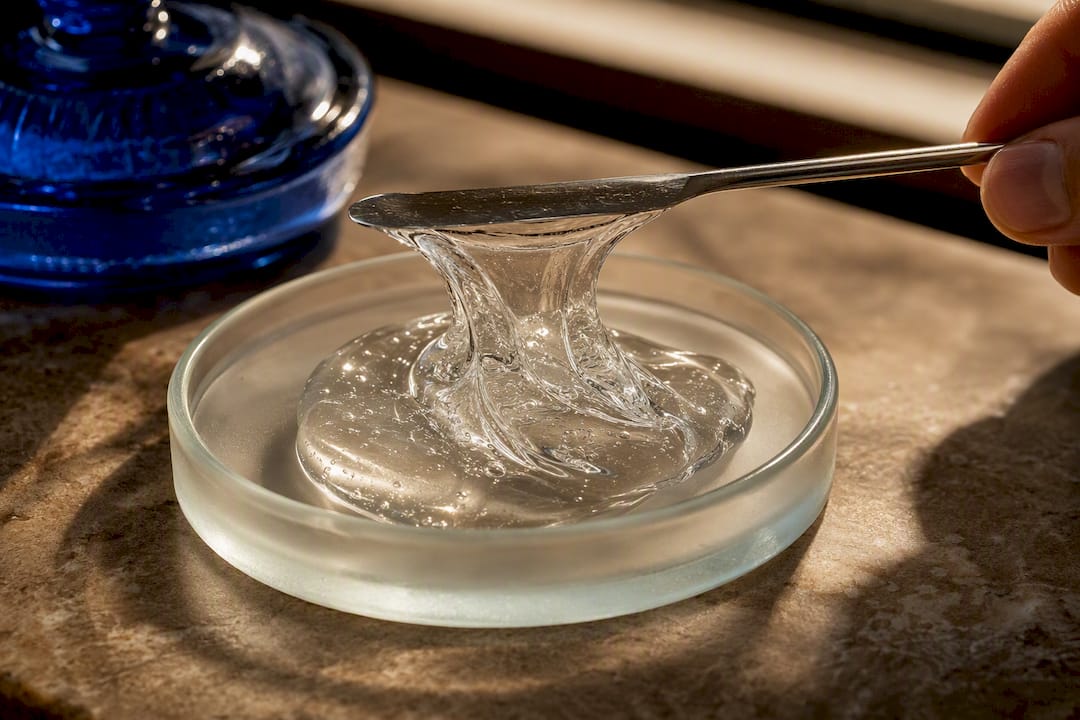
HA’s strength is texture. A well-formulated HA serum feels weightless, layers under makeup, and gives instant visual plumping that glycerin alone does not. Its weakness is that plumping is temporary and surface-level unless the formula includes multiple molecular weights or gets sealed with a moisturizer.
Reading the label helps you predict performance before you buy:
- Glycerin on an ingredient list, especially near the top, signals strong humectant power
- Sodium hyaluronate is a smaller, more stable, more penetrating form of HA
- Hydrolyzed hyaluronic acid signals very low molecular weight, built for penetration over surface plumping
- Plain hyaluronic acid without qualifiers usually means high molecular weight, surface-acting
Concentration matters more than the ingredient name alone.
Which One Should You Use, Based on Your Skin?
- Dry skin, winter, or low-humidity climates: Glycerin is the better primary humectant here because its performance does not depend on ambient moisture. HA still works, but only when sealed under a cream or balm. Skip it alone in a heated apartment in January.
- Oily or acne-prone skin: Lightweight, low-percentage HA or a modest glycerin concentration works better than a heavy, tacky humectant blend. Look for gel textures over rich creams.
- Sensitive or compromised barrier: Glycerin has one of the strongest tolerability track records of any humectant and actively supports barrier repair, which matters when the skin is reactive or freshly exfoliated.
- Aging skin: Multi-weight HA gives visible plumping around fine lines while glycerin handles the deeper hydration layer. This is where combining the two earns its keep.
- Frequent flyers and dry cabin air: Glycerin has a documented advantage in low-humidity environments, since dermatology research shows it maintains hydration performance across a range of humidity conditions where surface-level HA can underperform.
How to Layer Glycerin and Hyaluronic Acid the Right Way
- Apply to slightly damp skin. Humectants need moisture to grab onto. On bone-dry skin, they can pull water from deeper layers instead, an effect sometimes called paradoxical drying.
- Follow the thinnest-to-thickest rule. Humectant serums go on before creams and oils, right after cleansing while skin still holds a bit of water.
- Layer HA before glycerin-rich moisturizer, or use a formula that combines both, so the multi-weight HA plumps the surface while glycerin locks in deeper hydration underneath your moisturizer.
- Always seal with an occlusive in dry air. A single-application trial testing a fluid combining HA, glycerin, and Centella asiatica showed a hydrating, barrier-improving effect lasting up to 24 hours, largely because the formula paired humectants with ingredients that hold that water in place.
Pro Tip: If a glycerin serum feels sticky, you likely applied too much or skipped the damp-skin step. A thin layer on damp skin, sealed with a light moisturizer, almost always fixes tackiness without losing hydration.
For a full breakdown of ordering products correctly, Cellure’s layering guide walks through timing between steps.
Is It Safe to Use Every Day?
Both ingredients have strong track records. The Cosmetic Ingredient Review’s safety assessment backs glycerin’s use across thousands of formulations, and it remains one of the least irritating humectants available. Hyaluronic acid is naturally present in the body, and topical reactions are rare.
- Irritation usually comes from other ingredients in a formula, not the humectant itself
- A too-sticky feel signals excessive glycerin concentration or a poorly balanced formula
- Preservative systems and added fragrance are more common irritation sources than the humectants
- Patch-test any new serum on your inner arm for 24 to 48 hours before applying to your face
If your barrier is already compromised, from over-exfoliation, retinoid use, or a reactive flare, talk to a dermatologist before adding new actives, even ones considered generally gentle.
Where Clinician-Backed Layering Fits Into Your Routine
Timing separates a good routine from a great one. Applying HA to damp skin and following with a moisturizer or occlusive, as Harvard Health recommends, prevents the plumping effect from fading within an hour.
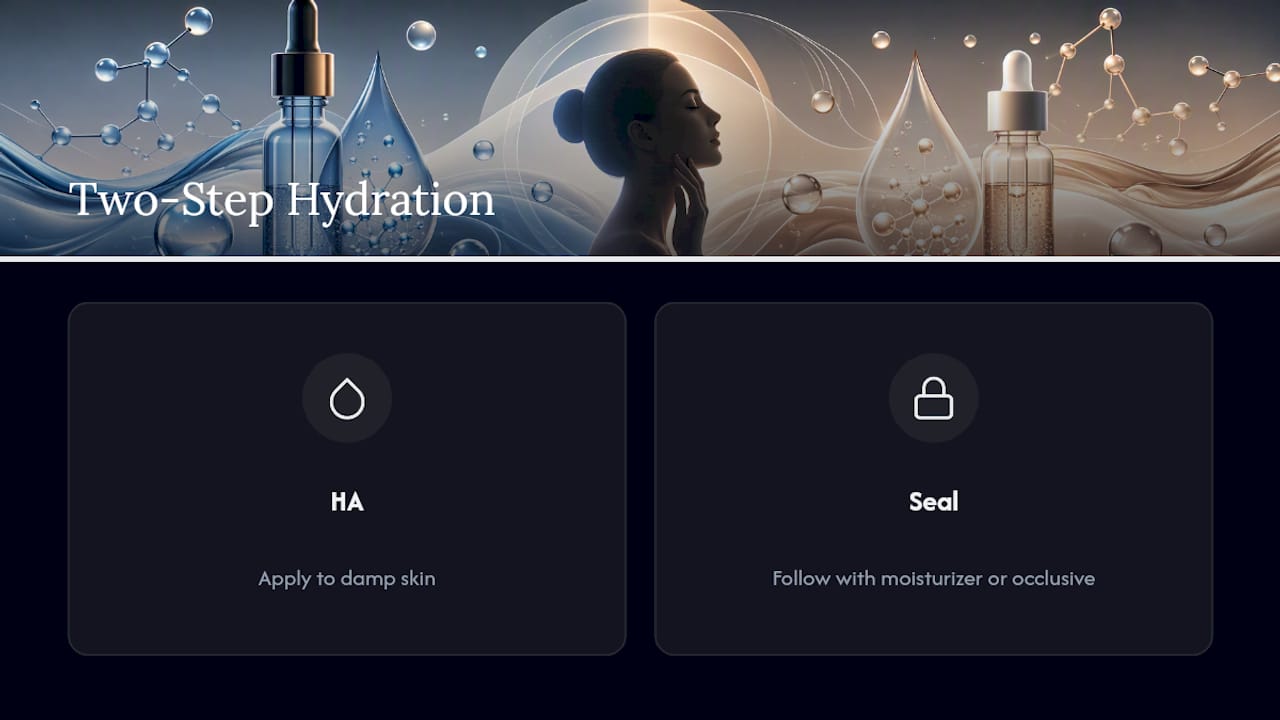
That principle is why some formulations pair humectants like HA with barrier-repair actives, peptides, and polynucleotides rather than relying on a single ingredient. Aging or compromised skin typically needs both the surface plumping and the deeper repair working together. For a closer look at hydration’s role in barrier recovery, see Cellure’s guide to hydration and skin repair.
A Quick Three-Question Check
Ask yourself: How dry is my climate? How oily is my skin? Do I want lightweight or richer texture? Dry climate points to glycerin, oily skin points to lightweight HA, and rich texture preference points toward layering both. Most people land on combination use, since the two work at different depths.
— Sara
A Simpler Way to Get Both, Already Balanced
Buying glycerin and HA as separate serums means guessing at compatible concentrations and hoping your layering order actually works. Cellure’s Complete Skin Repair Kit removes that guesswork by combining hydrating humectants with barrier-repair actives in concentrations already formulated to work together.
The kit is built around three pieces that cover the full hydration and repair cycle:
- A hydrating serum blending multi-weight HA with glycerin for both surface plumping and deeper moisture support
- A barrier cream with occlusive properties to seal hydration in, particularly useful in dry or low-humidity months
- Clinician-style usage notes on timing and layering order, so you are not guessing which product goes first
If you are rebuilding a compromised barrier or dealing with aging-related volume loss, a kit formulated to work as a system beats assembling separate products and hoping the percentages line up. Visit the Complete Skin Repair Kit page to see the full ingredient breakdown, or reach out to Cellure’s customer support with questions about which formulation suits your skin type.
Sources
- Hyaluronic acid: What it is, benefits, how to use & side effects — Cleveland Clinic
- Clinical trial: hydrating fluid with HA, glycerin, and Centella asiatica (PMC)
- Dermatology study noting glycerin’s effectiveness across humidity conditions (PubMed)
- Hyaluronic acid for skin: benefits, how to use, and side effects — Harvard Health
FAQ
Is glycerin better than hyaluronic acid?
Neither is categorically better. Glycerin offers more consistent, humidity-resistant hydration, while hyaluronic acid gives faster surface plumping. Many dermatology-backed formulas combine both.
Can glycerin and hyaluronic acid be used together?
Yes, and it is often the better strategy. A clinical trial combining both ingredients in one formula showed a hydrating effect lasting up to 24 hours after a single application.
Is glycerin good for wrinkles?
Glycerin does not fill wrinkles directly, but by keeping the skin barrier well hydrated, it supports a smoother-looking surface over time, especially when paired with plumping ingredients like multi-weight HA.
Why do some people avoid glycerin?
The main complaint is a sticky or tacky feel at high concentrations, particularly in humid weather. Applying to damp skin in a thinner layer usually resolves that issue without losing hydration benefits.
Which is better for oily or acne-prone skin?
Lightweight, low-concentration hyaluronic acid tends to feel less heavy on oily skin than a high-percentage glycerin formula, though a modest amount of glycerin is still well tolerated by most skin types.