


Facial Serum Ingredients List: What Every Label Tells You
TL;DR:
- Reading a facial serum’s ingredients list reveals the true potency, as key actives appear within the top five to seven ingredients.
- Understanding ingredient positioning helps assess product effectiveness, concentration, and potential for irritation, especially for sensitive skin types.
Most people pick a facial serum based on the front of the bottle. That’s the marketing side. The real story is on the back, in the ingredients list, where the actual formula lives. Knowing how to read a facial serum ingredients list changes how you shop, how you layer products, and ultimately how your skin responds. This guide breaks down the most important facial serum active ingredients, explains what they actually do, and gives you a clear method for telling apart a genuinely effective formula from one that’s all promise and no performance.
Table of Contents
- Key takeaways
- 1. How to read a facial serum ingredients list
- 2. Niacinamide
- 3. Vitamin C (L-ascorbic acid)
- 4. Hyaluronic acid
- 5. Retinol and retinoids
- 6. Peptides
- 7. Salicylic acid (BHA)
- 8. Glycerin and panthenol
- 9. Ceramides
- 10. Azelaic acid
- 11. Ingredient comparison by skin type
- 12. Practical tips for choosing a serum based on the label
- My take on what ingredient lists really reveal
- How Cellure puts ingredient transparency into practice
- FAQ
Key takeaways
| Point | Details |
|---|---|
| Order signals concentration | The first 5 to 7 ingredients make up roughly 80 to 90% of the formula’s total weight. |
| The 1% line is your benchmark | Ingredients listed after preservatives like phenoxyethanol are likely present in trace amounts only. |
| Active ingredients need the right dose | Concentration thresholds matter. Niacinamide works best around 5%. Vitamin C needs 10 to 20% to be effective. |
| Simpler routines outperform stacking | Layering too many actives without guidance increases irritation risk and can damage your skin barrier. |
| Match ingredients to skin concern | Dry skin needs humectants and ceramides. Oily or acne-prone skin benefits from BHAs and niacinamide. Aging skin responds to retinoids and peptides. |
1. How to read a facial serum ingredients list
Before you assess a single active ingredient, you need to understand the structure of the list itself. In the US and EU, cosmetic products must list ingredients in descending order by weight using INCI naming standards, which means International Nomenclature of Cosmetic Ingredients. Every ingredient gets its standardized Latin or chemical name, which is why “water” becomes Aqua and vitamin C becomes Ascorbic Acid.
The most useful thing to know is that the first 5 to 7 ingredients typically account for 80 to 90% of the formula by weight. That means if a serum claims to be powered by a prized active but you find it listed 15th, its actual concentration is likely negligible.
Here is what the structure usually looks like:
- Positions 1 to 3: Solvents and base carriers, usually Aqua, Glycerin, or silicone derivatives
- Positions 4 to 7: Primary actives and emollients in meaningful concentrations
- The 1% line: This is where ingredients drop below 1% of the total formula. Preservatives like Phenoxyethanol almost always appear near this cutoff
- Below the 1% line: Fragrance components, colorants, trace plant extracts, and any star ingredients a brand wants to mention for marketing purposes
Pro Tip: If a hero ingredient appears after the preservative in the list, it is almost certainly below 1% concentration. That does not mean it is useless, but it does mean you should not pay a premium for a serum that leads with that ingredient on the front label.
Understanding this system means you are no longer relying on the brand’s claims. You are reading the formula directly.
2. Niacinamide
Niacinamide (listed as Niacinamide or Nicotinamide) is one of the most practical and well-documented ingredients in modern serums. It addresses multiple concerns at once, balancing oil production, reducing redness, strengthening the skin barrier, and fading hyperpigmentation. That combination of functions is why it shows up in serums targeting everything from acne to aging.
The concentration matters significantly here. 5% niacinamide is the sweet spot for most skin types, delivering clear benefits across oil control, tone, and barrier function. Going above 10% does not compound those benefits and actually increases the risk of irritation for sensitive skin. If you see it listed among the top five ingredients in a serum, the concentration is likely in a meaningful range.
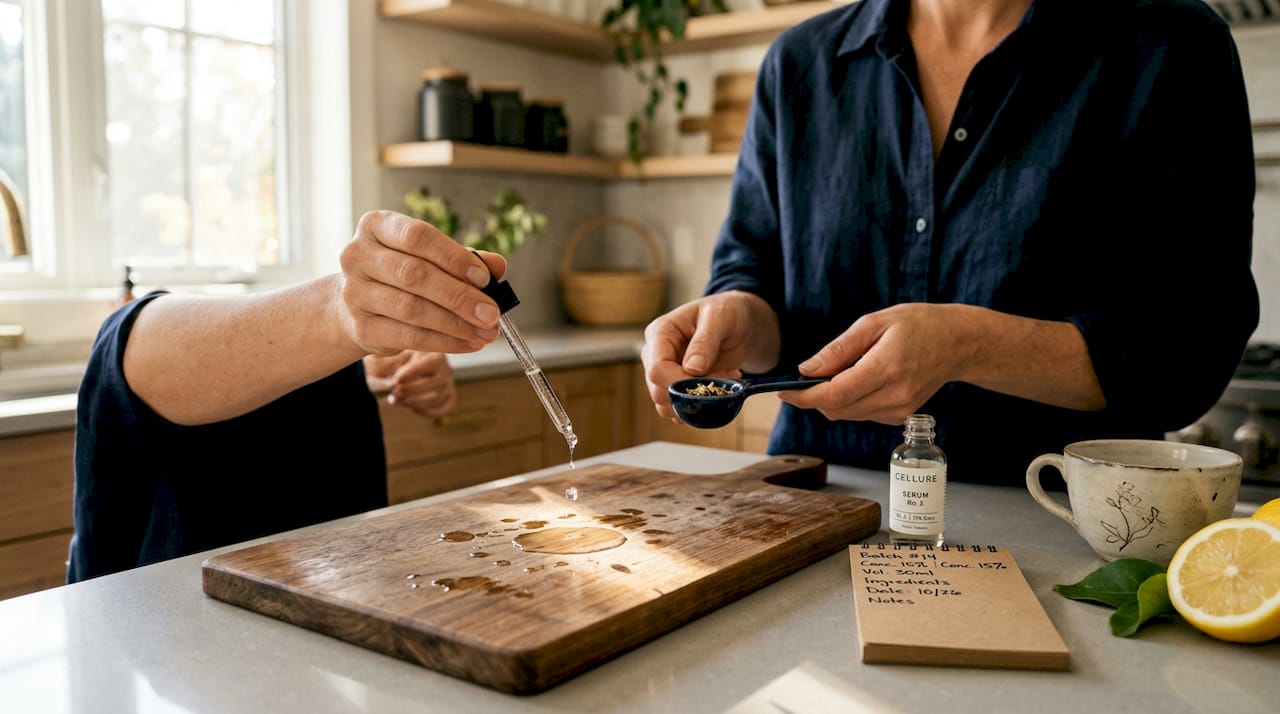
Niacinamide also plays well with most other actives, which makes it a reliable base in multi-ingredient formulas. You can read more about how niacinamide fits into anti-aging routines and what clinical practice says about its real-world results.
3. Vitamin C (L-ascorbic acid)
Vitamin C is one of the most researched and most misused ingredients in skincare. When you see L-Ascorbic Acid on a facial serum formula list, that is the most bioavailable form. It works by increasing collagen synthesis, reducing melanin production, and neutralizing oxidative stress. At the right concentration, topical vitamin C visibly reduces hyperpigmentation and improves skin texture over time.
The effective range is 10 to 20%. Below that, results are minimal. Above 20%, the formula becomes more irritating without meaningfully better outcomes. The challenge is stability. L-ascorbic acid degrades rapidly when exposed to air and light, which is why packaging matters as much as the formula itself. Look for opaque or airless packaging when choosing a vitamin C serum.
Vitamin C also needs support. Pairing it with ferulic acid and vitamin E stabilizes the formula and amplifies its antioxidant effect. When you see all three in the same serum, positioned early in the ingredient list, that is a genuinely well-built formula.
4. Hyaluronic acid
Hyaluronic acid (Sodium Hyaluronate on most labels) is in nearly every hydrating serum on the market. It functions as a humectant, drawing moisture toward the surface of the skin and reducing transepidermal water loss. That is a real and useful benefit. But hyaluronic acid works primarily as a topical moisturizer and does not penetrate deeply enough to stimulate collagen on its own.
What you see marketed as “plumping” or “volumizing” is surface hydration, not structural repair. That does not make it ineffective. Plump, hydrated skin genuinely looks healthier and smoother. But do not choose a serum based on hyaluronic acid alone expecting it to address fine lines at a cellular level.
Molecular size also matters. Lower molecular weight versions penetrate slightly deeper than high molecular weight forms. Some serums combine both, which gives a more layered hydration effect.
5. Retinol and retinoids
Retinol (Retinol on INCI labels) is the gold standard for addressing visible aging. It accelerates cell turnover, stimulates collagen, and reduces the depth of fine lines over consistent use. Stronger prescription retinoids like tretinoin work on the same pathway but at a more aggressive pace.
Because retinol is photosensitive and irritating at higher concentrations, effective OTC serums typically work in the 0.1% to 1% range. You will rarely see the percentage stated on the label, which is where ingredient position becomes your guide. If retinol appears in positions 10 through 15, its concentration is likely on the lower end. That is not bad for beginners, but it is useful information.
One non-negotiable rule: do not combine retinoids with AHAs, BHAs, or benzoyl peroxide in the same routine. That combination overwhelms the skin barrier and causes more damage than benefit. Retinoids pair well with peptides and hyaluronic acid instead.
6. Peptides
Peptides are short chains of amino acids that signal the skin to produce more collagen and improve firmness. Unlike retinol, they deliver these benefits without irritation, which makes them particularly suited to sensitive or reactive skin. Common ones to look for include Palmitoyl Tripeptide-1, Palmitoyl Tetrapeptide-7, and Acetyl Hexapeptide-3.
Their effectiveness depends on both concentration and formulation. Peptides are typically found in the mid-section of an ingredient list because they function at relatively low concentrations. If you are looking for peptide serums for sensitive skin, the placement of these names in the top half of the list is a strong quality signal.
Cellure builds several of its serums around peptide complexes precisely because they support cellular repair without triggering the sensitivity issues common to retinol-based products.
7. Salicylic acid (BHA)
Salicylic acid (Salicylic Acid in INCI notation) is the primary beta hydroxy acid used in serums targeting acne-prone and oily skin. It is oil-soluble, which means it penetrates pores and dissolves the debris and sebum that cause blackheads and breakouts. Effective concentrations run from 0.5% to 2%. At 2%, it is also approved for treating acne.
If you have oily skin with visible pores, salicylic acid appearing in the first ten ingredients of a serum is a strong functional signal. Be cautious about combining it with retinol or other exfoliating acids in the same routine. That kind of stacking without guidance is one of the most common ways people damage their skin barrier.
8. Glycerin and panthenol
These two are not glamorous, but they appear in almost every high-performing serum for good reason. Glycerin is one of the most effective humectants available and typically sits in the top three to five ingredients of a formula. Panthenol (provitamin B5) both hydrates and soothes, reducing redness and supporting healing.
Neither ingredient will turn heads in a marketing campaign, but formulas that position them prominently usually signal serious attention to the base layer of the product. A serum that skips them in favor of stacking in trendy actives often sacrifices feel, stability, and tolerance.
9. Ceramides
Ceramides are lipid molecules that make up the skin’s barrier. They appear on ingredient lists as Ceramide NP, Ceramide AP, Ceramide EOP, and others. In a serum, they work to repair and reinforce the barrier, which reduces moisture loss and protects against environmental damage.
They are especially relevant for dry, compromised, or mature skin. If the serum you are choosing for dry skin does not include ceramides or a lipid-replenishing ingredient, it may hydrate at the surface without addressing the deeper barrier issue. Ceramides are usually in the lower-mid section of an ingredient list but are effective even at relatively low concentrations.
10. Azelaic acid
Azelaic acid (Azelaic Acid) is antibacterial, anti-inflammatory, and mildly exfoliating, making it a dependable option for rosacea, post-inflammatory hyperpigmentation, and sensitive skin prone to breakouts. OTC serums typically use it at concentrations between 5% and 10%. Prescription formulations go up to 20%.
It is one of the few actives well-tolerated during pregnancy, which makes it a go-to when stronger options are not appropriate. If it appears in the first eight ingredients of a serum label, the concentration is likely in an effective range.
11. Ingredient comparison by skin type
This table gives you a quick side-by-side view of which facial serum active ingredients align with specific skin concerns, and where to expect them in a well-built formula.
| Ingredient | Best for | Typical list position | Key benefit | Use with caution if… |
|---|---|---|---|---|
| Niacinamide | Oily, combination, sensitive | Top 5 | Balances oil, reduces redness, repairs barrier | Rarely irritating; high doses over 10% can cause flushing |
| L-Ascorbic Acid | Dull, hyperpigmented, aging | Top 5 | Brightens, boosts collagen, antioxidant | Sensitive skin; unstable in poor packaging |
| Hyaluronic Acid | All skin types, especially dry | Top 3 | Surface hydration, plumping | Humidifier-dry climates can cause reverse moisture draw |
| Retinol | Aging, acne-prone | Mid to lower section | Cell turnover, collagen, fine lines | Beginners; do not mix with AHAs or BHAs |
| Peptides | Aging, sensitive | Mid section | Firmness, collagen signaling, gentle | Generally safe for all types |
| Salicylic Acid | Oily, acne-prone | Top 10 | Pore clearing, anti-acne | Do not combine with retinoids in same routine |
| Ceramides | Dry, mature, compromised | Mid to lower section | Barrier repair, moisture retention | No significant contraindications |
| Azelaic Acid | Sensitive, rosacea, hyperpigmented | Top 8 for OTC formulas | Anti-inflammatory, anti-pigmentation | Generally well-tolerated |
12. Practical tips for choosing a serum based on the label
Reading labels confidently is a skill, and a few habits make it much more reliable.
- Start with the base: If the first three ingredients are Aqua, Glycerin, and a proven emollient, the formulator prioritized skin health over flashy actives
- Find the preservative line: Preservatives like Phenoxyethanol or Ethylhexylglycerin mark where the formula drops below 1%. Anything after them is trace-level
- Cross-reference marketing claims: If the front says “powered by bakuchiol” and bakuchiol appears 18th on the list, the product is not really powered by it
- Avoid overloading actives: Layering multiple potent actives without professional guidance is one of the fastest ways to damage your barrier and trigger sensitivity
- Build combinations intentionally: Retinoids pair well with peptides and hyaluronic acid. Vitamin C pairs with ferulic acid and vitamin E. These combinations reinforce rather than conflict
- Ask about medical-grade options: For persistent concerns like melasma or significant laxity, prescription-grade or clinically formulated products go beyond what most OTC formulas can achieve
Pro Tip: Budget serums can be genuinely effective if the key active appears in the first six ingredients. An expensive serum with a trace-level active is a worse investment than a simple, well-positioned formula at a lower price.
My take on what ingredient lists really reveal
I’ve spent years reading ingredient labels, and the thing most people underestimate is how much the 1% line tells you about a brand’s actual intent. When I see a brand spending marketing dollars on an ingredient that appears 20th on the list, after the fragrance and the colorants, I do not see a results-driven product. I see a positioning exercise.
Hyaluronic acid is the clearest example of this in action. It is a genuinely useful humectant. But the hype around it as a “plumping” or “anti-aging” miracle has far outrun what it actually does. It works primarily as a topical moisturizer, not as a structural repair agent. Consumers who believe otherwise are often disappointed when six months of consistent use does not deliver the lift they expected.
What I’ve learned, and what I think gets drowned out by the constant cycle of trending ingredients, is that formulation science rewards simplicity and consistency more than novelty. A serum with five well-positioned actives at effective concentrations will outperform a 20-ingredient formula stacking trendy names that cancel each other out. For anyone choosing serums for anti-aging, the label is not just a legal requirement. It is the most honest thing a brand will ever tell you.
— Sara
How Cellure puts ingredient transparency into practice
Once you know how to read a facial serum ingredients list, the next step is finding formulas that hold up to that scrutiny. Cellure builds its serums around bioactive ingredients like peptides, tranexamic acid, and polynucleotides, and positions them where they need to be in the formula to actually work. There is no padding with trace-level hero ingredients. The Complete Skin Repair Kit is a strong example of that approach, combining targeted actives for firming, brightening, and barrier repair in concentrations that reflect the science. If you want formulas where what is on the front matches what is in the list, Cellure is worth a serious look.
FAQ
What order are ingredients listed on a serum label?
Serum ingredients are listed in descending order by weight under INCI labeling rules, meaning the ingredient with the highest concentration appears first.
How do I know if an active ingredient is in a meaningful amount?
If the active appears in the first five to seven positions, it likely accounts for a significant share of the formula. Ingredients listed after preservatives are almost always below 1% concentration.
Which serum ingredients should I avoid on sensitive skin?
Fragrance (Parfum), high concentrations of essential oils, and alcohol denat often trigger sensitivity. Potent actives like high-percentage AHAs and retinol also require caution and gradual introduction for reactive skin types.
Can I layer multiple active serums in one routine?
You can, but aggressive layering of actives without professional guidance regularly causes barrier damage. A better approach is using one primary active per routine and rotating others to alternate days or times.
What is the best ingredient for anti-aging serums?
Retinoids, peptides, and vitamin C at effective concentrations are consistently supported by research. For those with sensitive skin, peptides offer similar collagen-stimulating benefits without the irritation associated with retinol.