


EGF Safety for Skincare Buyers: 1 in 20 React, Check Storage
Topical EGF serums are generally well tolerated, and most people who use them experience nothing worse than mild, temporary irritation. In the largest observational study on EGF-based skincare, only 4.72% of users reported any adverse effect, and physicians judged the vast majority of applications were rated safe overall. The typical reaction, when one happens, is redness, itching, or a warm sensation that clears up on its own within a day or two.
TL;DR:
- About 1 in 20 users reports mild reactions such as redness or itching, but serious adverse effects from topical EGF are very rare.
- Reactions tend to be limited to irritation that occurs quickly and resolves within a couple of days, especially with proper patch testing and cautious use.
- The risk of EGF causing cancer or increasing sun sensitivity is unproven, with current evidence showing no link at cosmetic concentrations and limited penetration.
- Formulation stability and storage are crucial for safety and efficacy, with degraded serums potentially behaving unpredictably.
- Precautions include patch testing, gradual introduction, avoiding use on compromised skin, and following proper storage instructions.
Table of Contents
- What Side Effects Does Topical EGF Actually Cause?
- How Likely Are Side Effects? What the Research Says
- Does EGF Cause Cancer, Sun Sensitivity, or Other Serious Risks?
- Why Storage and Formulation Affect Safety, Not Just Results
- How Can You Reduce Your Risk of a Reaction?
- What Should You Do If You Have a Reaction?
- Why the Safety Conversation Around EGF Misses the Point
- Where Cellure Fits If You’re Ready to Try EGF
- Sources
- FAQ
What Side Effects Does Topical EGF Actually Cause?
The reactions people report with EGF serums follow a predictable, limited pattern. Erythema (redness) is the most common complaint, usually showing up within minutes to hours of application and fading within a day. Itching, a mild burning or heat sensation, and occasional dryness or flaking round out the typical list. In rare cases, especially with overuse or on already-compromised skin, a more widespread confluent dermatitis can develop, though this is far from the norm.
It helps to know the difference between the two ways skin can react:
- Irritation shows up fast, usually within the first few uses, and improves once you space out applications or stop.
- Allergic sensitization develops more slowly, sometimes after weeks of use, and tends to look more like true dermatitis with defined borders and lingering itch.
- Heat sensation is often just a sign the skin barrier is actively responding, not a red flag on its own.
What EGF does not typically cause is anything systemic. There’s no credible pattern of fatigue, headaches, or internal symptoms tied to topical use, because the molecule is applied at low concentration and largely stays where you put it.
Pro Tip: If a reaction shows up within the first two applications, it’s almost always simple irritation, not an allergy. Give your skin a few days off before deciding the product is wrong for you.
How Likely Are Side Effects? What the Research Says
The clearest picture comes from a multicenter observational study of 1,172 patients using EGF-based cream, where 4.72% reported mild adverse effects and the vast majority of cases were rated safe by treating physicians. That’s a low bar for concern, especially compared to stronger actives like retinoids or high-percentage acids.
By the numbers: Roughly 1 in 20 users reports a mild reaction to topical EGF, and nearly all cases are still classified as safe by the physicians overseeing them.
Broader systematic reviews of topical growth-factor preparations back this up, describing modest aesthetic benefit alongside a consistently low risk of adverse events. A separate 2021 review of EGF in aesthetic and regenerative medicine found similarly good tolerability across clinical and preclinical trials. The catch: formulations, doses, and follow-up periods vary a lot from study to study, so these numbers are directional, not exact. Risk also climbs when EGF goes onto skin that’s already compromised, whether from a recent laser treatment, microneedling, or an active flare of dermatitis.
Does EGF Cause Cancer, Sun Sensitivity, or Other Serious Risks?
The concern people raise most often, that a growth factor could theoretically encourage abnormal cell growth, remains largely theoretical and unproven at the concentrations and penetration levels used in cosmetic serums. EGF molecules are relatively large, penetration through intact skin is limited, and no clinical evidence currently ties topical use to skin cancer.
EGF also isn’t classified as a photosensitizer, so it won’t make your skin burn faster in the sun the way retinoids or certain acids can. That said, daily broad-spectrum sunscreen remains standard advice for anyone running a repair or anti-aging routine, EGF or not.
A few groups deserve extra caution before starting an EGF serum:
- Pregnant or lactating individuals, where safety data is limited and a doctor’s input matters.
- Children, who simply haven’t been studied for this use.
- Older adults with thinner or more reactive skin, who may see irritation more easily.
- Anyone with open wounds or heavily inflamed skin, where growth factors can behave unpredictably and healing needs are different from routine maintenance skincare.
Why Storage and Formulation Affect Safety, Not Just Results
EGF is a protein, and proteins are fussy. They’re prone to aggregation and lose activity quickly at room temperature, which is why formulation and stability challenges are a real issue in this category, not marketing fluff. Some industry testing suggests only 5% to 10% of the EGF added to a formula stays active at room temperature in certain products.
That instability cuts both ways. A degraded serum won’t just work less well, it can also behave less predictably on skin, since breakdown products and inconsistent concentrations are harder to test for tolerability.
Watch for these signals on packaging and product pages:
- Explicit refrigeration instructions after opening.
- A short stated shelf-life once the product is in use, often 30 to 90 days.
- Opaque, airless packaging that limits light and air exposure.
Pro Tip: If a serum promising EGF doesn’t mention storage or shelf-life anywhere on the label or site, that’s worth questioning, not ignoring.
How Can You Reduce Your Risk of a Reaction?
A little structure up front prevents most problems later.
- Patch test first. Apply a pea-sized amount to your inner forearm or behind your ear for 48 hours without washing the spot, then check for redness, swelling, or itch.
- Start slow. Use every other night for the first week before moving to nightly application.
- Layer with care. Apply EGF after cleansing and before heavier creams, and keep it separate in time from strong actives.
- Stagger strong ingredients. Use retinoids at night and EGF in the morning, or alternate nights entirely, to avoid stacking irritation.
- Wait after procedures. Give microneedling or laser treatments several days to a week of healing before reintroducing active serums, and check with your provider on timing.
- Reassess weekly. If skin looks calm after two weeks, you can gradually bring back other actives one at a time.
What Should You Do If You Have a Reaction?
Stop using the product the moment you notice redness that doesn’t fade, persistent itching, or swelling. Cleanse gently with lukewarm water, pat dry, and apply a bland, fragrance-free emollient to calm the barrier. A short course of over-the-counter 1% hydrocortisone can help with mild inflammation if it’s appropriate for your skin.
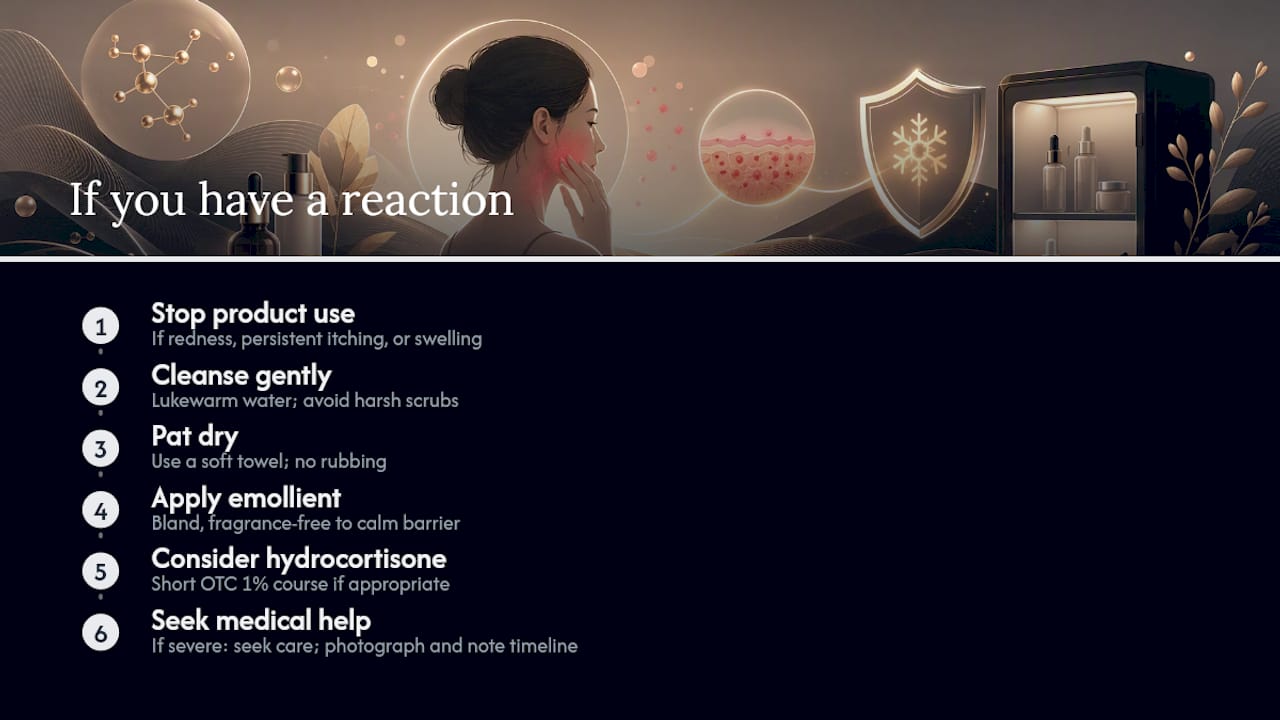
Seek medical attention if you notice a spreading rash, blistering, or any systemic symptom like difficulty breathing. Before any appointment, photograph the reaction and jot down when you applied the product, what else you’re using, and any recent procedures. That timeline speeds up an accurate diagnosis considerably.
Why the Safety Conversation Around EGF Misses the Point
Most of the anxiety around EGF safety centers on the wrong question. People ask “is this ingredient dangerous?” when the more useful question is “was this specific bottle formulated and stored well enough to still contain active, stable EGF?” A serum that’s degraded from heat exposure isn’t necessarily more dangerous, but it’s often less consistent, and inconsistency is where unexpected reactions creep in.
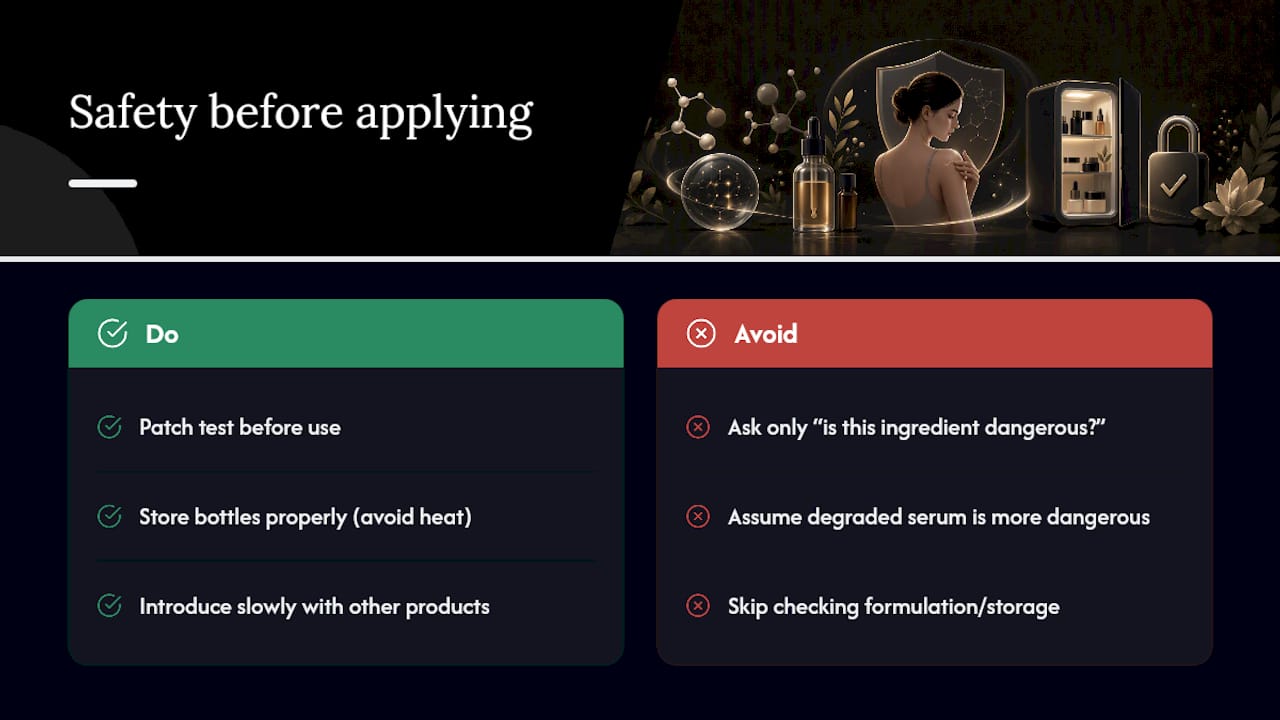
The data backs a calm approach: low adverse-event rates, no credible cancer signal, and a side-effect profile that’s mild compared to plenty of other actives on the market. The real safety work happens before you ever apply the product, in how you patch test, how you store it, and how you introduce it alongside everything else in your routine. For more on how EGF interacts with skin at a molecular level, our breakdown of EGF’s clinical evidence covers the mechanics in plain language.
[Sara’s professional skincare background and formulation experience inform this analysis, alongside clinical study data validating Cellure’s approach to stable, gentle EGF formulations.]
— Sara
Where Cellure Fits If You’re Ready to Try EGF
Cellure builds its serums around the same stability concerns raised throughout this article: proteins like EGF only help your skin if they survive long enough to work, and gentle formulation matters just as much as the active ingredient list. Cellure’s best-selling serums, including the Volufiline Serum, Peptide Hydro Lift Serum, and Tranexamic Acid Peptide Serum, are each priced at $60 and formulated with sensitive skin in mind.

If you want a fuller routine rather than a single serum, the Complete Skin Repair Kit bundles complementary actives designed to work together without overloading your barrier. Whichever you choose, read the storage and post-procedure guidance on the product page first, and check with a clinician if you’re recovering from a recent treatment or have reactive skin. Browse the collection and pick the serum that matches your skin’s current needs.
Sources
The safety claims here draw on a multicenter observational study of EGF-based cream tracking adverse events across more than a thousand patients, plus two systematic reviews covering topical growth-factor rejuvenation trials and EGF in aesthetic and regenerative medicine. Formulation and storage guidance comes from research on growth-factor stability challenges and commentary in Dermatology Times on real-world potency loss.
This article is general information, not a substitute for advice from a qualified doctor. Consult a qualified healthcare professional about your own circumstances before acting on anything here.
- The safety and efficacy of EGF-based cream for the prevention of radiotherapy-induced skin injury: results from a multicenter observational study
- Topical growth factor preparations for facial skin rejuvenation: A systematic review
FAQ
Is EGF Safe to Use on a Daily Basis?
Most formulations are designed for daily or near-daily use, and studies show low rates of adverse effects, but starting every other night and watching how your skin responds is the safer approach.
What Percentage of People Experience EGF Side Effects?
A large observational study found that 4.72% of users reported mild adverse effects like redness or itching, while 99.2% of cases were considered safe overall.
Can EGF Serums Cause Cancer?
No clinical evidence supports this; the concern remains theoretical, and current research finds topical EGF at cosmetic concentrations does not show a link to skin cancer.
Do I Need Sunscreen While Using an EGF Serum?
Yes. EGF isn’t known to increase sun sensitivity, but daily broad-spectrum sunscreen is still standard practice with any anti-aging or repair routine.
How Much Does Cellure’s EGF Serum Cost?
Cellure’s serums, including options containing EGF-supportive actives, are listed at $60 each on the best-sellers collection.
Recommended
Share