


Compromised Skin Barrier: Signs, Causes, and How to Heal It
Your skin barrier is the outermost layer of your skin, a thin but critical shield made of dead skin cells (called corneocytes) and lipids that act as the “mortar” holding everything together. According to the American Academy of Dermatology, this layer locks moisture in and keeps pathogens, toxins, and environmental irritants out. When that structure breaks down, you have a compromised skin barrier: moisture escapes, irritants get through, and your skin starts reacting in ways that feel impossible to fix.
The immediate effects are hard to miss:
- Persistent dryness that no moisturizer seems to touch
- Redness and visible inflammation
- Stinging or burning when you apply products
- Heightened sensitivity to things your skin previously tolerated
Understanding what went wrong is the first step to fixing it.
What causes a compromised skin barrier?
Barrier damage rarely comes from one source. It usually builds up from a combination of habits, environment, and biology working against you at the same time.
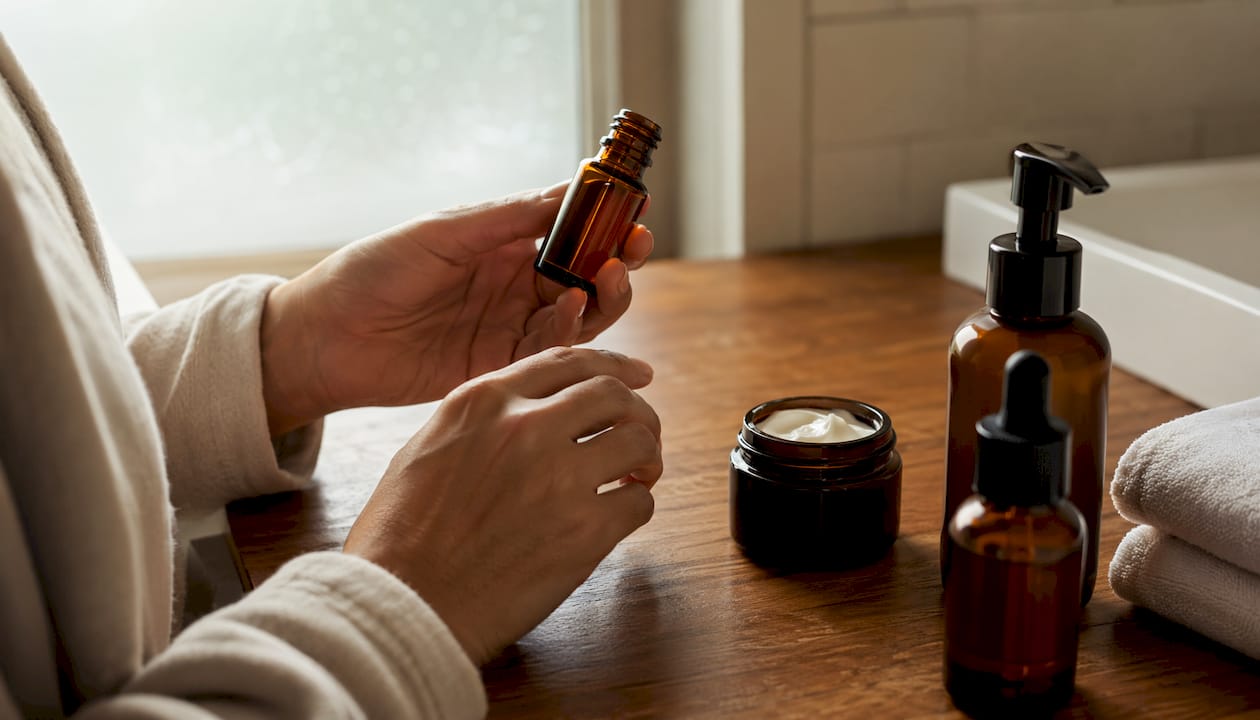
Skincare habits are the most common culprits. Over-exfoliating strips the lipid layer that holds skin cells together. Harsh alkaline soaps do the same thing. That “squeaky clean” feeling after washing? That’s often the acid mantle being stripped away. Soap-free cleansers with a pH close to 5.5 protect the acid mantle far better than traditional bar soap. Layering too many active ingredients, like retinoids, AHAs, and vitamin C all at once, overwhelms the skin’s ability to recover between applications. Many people reach for more products when their skin acts up, which is often the exact wrong move.
Environmental stressors hit the barrier from the outside. UV exposure, pollution, cold air, and dry indoor heat all trigger inflammation and accelerate moisture loss. Hot showers feel great but strip natural oils faster than lukewarm water.
Lifestyle and biology round out the picture:
- Chronic stress raises cortisol, which disrupts the skin’s repair cycle
- Poor sleep reduces the time skin has to regenerate overnight
- A diet low in essential fatty acids deprives the barrier of the raw materials it needs
- Aging slows cell renewal, making older skin more vulnerable to barrier breakdown
- Genetic predispositions, including conditions like atopic dermatitis, create an inherent disadvantage
You can find a detailed breakdown of ingredients that weaken the barrier on Cellure’s blog if you want to audit your current routine.
How do you know your skin barrier is damaged?
Some signs are obvious. Others get misread as normal skin behavior, which is why people keep using products that are making things worse.
The American Academy of Dermatology lists these as the key signals to watch for:
- Dryness and tightness that persist even right after moisturizing
- Stinging, burning, or tingling when applying products, including ones labeled “gentle”
- Redness, irritation, and inflammation without an obvious trigger
- Flaky, rough, or scaly patches, especially on the cheeks, chin, or around the nose
- Sudden breakouts or a worsening of existing conditions like eczema, rosacea, or acne
- Tenderness or a new sensitivity to products you’ve used for months without issue
That last one catches people off guard. If a serum you’ve used for a year suddenly stings, your barrier has likely changed, not the product. Tingling from a “gentle” cleanser is not normal. It signals that irritants are penetrating where they shouldn’t.
Perioral dermatitis, which shows up as redness, stinging, and small bumps around the mouth, is another classic sign of barrier compromise, often worsened by standard acne treatments rather than helped by them.
How to protect and heal a damaged skin barrier
The most counterintuitive advice dermatologists give: do less. When the barrier is damaged, adding more products, even targeted repair products, can extend the problem.
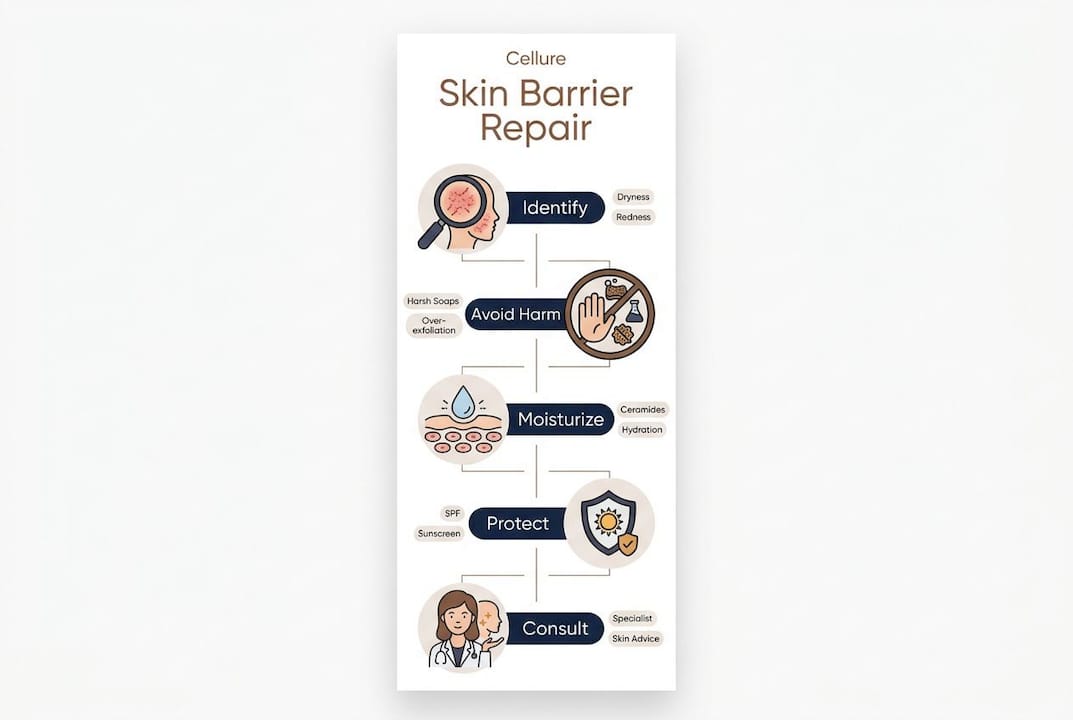
Start with a skin reset. Strip your routine down to three steps: a gentle, soap-free cleanser, a simple moisturizer with ceramides and fatty acids, and a mineral sunscreen. Hold that for several weeks before reintroducing anything else.
- Avoid exfoliants, retinoids, and AHAs entirely during the reset period
- Switch to lukewarm water for cleansing; hot water accelerates lipid loss
- Pat skin dry instead of rubbing
Moisturize strategically. Ceramides, cholesterol, and fatty acids are the natural lipids that form the barrier’s mortar. Products containing these ingredients don’t just hydrate; they physically rebuild the structure. Petrolatum and hyaluronic acid help seal moisture in and prevent transepidermal water loss (TEWL). Apply moisturizer while skin is still slightly damp for better absorption.
Protect from UV daily. Sunscreen protects the barrier from UV damage that degrades key structural proteins and accelerates aging. A broad-spectrum SPF 30 or higher, applied every morning, is non-optional during recovery.

Pro Tip: If your skin stings when you apply your moisturizer, that’s a sign the barrier is still actively compromised. Switch to a fragrance-free, single-ingredient occlusive like plain petrolatum until the stinging stops, then reintroduce your regular moisturizer.
When symptoms are severe, persistent, or tied to a diagnosed condition like eczema or psoriasis, a dermatologist can prescribe barrier-specific treatments that go beyond what over-the-counter products can do.
Can skin barrier damage become permanent?
Most barrier damage is reversible. The skin has self-repair mechanisms built in, and with the right care, mild to moderate damage typically resolves within days to weeks. Early intervention matters: chronic inflammation from untreated barrier damage can lead to structural changes in the skin that are harder to reverse over time.
Age changes the picture. As the Cleveland Clinic’s dermatologist Dr. Melissa Piliang explains, a young person’s barrier can recover from a harsh shower within hours. By your 50s and 60s, that same recovery takes significantly longer because cell renewal slows down. Aging skin needs gentler care and more consistent moisturizing, not just occasionally but every single day.
Underlying conditions like atopic dermatitis and psoriasis create chronic barrier impairment that doesn’t fully resolve without managing the condition itself. These aren’t the same as barrier damage from over-exfoliation. They require a different approach, usually with dermatologist guidance.
How long does skin barrier repair actually take?
Mild damage, from a week of over-exfoliation or a reaction to a new product, can resolve within days to weeks with proper care. More significant damage, from months of harsh routines or chronic environmental exposure, takes longer.
Several factors affect recovery speed:
- Age: younger skin regenerates faster
- Severity: deeper or longer-standing damage takes more time
- Consistency: skipping the simplified routine even occasionally slows progress
- Environment: continued exposure to cold air, pollution, or UV without protection stalls healing
Recovery stalls most often when people reintroduce actives too soon. Four weeks of a stripped-down routine feels like a long time, but it’s the minimum most dermatologists recommend before adding anything back.
Which ingredients help repair the barrier, and which ones hurt it?
Use these:
- Ceramides (ceramide NP, AP, EOP): directly replenish the lipid mortar
- Fatty acids (linoleic acid, oleic acid): restore the lipid bilayer structure
- Cholesterol: works alongside ceramides to rebuild barrier integrity
- Hyaluronic acid: draws water into the skin and reduces TEWL
- Petrolatum: the most effective occlusive for sealing moisture in
- Niacinamide: reduces inflammation and supports ceramide production
- Panthenol (vitamin B5): soothes and supports cell repair
Avoid these during recovery:
- Retinoids and retinol (temporarily)
- AHAs and BHAs (glycolic, salicylic acid)
- Benzoyl peroxide at high concentrations
- Alcohol-based toners and astringents
- Fragrances and essential oils
- Physical scrubs and exfoliating brushes
For a deeper look at barrier-repairing ingredients, Cellure’s ingredient guide covers the clinical evidence behind each one.
A daily skincare routine that keeps your barrier healthy
Prevention is simpler than repair. A consistent, minimal routine does more for barrier health than a complex one.
Morning:
- Rinse with cool or lukewarm water, or use a gentle, pH-balanced cleanser
- Apply a lightweight moisturizer with ceramides or hyaluronic acid
- Finish with a broad-spectrum SPF 30+ sunscreen
Evening:
- Double cleanse if you wear sunscreen or makeup (oil cleanser first, then gentle foaming cleanser)
- Apply a ceramide-rich moisturizer or barrier cream
- Use a heavier occlusive on very dry areas if needed
Keep actives like retinoids or exfoliants to two or three nights per week at most, and never layer them on the same night. Dermatologist-approved skincare tips for sensitive skin consistently point to this kind of minimal, consistent approach as the most effective long-term strategy.
How diet, stress, and environment affect your skin barrier
Your skin barrier doesn’t operate in isolation. What happens inside your body and around it shows up on your skin.
Diet supplies the raw materials for barrier repair. Omega-3 fatty acids, found in fatty fish, flaxseed, and walnuts, support the lipid layer directly. Zinc and vitamins A, C, and E all play roles in skin cell production and repair. A diet heavy in processed foods and low in these nutrients slows recovery.
Stress is one of the more underestimated factors. Elevated cortisol disrupts the skin’s ability to produce ceramides and impairs the immune component of the barrier. Research on how stress affects skin shows it can trigger or worsen conditions like eczema and rosacea, both of which involve barrier dysfunction. Managing stress isn’t just good for your mental health; it directly supports skin repair.
Environment works on the barrier constantly. Dry indoor air in winter pulls moisture out of the skin. Pollution deposits particles that generate free radicals and degrade barrier proteins. UV radiation, as noted earlier, breaks down structural proteins over time. Using a humidifier indoors during winter, wearing protective clothing outdoors, and applying sunscreen daily address all three.
Key Takeaways
A compromised skin barrier loses its ability to retain moisture and block irritants, but with the right ingredients, a simplified routine, and consistent lifestyle habits, most people can restore it within weeks.
| Point | Details |
|---|---|
| Barrier basics | The skin barrier is made of corneocytes and lipids that lock in moisture and block irritants. |
| Top causes | Over-exfoliation, harsh soaps, UV exposure, stress, and aging are the most common triggers. |
| Core repair ingredients | Ceramides, fatty acids, cholesterol, and petrolatum physically rebuild the barrier’s lipid structure. |
| Reset your routine | Strip down to a gentle cleanser, ceramide moisturizer, and SPF 30+ sunscreen for at least four weeks. |
| Lifestyle support | Omega-3-rich diet, stress management, and a humidifier in dry conditions all accelerate recovery. |
Cellure’s Complete Skin Repair Kit was formulated specifically for barrier recovery, combining clinically supported bioactive ingredients including peptides and barrier-replenishing lipids to support skin renewal at the cellular level. If your skin has been reacting to everything lately, it may be time to stop adding products and start rebuilding from the ground up.