


Pregnant? Pause Topical Tranexamic Acid and Use SPF 50+ Now
Topical tranexamic acid is not off-limits by law, but most dermatologists advise pausing it during pregnancy simply because the safety data does not exist yet. If you’re already using it, talk to your OB/GYN or dermatologist before continuing. In the meantime, niacinamide, azelaic acid, and a strong SPF 50+ sunscreen cover most of the same ground safely.
TL;DR:
- Topical tranexamic acid has limited pregnancy safety data, and most dermatologists recommend pausing its use during pregnancy as a precaution.
- Clinical trials demonstrate topical TXA effectively reduces melasma in non-pregnant populations, typically showing visible results between 4 to 12 weeks.
- Pregnant individuals should avoid introducing new actives and consult with their OB/GYN or dermatologist before reintroducing any skin treatments postpartum.
- Alternatives like niacinamide, azelaic acid, and high-SPF sunscreen offer safe options for managing pigmentation during pregnancy.
- Discontinuing TXA during pregnancy and reassessing treatment options postpartum is recommended to ensure safety and effectiveness.
Table of Contents
- Is Topical Tranexamic Acid Safe During Pregnancy?
- Does Topical Tranexamic Acid Actually Work for Melasma?
- What to Do With Your Routine Right Now
- Pregnancy-Safe Alternatives and When to Level Up
- Where to Go for More on Tranexamic Acid and Pigment
- Balancing What Works With What’s Safe Right Now
- Ready for Postpartum? Here’s What to Consider
- Sources
Is Topical Tranexamic Acid Safe During Pregnancy?
The honest answer is that nobody has run the trial that would settle this. Dermatology resources consistently point to the same gap: DermNet NZ notes that pregnancy-specific safety data for topical tranexamic acid are limited, and that caution reflects an absence of research, not evidence of harm. That distinction matters for how you think about risk here.
There’s a real difference between topical and systemic tranexamic acid, and conflating the two causes most of the confusion. Oral or IV tranexamic acid carries a documented clotting risk and is used in pregnancy only under direct medical supervision. Topical formulas absorb into the skin at far lower levels, but because trials almost universally exclude pregnant participants, researchers simply cannot rule out an effect with confidence. Low absorption isn’t the same as zero absorption, and “probably fine” isn’t a substitute for a study.
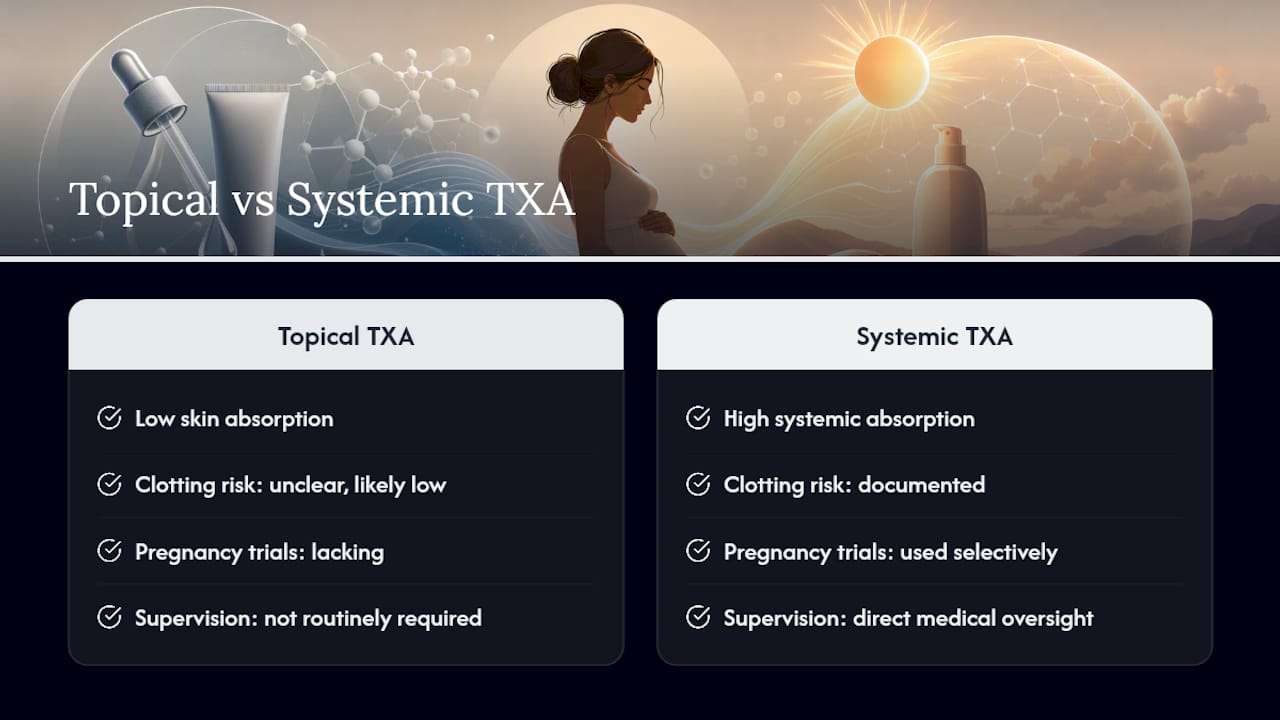
Cosmetic-safety guidance leans conservative for exactly this reason. One cosmetic-medicine guide advises against non-prescription topical TXA during pregnancy and breastfeeding without specialist oversight, pairing that advice with standard patch-testing before any new active touches your face.

A few situations call for extra caution beyond the general pregnancy advice, such as a history of blood clots, use of blood thinners or hormonal medications under clinical management, known sensitivity to TXA or similar actives, or rapidly changing pigmentation that requires dermatologist consultation.
Patient-facing health resources echo the same bottom line: topical TXA looks safe in general populations, but pregnancy-specific research simply hasn’t been done, so a quick conversation with your clinician beats guessing.
Does Topical Tranexamic Acid Actually Work for Melasma?
Outside of pregnancy, the efficacy data on topical TXA is genuinely strong, and it’s worth understanding what you’re pausing, not just why. Randomized trials on 2% to 5% formulations show it works by suppressing plasminogen activation in skin cells and calming the inflammatory signals that drive melanin overproduction, which is why it targets melasma and post-inflammatory hyperpigmentation specifically rather than pigmentation in general.
The numbers back that up. Research on topical tranexamic acid shows consistent MASI score reductions across routes of administration, with most protocols using twice-daily application or mask formats. Visible change typically starts around week 4 to 8, with fuller results by week 8 to 12. Tolerability is generally good, with mild local irritation as the most common side effect and systemic reactions rare.
Trials comparing topical TXA to hydroquinone found comparable or better pigment reduction with fewer irritant reactions, which is notable because hydroquinone carries its own pregnancy restrictions.
The catch is one you’ve probably already guessed: nearly every one of these trials excludes pregnant and breastfeeding participants. That means the efficacy numbers are real, but they describe a different population than the one asking this question. Expert consensus also frames topical TXA as most effective within a combination routine, alongside sunscreen and sometimes other brightening agents, for long-term melasma control rather than as a standalone fix. That combination framing is useful to keep in mind once you’re cleared to resume.
What to Do With Your Routine Right Now
If you’re currently using a TXA serum, or thinking about starting one, here’s a straightforward sequence to follow.
- Pause new actives first. Don’t introduce tranexamic acid, retinoids, or strong exfoliating acids while pregnant unless your clinician has specifically signed off.
- Book a quick check-in. Bring your product list to your OB/GYN or dermatologist rather than researching alone. They know your medical history and can flag anything relevant to you specifically.
- Patch test anything new. Apply a small amount to your inner forearm and wait 24 to 48 hours, watching for redness, persistent stinging, or spreading rash before using it anywhere else.
- Simplify your layering. Lean on gentle moisturizers and broad-spectrum SPF as your daily foundation, and hold off stacking multiple active ingredients at once.
- Reintroduce gradually postpartum. Once you’ve finished breastfeeding (or your clinician clears it earlier), bring back one active at a time and watch how your skin responds before adding the next.
Pro Tip: Keep a simple weekly photo of the same spot on your face, taken in consistent lighting. It turns “my melasma feels worse” into an actual before-and-after your dermatologist can assess at your next visit.
For more on sequencing brightening actives around sensitive periods, Cellure’s melasma skincare routine guide walks through order of application in detail.
Pregnancy-Safe Alternatives and When to Level Up
You’re not choosing between “do nothing” and tranexamic acid. Several ingredients have a longer track record of pregnancy use and still meaningfully help with tone and pigment.
- Niacinamide calms inflammation and helps even skin tone without the absorption questions that come with TXA.
- Azelaic acid is commonly recommended by dermatologists during pregnancy for both pigmentation and mild breakouts.
- Mineral sunscreen, SPF 50+ is your single biggest lever. Melasma is largely UV-driven, and consistent sun protection prevents new dark patches from forming while you wait to treat existing ones.
Oral TXA and prescription-strength hydroquinone are typically avoided in pregnancy due to clotting risk and absorption concerns respectively. A reasonable timeline is to manage conservatively during pregnancy, then reassess postpartum once breastfeeding status is clear, followed by reintroducing stronger topical or systemic options under clinical supervision.
Where to Go for More on Tranexamic Acid and Pigment
Cellure formulates with bioactive ingredients like tranexamic acid and peptides specifically for cellular repair and tone correction, and publishes ingredient breakdowns alongside its products rather than just selling them. If you want the mechanism explained in more depth, the guide to what tranexamic acid actually does covers concentration ranges and how it compares to other brightening actives.
For readers weighing options beyond TXA, Cellure’s comparison of tranexamic acid and kojic acid is a useful reference. None of this replaces your clinician’s input. Once you’re cleared, Cellure’s Tranexamic Acid Peptide Serum is formulated as a postpartum option worth discussing with your dermatologist.
Balancing What Works With What’s Safe Right Now
The efficacy data on topical TXA is genuinely good, and pretending otherwise does a disservice to a proven ingredient. But good data on non-pregnant skin doesn’t answer the question you’re actually asking. Favor sunscreen and patience now, and treat postpartum as your window to bring back stronger options with your clinician’s input, not as a consolation prize.
A monthly photo log costs you nothing and gives your dermatologist something concrete to work from when you’re ready to resume treatment.
— Sara
Ready for Postpartum? Here’s What to Consider
Once breastfeeding ends and your clinician gives the go-ahead, you don’t need to start your pigment routine from scratch. Cellure’s Tranexamic Acid Peptide Serum targets melasma and post-inflammatory pigmentation with a formula built around the same active studied in the clinical research above, paired with peptides for skin repair.
If your skin needs more than pigment correction after pregnancy, the Complete Skin Repair Kit pairs brightening with barrier support and hydration in one structured routine, useful if months of hormonal shifts left your skin needing more than a single serum can address. Talk to your dermatologist about timing, then browse either option when you’re cleared to start.
Sources
This article is general information, not a substitute for advice from a qualified doctor. Consult a qualified healthcare professional about your own circumstances before acting on anything here.