


What Is Tranexamic Acid? 50% Hyperpigmentation Cut Guide
Many assume only oral tranexamic acid tackles pigmentation effectively, but topical forms deliver comparable results with far fewer risks. Topical tranexamic acid provides comparable efficacy with lower risk of systemic side effects and suits long-term use. You’ll discover how this ingredient works, its clinical benefits, safe usage strategies, comparisons with alternatives, and practical tips for achieving even tone.
Table of Contents
Key Takeaways
| Point | Details | |-------|---------|| | Mechanism | Tranexamic acid inhibits plasmin activity to reduce melanin production and pigmentation. | | Efficacy | Clinically proven to reduce hyperpigmentation up to 50% with minimal irritation. | | Safety | Safe topical alternative to harsh treatments like hydroquinone for aging skin. | | Synergy | Works effectively combined with niacinamide and vitamin C for enhanced results. | | Timeline | Visible improvements typically appear after 8 to 12 weeks of consistent use. |
Introduction to Tranexamic Acid in Skincare
Transexamic acid started as a synthetic lysine derivative used for bleeding control in medical settings. Dermatologists later discovered its power to reduce melasma, dark spots, and uneven tone in aging skin. This shift matters because aging skin often develops pigmentation from sun damage and chronic inflammation.
The ingredient offers a gentle approach distinct from conventional lightening agents. Adults experiencing discoloration now have access to a scientifically supported option that targets uneven skin tone without harsh side effects. This makes tranexamic acid especially valuable for those seeking sensitive skin care tips while addressing pigmentation.
Key milestones and applications include:
-
Originally developed in the 1960s for hemostatic purposes in surgery
-
First dermatological applications emerged in Japan during the 1990s
-
Now addresses melasma, post-inflammatory hyperpigmentation, and age spots
-
Particularly effective for sun-induced pigmentation and hormonal discoloration
-
Suitable for long-term maintenance of even skin tone
The Ultimate Guide to Tranexamic Acid provides comprehensive formulation insights for understanding this ingredient’s versatility.
How Tranexamic Acid Works in Skin Pigmentation
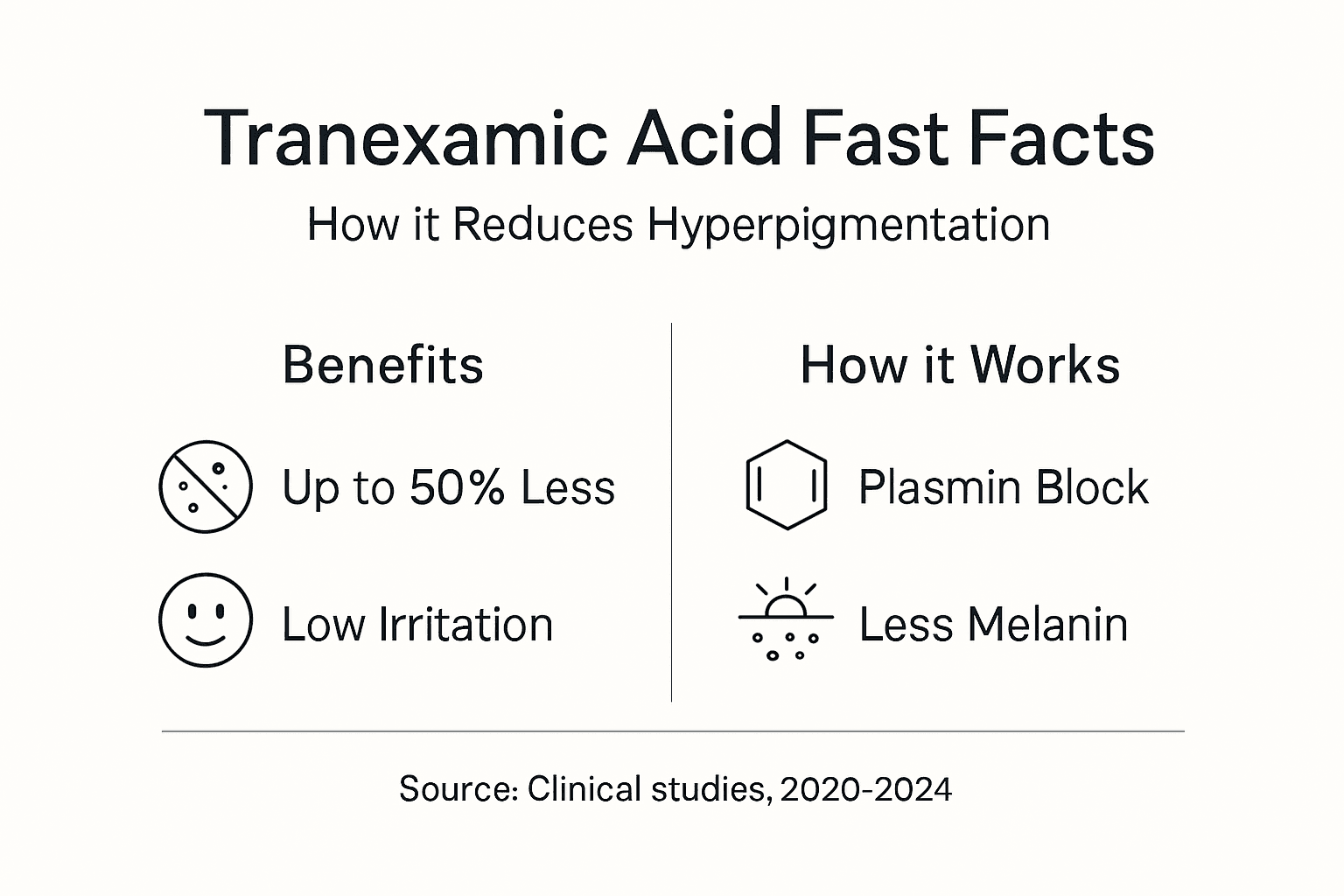
Transexamic acid reduces melanin production by inhibiting plasmin activity, disrupting keratinocyte-melanocyte signaling responsible for pigmentation. This upstream intervention stops pigment formation before it starts. The ingredient blocks inflammatory signals that trigger melanin synthesis, offering prevention rather than just correction.
The biochemical process operates through multiple pathways. It reduces cytokine production that encourages both pigmentation and inflammation. This multi-mechanistic action includes anti-inflammatory, anti-angiogenic, and skin barrier strengthening effects beyond pigmentation reduction. These combined actions enhance overall skin resilience and reduce redness.
Here’s how tranexamic acid operates sequentially:
-
Inhibits plasmin enzyme activity at the cellular level
-
Blocks prostaglandin and cytokine release that stimulates melanocytes
-
Disrupts communication between keratinocytes and melanin-producing cells
-
Reduces vascular permeability to minimize inflammation-driven pigmentation
-
Strengthens skin barrier function to prevent future damage
Understanding skin repair ingredients helps you appreciate how tranexamic acid fits into comprehensive rejuvenation strategies. The tranexamic acid mechanism research demonstrates its sophisticated approach to pigmentation control.
Pro Tip: Consistent twice-daily application supports all these pathways simultaneously, maximizing your results over time while maintaining skin health.
Clinical Benefits and Safety Profile of Tranexamic Acid
Clinical studies demonstrate up to 50% reduction in hyperpigmentation with low irritation rates using topical tranexamic acid. Research shows MASI scores improved 30 to 60% after 8 to 12 weeks of consistent use. These results rival more aggressive treatments without the associated risks.
The safety profile stands out compared to traditional options. Well-tolerated topical use with minimal side effects is safer than hydroquinone for long-term pigmentation management. Japan approved it as a quasi-drug for skin lightening support, confirming its efficacy and safety.
| Treatment | MASI Score Improvement | Irritation Rate | Treatment Duration |
| Tranexamic Acid 3% | 40-60% | <5% | 8-12 weeks |
| Hydroquinone 4% | 50-70% | 15-25% | 8-12 weeks |
| Control (Vehicle) | 10-15% | <2% | 8-12 weeks |
The data confirms tranexamic acid delivers substantial results with exceptional tolerability. Less than 5% of users report mild irritation, and no major adverse effects appear in clinical trials. This safety margin makes it ideal for aging skin that may be more reactive.
Integrating sensitive skin practices enhances outcomes further. Many users combine tranexamic acid with skin repair kits for comprehensive rejuvenation. Review clinical studies on hyperpigmentation and tranexamic acid safety for detailed evidence.
Pro Tip: Monitor your skin’s response during the first two weeks and maintain consistent sun protection to maximize benefits and prevent new pigmentation.
Common Misconceptions About Tranexamic Acid
Several myths prevent people from trying this effective ingredient. Understanding the facts empowers better skincare decisions. The most common misconception claims tranexamic acid works like hydroquinone by inhibiting tyrosinase, but it actually acts upstream by blocking plasmin-mediated pathways.
Another widespread belief suggests only oral forms work for pigmentation. Topical tranexamic acid provides significant benefits comparable to oral forms with fewer systemic risks. This makes topical application the preferred choice for most users seeking pigmentation correction.
Key misconceptions debunked:
-
Myth: Tranexamic acid directly inhibits tyrosinase like hydroquinone. Reality: It blocks plasmin and inflammatory pathways that trigger melanin production upstream.
-
Myth: Only oral tranexamic acid treats pigmentation effectively. Reality: Topical forms deliver comparable results with superior safety profiles.
-
Myth: Tranexamic acid causes significant irritation. Reality: Clinical data shows less than 5% irritation rates, making it suitable for sensitive skin.
-
Myth: Results appear within days of use. Reality: Visible improvements require 8 to 12 weeks of consistent application for optimal outcomes.
-
Myth: Tranexamic acid cannot be combined with other actives. Reality: It works synergistically with niacinamide, vitamin C, and peptides.
Clearing these tranexamic acid misconceptions helps you approach treatment with realistic expectations and confidence in the science.
Comparing Tranexamic Acid to Other Pigmentation Treatments
Understanding how tranexamic acid stacks up against alternatives helps you choose the right approach. Each treatment offers distinct mechanisms, efficacy levels, and safety considerations. The comparison reveals why tranexamic acid has gained popularity among dermatologists and skincare enthusiasts.
| Treatment | Mechanism | Efficacy for Melasma | Safety Profile | Sensitive Skin Suitability |
| Tranexamic Acid | Inhibits plasmin, reduces inflammation | 40-60% improvement | Excellent, <5% irritation | Highly suitable |
| Hydroquinone | Inhibits tyrosinase directly | 50-70% improvement | Moderate, 15-25% irritation | Limited use recommended |
| Vitamin C | Antioxidant, mild tyrosinase inhibition | 20-40% improvement | Good, 5-10% irritation | Generally suitable |
| Niacinamide | Inhibits melanosome transfer | 30-45% improvement | Excellent, <5% irritation | Highly suitable |
Each option has trade-offs worth considering:
-
Tranexamic Acid: Multi-pathway action, excellent safety, long-term use friendly, works well in combinations
-
Hydroquinone: Powerful but higher irritation, regulatory restrictions in some regions, not ideal for prolonged use
-
Vitamin C: Gentle antioxidant benefits, less targeted for severe melasma, stability challenges in formulations
-
Niacinamide: Barrier support, reduces inflammation, works synergistically with tranexamic acid for enhanced results
The data supports tranexamic acid as a balanced choice offering substantial efficacy without compromising safety. Its multi-mechanistic approach addresses pigmentation through several pathways simultaneously. Compare skin repair ingredients to understand how different actives complement each other in comprehensive regimens.
Optimal Usage and Formulation Considerations
Effective incorporation requires understanding concentration, application frequency, and complementary ingredients. Recommended topical concentrations typically range from 2% to 5% tranexamic acid for optimal results. Higher concentrations do not necessarily improve outcomes and may increase irritation risk.
Preferred application involves twice-daily use with broad-spectrum sun protection. Delivery vehicles significantly affect absorption and skin compatibility. Serums penetrate more effectively than creams, while emulsions balance penetration with hydration. Combining tranexamic acid with niacinamide and vitamin C enhances pigmentation reduction and tolerability.
Follow these best practices for maximum benefit:
-
Assess your skin type and current pigmentation severity before starting
-
Choose products with 2 to 5% tranexamic acid in stable, well-formulated bases
-
Apply twice daily to clean skin, morning and evening
-
Layer with complementary actives like niacinamide or peptides
-
Always follow with broad-spectrum SPF 30 or higher during daytime
-
Maintain consistency for at least 12 weeks to evaluate full results
Explore the tranexamic acid serum formulated with complementary peptides for enhanced rejuvenation. Understanding skin care ingredients helps you build effective combinations. The combination formula study demonstrates synergistic benefits.
Pro Tip: Set realistic expectations as visible improvements generally appear after 8 to 12 weeks of consistent use, with continued enhancement over six months.
Summary and Practical Takeaways for Skin Rejuvenation
Transexamic acid delivers a scientifically supported, safe, and effective solution for reducing pigmentation in aging skin. Its multi-mechanistic approach addresses inflammation, melanin production, and barrier function simultaneously. This comprehensive action sets it apart from single-pathway treatments.
The evidence confirms its suitability for sensitive and aging skin with minimal irritation risk. Long-term use remains safe, making it ideal for maintenance after initial improvement. Combining tranexamic acid with complementary actives amplifies results while supporting overall skin health.
Essential points to remember:
-
Inhibits plasmin activity upstream to prevent melanin formation
-
Delivers 40 to 60% improvement in pigmentation with under 5% irritation rates
-
Works synergistically with niacinamide, vitamin C, and peptides
-
Requires 8 to 12 weeks of consistent twice-daily application
-
Always pair with broad-spectrum sun protection for optimal results
-
Suitable for long-term use without the risks associated with hydroquinone
-
Addresses multiple aging concerns beyond pigmentation through barrier support
This ingredient represents a significant advancement in safe, effective pigmentation management for adults seeking evidence-based skincare solutions.
Explore Tranexamic Acid Skincare Solutions at Cellure
Ready to experience these scientifically backed benefits firsthand? Cellure’s tranexamic acid peptide serum combines this powerful ingredient with complementary peptides for comprehensive skin rejuvenation. The formulation targets uneven tone while supporting firmness and barrier health.
For complete cellular renewal, the complete skin repair kit integrates multiple bioactive ingredients including tranexamic acid for maximum rejuvenation. These expert-formulated products translate clinical research into real results you can see and feel. Discover more about top skin repair ingredients and how they work together for optimal skin health.
Frequently Asked Questions About Tranexamic Acid
What is the typical timeline to see results using tranexamic acid?
Most users notice visible improvements after 8 to 12 weeks of consistent twice-daily application. Optimal results continue developing through six months of use with proper sun protection.
Is tranexamic acid safe for sensitive or aging skin?
Yes, clinical data shows less than 5% irritation rates, making it highly suitable for sensitive and mature skin. It strengthens the skin barrier while reducing pigmentation.
Can tranexamic acid be combined with other skincare ingredients?
Absolutely. It works synergistically with niacinamide, vitamin C, peptides, and hyaluronic acid. These combinations enhance efficacy while supporting overall skin health.
Does topical tranexamic acid cause side effects?
Side effects are rare and typically limited to mild, temporary irritation in fewer than 5% of users. It demonstrates an excellent safety profile compared to alternatives like hydroquinone.
How does tranexamic acid differ from hydroquinone?
Transexamic acid inhibits plasmin and inflammatory pathways upstream, while hydroquinone directly inhibits tyrosinase. Tranexamic acid offers comparable efficacy with superior safety and tolerability for long-term use.
Recommended
Share