


The Science Behind Skin Brightening: 2026 Guide
TL;DR:
- Skin brightening involves reducing melanin synthesis, inhibiting melanosome transfer, and accelerating pigment clearance for a more even skin tone. Combining a tyrosinase inhibitor with niacinamide targets multiple steps, but photoprotection remains essential to prevent ongoing pigmentation from UV and visible light. Clinical evidence highlights ingredients like thiamidol and tranexamic acid as effective, with results typically appearing after 8 to 12 weeks of consistent use.
Skin brightening is defined as the biological process of reducing melanin synthesis, inhibiting melanosome transfer, and accelerating pigment clearance to produce a more even and radiant skin tone. The science behind skin brightening targets specific enzymatic and cellular pathways rather than simply bleaching the skin surface. Melanocytes, the pigment-producing cells in the basal layer of the epidermis, synthesize melanin through a cascade controlled by the enzyme tyrosinase. Understanding these pathways is what separates evidence-based brightening from marketing noise.
What biological mechanisms control skin pigmentation?
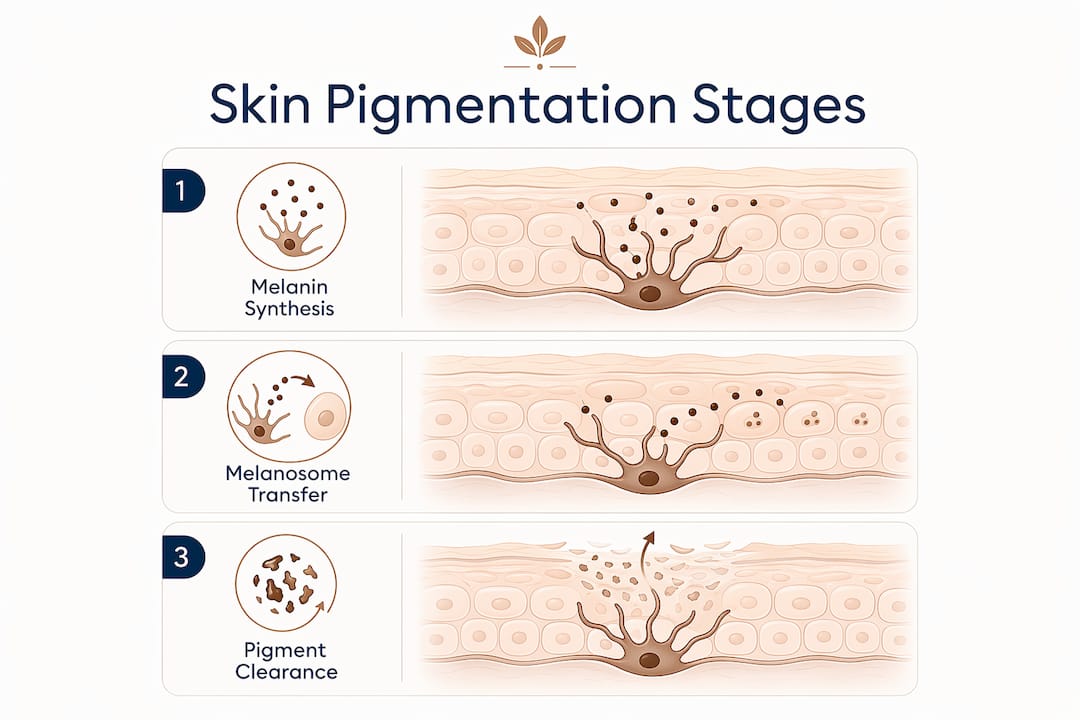
Skin pigmentation is governed by a three-stage process: melanin synthesis inside melanocytes, packaging of melanin into organelles called melanosomes, and transfer of those melanosomes to surrounding keratinocytes. Each stage is a distinct target for brightening. Reducing melanin production and inhibiting melanosome transfer are the two most scientifically defensible strategies for achieving a lighter, more uniform tone.
Tyrosinase is the rate-limiting enzyme in melanin biosynthesis. It converts the amino acid tyrosine into DOPA and then into dopaquinone, which eventually becomes melanin. Blocking tyrosinase activity is the most direct way to reduce pigment output. Signaling pathways upstream of tyrosinase, including MITF (microphthalmia-associated transcription factor) and Wnt signaling, also regulate how much melanin a cell produces. Ingredients that suppress MITF expression reduce pigment production at the gene level, not just the enzyme level.
Melanosome transfer from melanocytes to keratinocytes is the step that actually deposits visible color in the skin. Niacinamide, for example, works specifically at this transfer stage. It does not inhibit tyrosinase but instead blocks the physical handoff of melanosomes, which explains why it pairs well with tyrosinase inhibitors targeting synthesis.
The final stage is pigment clearance. As keratinocytes migrate upward through the epidermis and eventually shed, they carry melanin with them. Accelerating cell turnover through retinoids or exfoliating acids speeds up this clearance. The table below maps each biological step to its corresponding brightening strategy.
| Biological Step | Mechanism | Brightening Strategy |
|---|---|---|
| Melanin synthesis | Tyrosinase catalyzes pigment formation | Tyrosinase inhibitors (thiamidol, kojic acid) |
| Signaling activation | MITF/Wnt pathways upregulate melanogenesis | Pathway modulators (tranexamic acid, resveratrol) |
| Melanosome transfer | Melanosomes move to keratinocytes | Transfer inhibitors (niacinamide) |
| Pigment clearance | Melanin sheds with keratinocytes | Cell turnover agents (retinoids, AHAs) |
Pro Tip: Combining a tyrosinase inhibitor with niacinamide targets two separate steps in the pigmentation process. This dual-pathway approach often delivers better results than using either ingredient alone.
Which skin brightening ingredients are clinically validated?
The most studied skin brightening ingredients each work through a distinct mechanism. Knowing the mechanism tells you how to combine them and what to expect from each.
Thiamidol is one of the most specific tyrosinase inhibitors currently available. A 2026 randomized clinical trial confirmed that 0.2% thiamidol cream significantly improves facial hyperpigmentation compared to vehicle, with excellent tolerability. Its selectivity for human tyrosinase matters because many inhibitors that perform well in lab enzyme assays fail on actual human skin. Many tyrosinase inhibitors show strong in-vitro results but differ substantially in human clinical performance due to enzyme specificity differences. Thiamidol clears this bar.
Tranexamic acid works differently. It reduces melanin production by blocking the interaction between keratinocytes and melanocytes triggered by UV exposure. A meta-analysis of 63 RCTs found that both oral and topical tranexamic acid produce significant reductions in melasma severity by weeks 8–12, with good tolerability across formulations. This makes it one of the most evidence-backed options for melasma specifically.
Niacinamide at 2–5% concentrations improves pigmentation and skin barrier function with strong tolerability. It works by inhibiting melanosome transfer rather than synthesis, which means it addresses the deposition of existing pigment rather than preventing new pigment from forming. Combining it with a synthesis inhibitor like thiamidol covers both ends of the process.
Natural and food-derived compounds also show multi-pathway activity:
- Kojic acid (derived from fungi) inhibits tyrosinase by chelating copper at the enzyme’s active site
- Resveratrol (found in grapes and berries) suppresses MITF signaling and has antioxidant properties that reduce UV-triggered pigment stimulation
- Vitamin C (ascorbic acid) reduces dopaquinone back to DOPA, interrupting melanin formation, and also provides antioxidant protection
- Arbutin (found in bearberry) is a hydroquinone precursor that inhibits tyrosinase with lower irritation risk than hydroquinone itself
Hydroquinone remains the historical gold standard at 2–4% concentrations, but its use is restricted in several markets due to concerns about long-term safety. Newer agents like thiamidol offer comparable efficacy with a cleaner safety profile.
| Ingredient | Mechanism | Evidence Level | Tolerability |
|---|---|---|---|
| Thiamidol 0.2% | Human tyrosinase inhibition | High (RCT 2026) | Excellent |
| Tranexamic acid | UV-triggered pathway blockade | High (63-RCT meta-analysis) | Good |
| Niacinamide 2–5% | Melanosome transfer inhibition | Moderate | Excellent |
| Kojic acid | Tyrosinase copper chelation | Moderate | Moderate |
| Vitamin C | Dopaquinone reduction | Moderate | Variable |
Pro Tip: If you are exploring how to brighten skin scientifically, start with a brightening serum that combines tranexamic acid and niacinamide. These two ingredients target different steps and rarely cause irritation together.
Why is photoprotection non-negotiable in brightening regimens?
Photoprotection is not a supporting step in a brightening regimen. It is the foundation. Without it, even the most potent actives lose ground to ongoing pigment stimulation from UV and visible light.
Visible light, specifically high-energy visible light (HEVL) in the 400–700 nm range, darkens melasma lesions more than adjacent normal skin. This means standard sunscreens that only block UVA and UVB are insufficient for people with melasma or post-inflammatory hyperpigmentation. The same 2026 pilot study found that daily application of a tyrosinase inhibitor like thiamidol reduces visible-light-induced pigmentation, which shows that brightening actives and photoprotection work together rather than independently.
2026 clinical guidelines for managing hyperpigmentation disorders specify that sunscreen must provide broad-spectrum coverage across UVA, long UVA, and HEVL. Adequate dosing and reapplication frequency are equally important. Most people apply far less sunscreen than the amount used in clinical testing, which dramatically reduces real-world protection.
Best practices for photoprotection in a brightening regimen:
- Choose a broad-spectrum SPF 50+ sunscreen that explicitly covers UVA, long UVA, and HEVL. Tinted mineral sunscreens with iron oxides are the most reliable option for HEVL blocking.
- Apply 2 mg per cm² of skin surface, which translates to roughly a quarter teaspoon for the face alone.
- Reapply every two hours when outdoors, or after sweating and swimming.
- Apply sunscreen as the final step in your morning routine, after any brightening serums or treatments.
Without consistent photoprotection, even potent brightening actives show reduced real-world efficacy because ongoing pigment stimulation from UV and visible light counteracts their effects. Think of it this way: brightening actives reduce the pigment already present, while sunscreen prevents new pigment from being triggered. You need both working simultaneously.
How do combination approaches and timelines affect results?
Skin brightening is not a fast process. The kinetics of skin lightening follow the rate at which UV-induced pigmentation is eliminated over time, which varies by ingredient, concentration, and individual skin biology. Clinical trials measure outcomes at multiple time points rather than a single endpoint precisely because results accumulate gradually.
Tranexamic acid typically shows measurable improvement in melasma severity by weeks 8–12. Thiamidol shows significant results within similar timeframes in controlled trials. Niacinamide tends to show visible improvement in skin tone and texture within 4–8 weeks at effective concentrations. Expecting dramatic results in two weeks sets up disappointment and often leads to abandoning a regimen that would have worked with more time.
Combination approaches that target multiple melanogenesis pathway nodes consistently outperform single-ingredient strategies. Combining topical tranexamic acid with intense pulsed light (IPL) over four months, for example, improves melasma severity and photoaging more than IPL alone, with good tolerability. This illustrates that layering mechanisms, whether through topical combinations or topical plus procedural approaches, produces better outcomes than relying on one pathway.
Common pitfalls that undermine brightening regimens:
- Skipping sunscreen on cloudy days or indoors near windows, where UVA and HEVL still penetrate
- Overloading actives in the first week, which triggers irritation and can worsen post-inflammatory hyperpigmentation
- Stopping too early before the 8–12 week window when most actives show their full effect
- Ignoring rebound pigmentation, which occurs when a stimulus (UV, heat, hormones) is not controlled alongside the brightening treatment
Pro Tip: Build your regimen in layers. Start with niacinamide alone for two weeks to support your skin barrier. Then add a tyrosinase inhibitor like thiamidol or tranexamic acid. This staged approach reduces the risk of irritation and makes it easier to identify what is working.
Key takeaways
Effective skin brightening requires targeting melanin synthesis, melanosome transfer, and pigment clearance simultaneously while maintaining consistent broad-spectrum photoprotection.
| Point | Details |
|---|---|
| Tyrosinase is the primary target | Inhibiting this enzyme is the most direct way to reduce melanin production at the source. |
| Multi-pathway combinations work best | Pairing a tyrosinase inhibitor with niacinamide covers synthesis and transfer for stronger results. |
| Visible light triggers repigmentation | Broad-spectrum sunscreens with HEVL blocking are required to prevent re-darkening during treatment. |
| Results require 8–12 weeks minimum | Tranexamic acid and thiamidol show significant improvement only after consistent use over this period. |
| Tolerability drives adherence | Staging ingredient introduction reduces irritation and keeps regimens sustainable long-term. |
What i’ve learned about reading brightening science honestly
Most brightening products on the market reference tyrosinase inhibition in their marketing. Very few have clinical data on human skin to back it up. The gap between in-vitro enzyme assays and real-world human trials is significant, and it is the single most important thing to understand when evaluating any brightening product.
I have reviewed dozens of ingredient decks over the years, and the pattern is consistent: brands lead with a compelling mechanism and bury the lack of human clinical evidence. Thiamidol is one of the rare exceptions. Its 2026 RCT data on facial hyperpigmentation is exactly the kind of evidence that should be the standard, not the exception.
The other thing I would push back on is the tendency to treat photoprotection as optional or secondary. Consumers often invest in expensive serums and then apply a low-SPF moisturizer with no HEVL coverage. The 2026 guidelines make it clear that visible light is a meaningful driver of melasma and hyperpigmentation. A $15 tinted mineral SPF 50+ sunscreen will do more for your results than doubling the concentration of your brightening serum.
My honest recommendation: look for products with tranexamic acid, niacinamide, and a validated tyrosinase inhibitor. Pair them with a broad-spectrum tinted sunscreen. Give the regimen 12 weeks before evaluating. The science behind skin brightening is solid. The results follow when the regimen is built correctly.
— Sara
How Cellure approaches brightening at the cellular level
Cellure formulates with the same biological logic this article describes: target multiple steps in the pigmentation process, support the skin barrier, and use ingredients with clinical backing rather than just theoretical appeal.
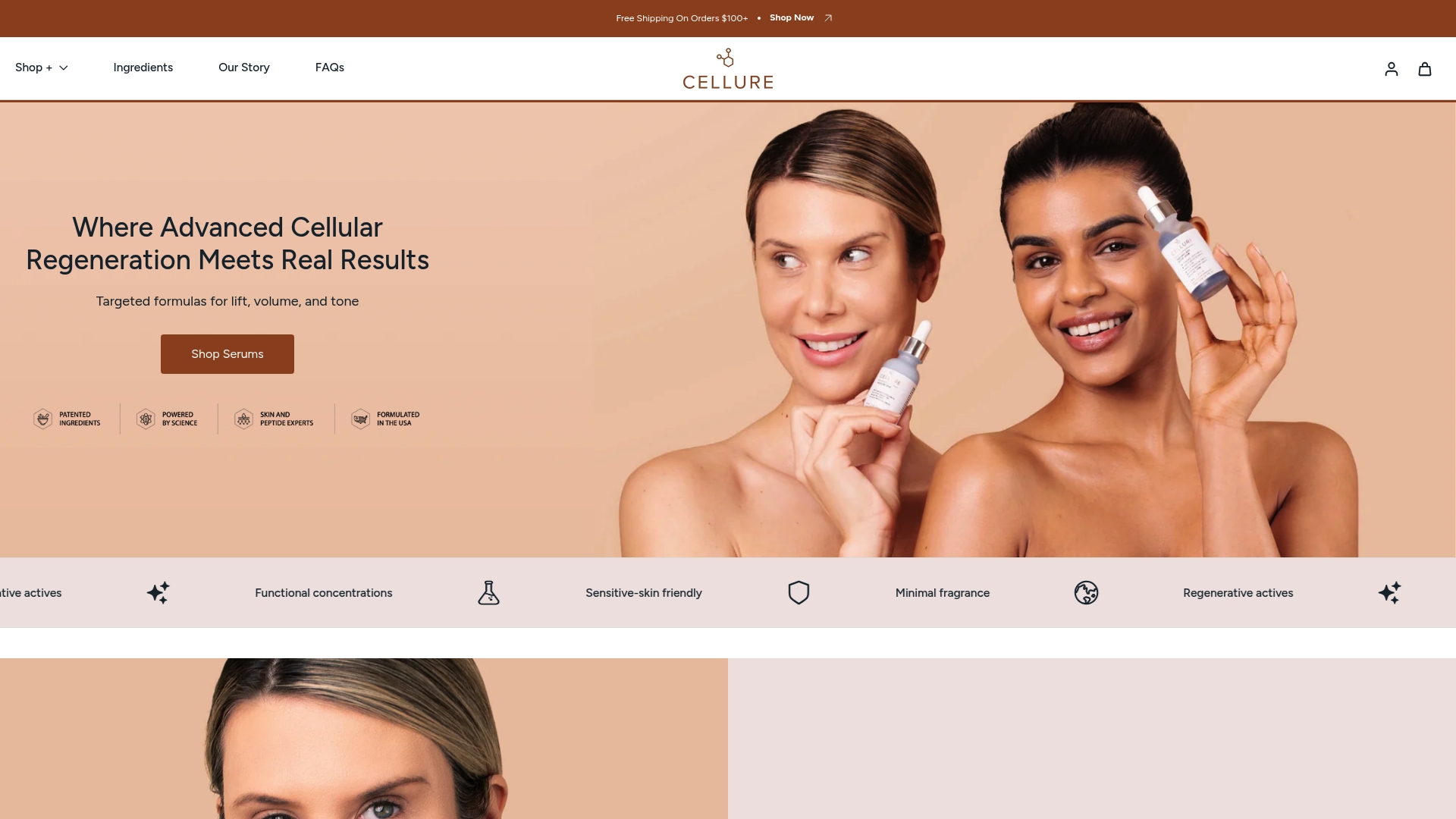
The Complete Skin Repair Kit from Cellure includes tranexamic acid alongside peptides and barrier-supporting actives designed to address uneven tone and loss of radiance at the cellular level. The formulation targets both melanin synthesis and skin renewal, which aligns with the multi-pathway approach that clinical research consistently supports. If you are ready to move from understanding the science to applying it, the Complete Skin Repair Kit is a well-reasoned starting point built on the same evidence reviewed here.
FAQ
What causes dull skin at the biological level?
Dull skin results from accumulated melanin in the upper epidermis, reduced cell turnover, and a compromised skin barrier that scatters light unevenly. UV exposure, hormonal changes, and inflammation are the primary triggers for excess melanin production.
How does tranexamic acid treat hyperpigmentation?
Tranexamic acid blocks UV-triggered signaling between keratinocytes and melanocytes, reducing the stimulus for melanin production. A meta-analysis of 63 RCTs confirms significant improvement in melasma severity by weeks 8–12 with both oral and topical formulations.
Are natural skin brightening remedies effective?
Compounds like kojic acid, arbutin, vitamin C, and resveratrol have documented mechanisms for reducing melanin synthesis. Their clinical evidence is generally moderate compared to thiamidol or tranexamic acid, but they are useful additions in multi-ingredient regimens.
What are the benefits of skin brightening beyond appearance?
Effective skin discoloration treatments also support skin barrier function, reduce oxidative stress, and in many cases improve skin texture and hydration. Niacinamide, for example, improves both pigmentation and stratum corneum hydration simultaneously.
How long does it take to see results from brightening treatments?
Most clinically validated brightening ingredients show measurable improvement between weeks 8 and 12 of consistent use. Expecting visible results before this window often leads to premature discontinuation of regimens that would have succeeded with more time.