


Brightening Serum Benefits: 7 Science-Backed Results
TL;DR:
- Brightening serums target melanin production to reduce hyperpigmentation and improve skin radiance through active ingredients like vitamin C, TXA, and thiamidol. Consistent use over 8 to 12 weeks combined with daily SPF is essential for lasting, visible results, and professional treatments can enhance their effectiveness. Proper routine sequencing, patience, and photoprotection are key to achieving a more even and luminous complexion.
Brightening serums are specialized topical treatments designed to reduce uneven pigmentation and boost skin luminosity through active ingredients like vitamin C, tranexamic acid (TXA), and thiamidol. Clinically, these products work by interrupting melanogenesis, the biological process your skin uses to produce pigment. The brightening serum benefits you see in the mirror are the direct result of targeted biochemistry, not surface-level cosmetics. Understanding what each ingredient does, and when to expect results, separates effective routines from wasted money.
1. Brightening serum benefits start with reducing dark spots
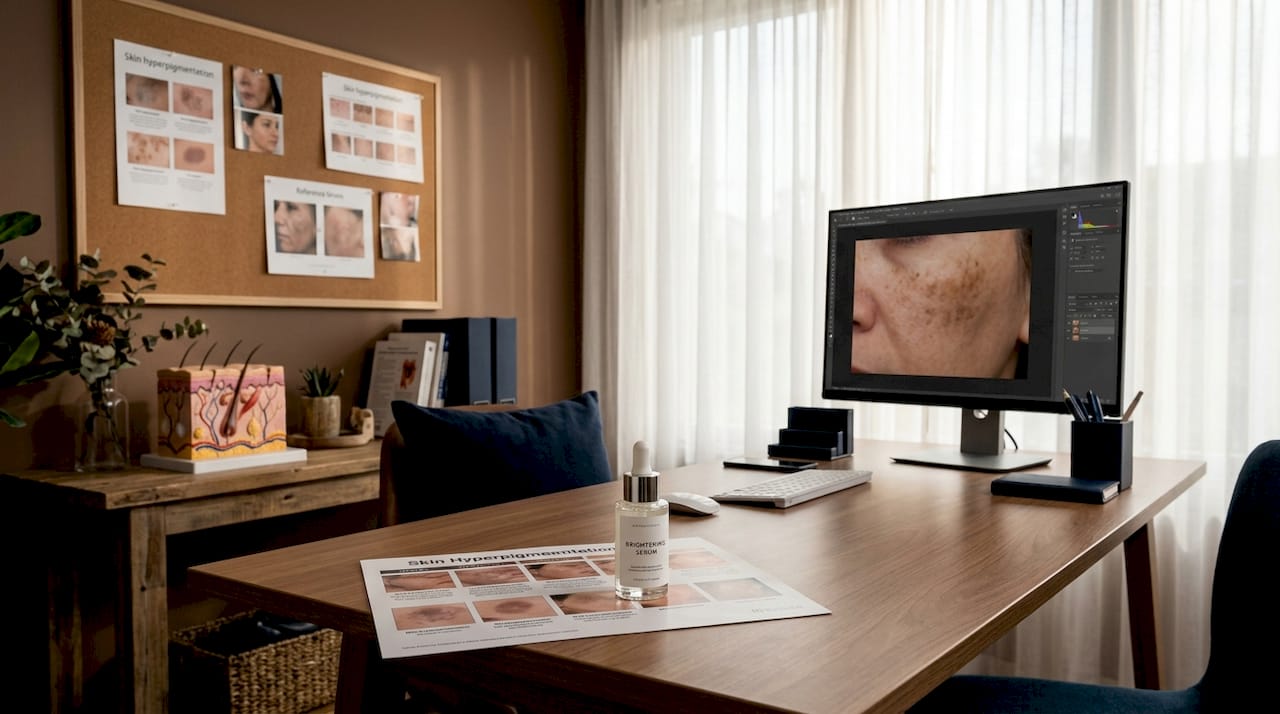
Hyperpigmentation, including melasma, post-inflammatory marks, and age spots, is the primary reason most adults reach for a brightening serum. These spots form when melanocytes overproduce melanin in response to UV exposure, hormonal shifts, or skin inflammation. A 2026 meta-analysis of 63 randomized controlled trials found measurable improvement in melasma severity starting at week 8 with topical TXA, with the strongest results appearing between weeks 8 and 12. That timeline matters because most people quit before the ingredient has had enough time to work.
2. How does brightening serum work on a biological level?
Brightening serums interrupt melanogenesis by targeting the tyrosinase enzyme, which is the catalyst your skin uses to convert tyrosine into melanin. Block or slow tyrosinase, and pigment production decreases at the source.
The three most clinically supported ingredients each take a different route:
- Vitamin C (L-ascorbic acid): Inhibits tyrosinase and neutralizes the oxidative stress that UV radiation uses to trigger pigment signaling. It is a dual-action brightener, but its efficacy depends heavily on formulation stability. Oxidized vitamin C loses activity entirely, which is why a serum that has turned brown should be replaced immediately.
- Tranexamic acid: Blocks the plasminogen interaction and reduces inflammatory mediators in melanocytes that trigger excess melanin production. It works through an anti-inflammatory pathway rather than direct enzyme inhibition, which makes it gentler for reactive skin types.
- Thiamidol: A potent and selective human tyrosinase inhibitor. A double-blind trial found that 0.2% thiamidol cream produced a 36.1% reduction in pigment severity by week 12 across 200 participants, with no serious adverse events.
Pro Tip: Apply your brightening serum after cleansing and before moisturizer. Active ingredients penetrate most effectively on clean, slightly damp skin before a heavier product creates a barrier.
3. Evening out skin tone and reducing redness
Uneven skin tone is rarely just about dark spots. Redness, blotchiness, and patchy discoloration all contribute to a complexion that looks tired or inconsistent. Brightening serums address this by reducing the inflammatory signals that cause localized pigment surges. Tranexamic acid, in particular, targets the inflammatory pathway directly, making it effective for both post-acne redness and diffuse redness caused by sun damage. The result is a more uniform base tone, not just lighter spots.
4. Antioxidant protection against UV-driven pigmentation
UV radiation does not just burn skin. It triggers a cascade of oxidative stress that signals melanocytes to produce more pigment as a defense mechanism. Vitamin C serums interrupt this cascade by neutralizing free radicals before they can activate pigment signaling. This means vitamin C acts on melanin production both reactively, by reducing existing pigment, and preventively, by blocking the UV signals that create new spots. No other topical brightener offers this dual protective role as clearly.
5. Boosting radiance and skin luminosity
Radiance is not the same as lightness. A radiant complexion reflects light evenly because the skin surface is smooth, hydrated, and free of dead cell buildup. Brightening serums contribute to luminosity by reducing the dull, uneven texture that hyperpigmentation creates. When dark patches and blotchiness are reduced, light reflects more uniformly across the face. Many formulations also include hydrating co-ingredients like hyaluronic acid or niacinamide that support the skin barrier and add a visible plumpness that amplifies the brightening effect.
6. Supporting the skin barrier and hydration
A compromised skin barrier accelerates pigmentation. When the barrier is disrupted, inflammation increases, and inflammation is one of the primary triggers for post-inflammatory hyperpigmentation (PIH). Well-formulated brightening serums address this by pairing active brighteners with barrier-supporting ingredients. Niacinamide, for example, targets pigment transfer between melanocytes and skin cells while simultaneously reinforcing the lipid barrier. This dual function makes it particularly valuable for adults with sensitive or compromised skin who need brightening without additional irritation.
7. Synergy with professional treatments like IPL and microneedling
One of the most underappreciated skin brightening advantages is how well serums amplify professional procedures. A randomized controlled trial found that combining TXA with IPL produced superior melasma improvement at 5 months compared to IPL alone, with better pigment reduction and texture results. Microneedling with tranexamic acid also showed significant pigment reduction over 15 weeks in a 50-patient study. If you are investing in in-office treatments, a consistent topical brightening routine before and after the procedure extends and deepens the results.
Comparing key brightening ingredients and realistic timelines
Not all brightening serums are equal, and the ingredient driving the formula determines both the speed of results and who should use it. Here is a direct comparison of the three most clinically validated actives:
| Ingredient | Mechanism | Timeline | Best for | Caution |
|---|---|---|---|---|
| Vitamin C (L-ascorbic acid) | Tyrosinase inhibition + antioxidant | 4 to 8 weeks | Most skin types, UV-exposed skin | Can irritate sensitive skin; oxidizes quickly |
| Tranexamic acid | Anti-inflammatory, blocks pigment signaling | 8 to 12 weeks | Sensitive skin, melasma, reactive types | Delayed onset; many users quit too early |
| Thiamidol (0.2%) | Selective tyrosinase inhibition | 12 weeks | Stubborn facial hyperpigmentation | Less widely available in OTC formulations |
The strongest evidence for 10 to 20% L-ascorbic acid comes from low-pH formulations, but these carry the highest irritation risk. Derivatives like ascorbyl glucoside are gentler but may deliver lower potency. Tranexamic acid sits in the middle: well-tolerated, backed by a 2026 meta-analysis covering 63 trials, but requiring patience. Thiamidol is the newest of the three in mainstream skincare and shows the most selective action on human tyrosinase specifically.
Pro Tip: Do not layer multiple strong brightening actives in the same routine. Clinical protocols isolate actives to avoid compounding irritation. Pick one primary brightener and support it with SPF and a gentle moisturizer.
How to maximize results with your daily routine
Getting the most from a brightening serum is as much about what surrounds it in your routine as the serum itself. Follow these practices consistently:
- Apply your brightening serum in the morning, after cleansing and before moisturizer, then finish with SPF 30 or higher. UV exposure is the single fastest way to undo brightening progress.
- Use a gentle, non-stripping cleanser. Harsh cleansers damage the skin barrier and increase inflammation, which triggers the exact pigment response you are trying to reduce.
- Pair your serum with a fragrance-free moisturizer. Hydrated skin absorbs actives more effectively and tolerates them with less irritation.
- Avoid mixing TXA, vitamin C, and retinol in the same application. Each active works best when the skin is not simultaneously managing multiple chemical signals.
- Track your skin every four weeks with photos taken in consistent lighting. Progress is gradual, and without documentation, it is easy to underestimate how much has changed.
- If pigmentation is severe or persistent, consult a dermatologist. Clinical trial protocols consistently list strict photoprotection as the primary variable separating successful from failed brightening outcomes.
Key takeaways
Brightening serums work by targeting melanin production at the biological level, and consistent use with SPF is the single most important factor in achieving visible, lasting results.
| Point | Details |
|---|---|
| Dark spot reduction | TXA shows measurable improvement starting at week 8, with peak results by week 12. |
| Ingredient mechanisms differ | Vitamin C blocks tyrosinase; TXA reduces inflammation; thiamidol selectively inhibits human tyrosinase. |
| Timeline expectations | Most users need 8 to 12 weeks of consistent use before visible brightening is apparent. |
| SPF is non-negotiable | UV exposure reverses brightening progress; SPF 30 or higher is required daily alongside any serum. |
| Professional synergy | Combining topical TXA with IPL or microneedling produces superior results compared to either treatment alone. |
Why I think most people are using brightening serums wrong
I have reviewed a lot of skincare routines, and the most common mistake is not choosing the wrong serum. It is abandoning the right one too early. Tranexamic acid, one of the most clinically supported brightening actives available, shows delayed onset with visible changes typically appearing after week 8. Most people give up at week 4 and conclude the product does not work.
The second mistake is treating SPF as optional. Every clinical trial I have reviewed on brightening serums, including the thiamidol and TXA studies, lists photoprotection as a core protocol requirement. Without it, UV exposure continuously restimulates the melanocytes you are trying to quiet. The serum and the sun are working against each other.
My honest recommendation: choose one well-formulated serum based on your skin type, commit to it for a minimum of 12 weeks, and treat daily SPF as part of the brightening routine rather than a separate step. If you have stubborn melasma, explore pairing topical TXA with even skin tone treatments or professional procedures rather than switching products repeatedly. Consistency and sun protection will outperform any ingredient upgrade.
— Sara
Cellure’s brightening serums: formulated for real results
Cellure’s brightening formulations are built around the same clinically validated actives covered in this article, including tranexamic acid and peptide complexes designed for cellular-level skin renewal. Every product in the Cellure range is formulated for tolerability across all skin types, with ingredient transparency you can verify on the Cellure ingredients page. If you are ready to move from research to results, the Cellure Tranexamic Acid Peptide Serum pairs the anti-inflammatory power of TXA with regenerative peptides in a single daily formula. Explore the full range at Cellure and find the serum matched to your skin’s specific needs.
FAQ
What are the main brightening serum benefits?
Brightening serums reduce hyperpigmentation, even out skin tone, provide antioxidant protection, and boost radiance. The specific benefits depend on the active ingredient: vitamin C targets tyrosinase and oxidative stress, while tranexamic acid works through anti-inflammatory pathways.
How long does a brightening serum take to work?
Most brightening serums require 8 to 12 weeks of consistent daily use before visible results appear. Tranexamic acid specifically shows measurable improvement starting at week 8, according to a 2026 meta-analysis of 63 randomized controlled trials.
Can I use a brightening serum for dark spots every day?
Yes. Daily use is recommended for best results, applied in the morning after cleansing and before SPF. Consistent application is the primary driver of improvement, and skipping days extends the timeline significantly.
Do brightening serums work better with professional treatments?
Clinical evidence confirms they do. Combining topical tranexamic acid with IPL produced superior melasma improvement at 5 months compared to IPL alone, making a consistent topical routine a strong complement to in-office procedures.
Is SPF necessary when using a brightening serum?
SPF is not optional. UV exposure continuously triggers melanin production and directly counteracts the work of any brightening active. Clinical protocols for brightening treatments universally require SPF 30 or higher with UVA protection as a daily non-negotiable.