


Serum Shelf Life: Unopened 2–3 Years, Opened 3–12 Months
Most opened serums stay potent for several months depending on the active ingredient, while unopened bottles kept sealed and stored properly often last a few years. Toss any serum the moment you notice a color shift, a sour or rancid smell, a texture that won’t blend back together, or any new irritation on your skin. When in doubt, throw it out. It’s a cheap trade compared to a reaction that lands you at the dermatologist’s office.
TL;DR:
- Most opened serums last between a few months and a year, depending on their active ingredients and storage conditions, with vitamin C being the most fragile.
- Oxidation signs, unusual smells, texture changes, or new skin irritation indicate that a serum has expired and should be discarded immediately.
- Proper storage, including cool, dark environments and airtight packaging, can significantly extend a serum’s shelf life, especially for sensitive ingredients like vitamin C and retinol.
- The PAO (period after opening) symbol indicates the time a serum remains stable after first exposure to air, and it is more reliable than the manufacture date for usability.
- Expired or contaminated serums should be thrown away, and purchasing smaller sizes or with airless pumps can help prevent unnecessary waste.
Table of Contents
- What Is Serum Shelf Life and How Does PAO Work?
- How Can You Tell if a Serum Has Expired?
- What Are the Best Storage Practices for Serums?
- How Long Do Specific Serum Ingredients Actually Last?
- Where Do You Find Expiration Dates and PAO Symbols?
- What Should You Do With an Expired Serum?
- How Does Cellure Design Serums to Stay Stable Longer?
- A Few Habits That Actually Move the Needle
- A Stability-Minded Option Worth Considering
- Sources
What Is Serum Shelf Life and How Does PAO Work?
Serum shelf life comes in two distinct phases, and mixing them up is the single most common mistake people make with their skincare drawer. The first is the unopened window, the time a sealed bottle sits stable on a shelf before you ever crack the seal. The second is PAO, or period after opening, a small jar icon printed on the packaging (usually “6M,” “12M,” or similar) that tells you how long the formula stays reliable once air first hits it.
Unopened, most serums are stability-tested to last two to three years when kept away from heat and sunlight before purchase. That number depends heavily on how the product was stored before it reached you, which is one reason buying from reputable retailers with real inventory turnover matters more than people assume.
Once opened, typical PAO ranges vary by active ingredient and can last from a few months to up to around a year depending on formula type.
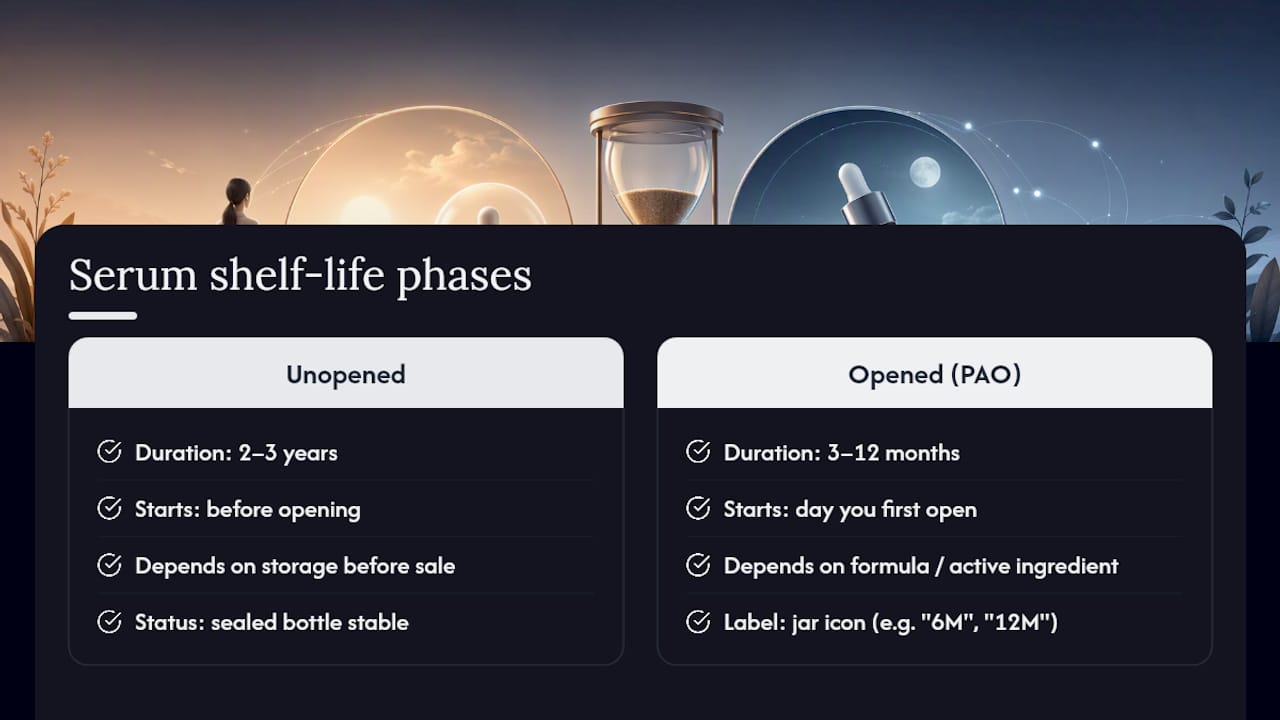
Treat that PAO number as a countdown that starts the day you first open the bottle, not the day you bought it.
How Can You Tell if a Serum Has Expired?
A serum doesn’t always announce that it’s gone bad with a dramatic smell, so it helps to know exactly what to check.
- Look at the color. A vitamin C serum turning amber, orange, or brown is a textbook sign of oxidation, and it means the active has largely lost its punch.
- Smell it. Any sour, rancid, or chemically “off” odor that wasn’t there when you bought it signals the formula has broken down.
- Check the texture. If the serum has separated into layers or gone gritty and shaking doesn’t fix it, the emulsion has failed.
- Watch your skin. New redness, stinging, breakouts, or a rash after use is an automatic discard, no exceptions.
- Don’t assume “looks fine” means “is fine.” A serum can appear normal while harboring bacteria or mold introduced through dirty fingers or a contaminated dropper, especially in humid bathrooms.
That last point trips people up the most. Contamination doesn’t always come with a warning sign, which is exactly why the PAO date matters even when a product still smells and looks normal.
What Are the Best Storage Practices for Serums?
Where and how you store a serum matters as much as the formula itself. Environmental stress, light, heat, humidity, and repeated oxygen exposure, breaks down active ingredients faster than almost anything else, and the countdown usually starts the moment you open the cap.
A few rules cover most of what actually protects potency:
- Keep serums below about 77°F. Heat speeds up the chemical reactions that degrade actives like vitamin C and retinol.
- Store in a drawer or cabinet away from direct sunlight. Amber glass or opaque bottles block UV rays that clear packaging lets straight through.
- Choose airless pump packaging over open droppers whenever you can. Every time a dropper touches your skin, it introduces bacteria back into the bottle.
- Screw caps on tightly and immediately after use rather than leaving bottles open on the counter.
- Skip the bathroom shelf. Steam and humidity from showers accelerate breakdown and encourage microbial growth.
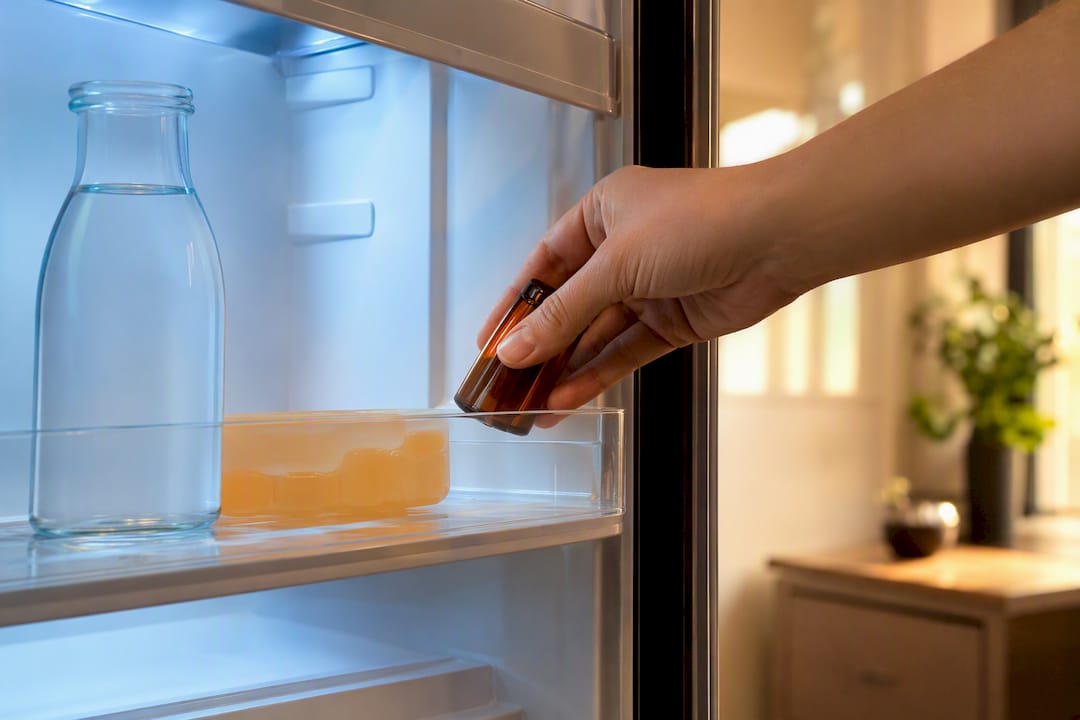
Refrigeration helps certain formulas more than others. Vitamin C, retinol, and enzyme or probiotic-based serums benefit most, since cold slows the oxidation and enzymatic activity that degrade them fastest. If you do refrigerate a serum, let it come to room temperature briefly before applying, and keep it in a sealed bag so condensation doesn’t seep past the cap.
Pro Tip: Keep vitamin C serums in the fridge door during summer months. The temperature swing from a warm bathroom to a cool fridge can extend usable potency noticeably, and it takes zero extra effort once it’s part of your routine.
How Long Do Specific Serum Ingredients Actually Last?
Not every active degrades at the same rate, and knowing which ones are fragile changes how you shop and store.
- Vitamin C (L-ascorbic acid): Lasts roughly 3 to 6 months after opening. It’s one of the least stable actives in skincare, and ambering is your visual warning that oxidation has already started. Refrigeration slows this considerably.
- Retinol: Holds up for about 6 months once opened. Light and heat break it down fast, so opaque, airtight packaging isn’t a luxury, it’s a requirement.
- Hyaluronic acid and niacinamide: Generally the most forgiving, often remaining stable for up to 12 months after opening thanks to their simpler molecular structure.
- Peptides: Typically good for 6 to 9 months. Refrigeration can meaningfully extend their working life since heat accelerates the breakdown of the peptide bonds.
- AHAs, BHAs, and enzyme-based exfoliants: Often the shortest-lived category. Humidity and heat both speed up degradation, so these need consistent cool, dry storage more than almost anything else in your cabinet.
If you’re deciding what to layer and in what order to preserve each active’s effectiveness, a serum layering routine that limits air exposure per use goes a long way toward stretching out that window.
Where Do You Find Expiration Dates and PAO Symbols?
Expiration information usually sits in one of two spots: printed near the batch code on the bottom or back of the packaging, or as a small open-jar icon with a number and letter, like “12M,” molded into the label or box.
That PAO number is the number that matters most day to day. “6M” means six months from the date you opened it, not six months from manufacture. Cosmetic chemists and dermatologists generally treat that figure as a hard toss date rather than a rough suggestion.
A few things worth knowing about the regulatory side:
- The FDA does not require an expiration date on most cosmetics, including serums, though it does mandate dating for certain products like sunscreens and some OTC acne treatments.
- Most cosmetic shelf-life claims rely on the manufacturer’s own stability testing, which is why PAO symbols exist as a voluntary industry standard rather than a federal mandate.
- Preservative system and packaging design affect spoilage risk more than whether the product is technically labeled a “serum,” “cream,” or “gel.”
What Should You Do With an Expired Serum?
Stop using it right away. If you’ve already developed irritation, redness, or a rash, monitor it closely and see a dermatologist if it doesn’t calm down within a day or two.
For disposal, expired serums can go in regular household trash. Peeling off the label first is optional but useful if you want to avoid confusing it with an active product later.
To avoid repeating the waste:
- Buy smaller sizes for unstable actives like vitamin C so you finish the bottle inside its PAO window.
- Prioritize airless-pump packaging when choosing between similar formulas.
- Set a simple usage schedule or reminder so an expensive serum doesn’t sit half-used in a drawer for a year.
How Does Cellure Design Serums to Stay Stable Longer?
Cellure formulates with stability in mind from the start, not as an afterthought. Actives like tranexamic acid, polynucleotides, and peptides go into tinted glass and airless pump packaging specifically because that combination limits the oxygen and light exposure that cause early breakdown.
The care steps that protect any serum, tight caps, cool and dark storage, minimal skin contact with the dispenser, apply directly to Cellure’s product line. A complete regimen guide walks through how to build habits that keep every bottle performing closer to its full window.
A Few Habits That Actually Move the Needle
If you only take one seasonal step, put vitamin C and enzyme serums in the fridge once summer heat hits. Beyond that, two habits do most of the work: screw caps on tight every time, and keep fingers off the dropper tip. Skin reacting badly? Stop immediately and don’t second-guess it.
— Sara
A Stability-Minded Option Worth Considering
If you’ve read this far, you already know that packaging and formulation decisions matter as much as the ingredient list itself. Cellure’s Complete Skin Repair Kit was built around that principle, pairing clinically supported actives with tinted glass and airless dispensing designed to slow oxidation from day one.
The kit bundles targeted formulas so you’re not left guessing which bottle needs the fridge and which one belongs in a dark drawer, each product ships with its own storage guidance printed right on the packaging. Check the product page for full ingredient details and care instructions, and see whether it fits the routine you’re trying to protect.
Sources
- Do Skin-Care Products Expire? When and Why You Should Throw Out Certain Serums and Creams | Allure
- Shelf life and expiration dating of cosmetics — FDA
- You Might Be Storing Your Vitamin C Serum Wrong. Try This Instead. — Wirecutter/NYT
Recommended
Share