


Can You Layer Peptides and Acids? Yes, With One Real Catch
Yes. Most peptides pair safely with acids as long as you sequence them correctly, with one genuine chemistry exception: GHK-Cu (copper peptides) and high-concentration L-ascorbic acid fight each other at the molecular level, so keep those two apart.
The rule that governs almost everything else is simple. Apply thin, water-based products before thick, oil-based ones. Use low-pH acids first, then wait before layering pH-sensitive actives on top. And when in doubt, split your routine across AM and PM instead of stacking everything at once.
- Thin to thick, always: liquids and serums before creams and oils.
- Wait about ten to twenty minutes after an acid before applying peptides or retinoids.
- Separate copper peptides from strong vitamin C by time of day, not just product.
Cellure builds its Complete Skin Repair Kit around this exact logic, pairing peptides with buffered, barrier-friendly actives instead of raw acids that fight for the same real estate on your face.
TL;DR:
- Copper peptides and high-concentration vitamin C should be kept apart and scheduled separately to prevent chelation and neutralization.
- Waiting 10 to 20 minutes after acids before applying peptides or retinoids is crucial to avoid irritation and maintain ingredient stability.
- Low-pH acids in the 3 to 4 range require careful sequencing, with buffers or times to restore skin pH before layering peptides or retinoids.
- For those with sensitive skin, alternating active nights or reducing acid frequency minimizes irritation and supports barrier recovery.
- Cellure’s formulations are designed around these principles, with products that incorporate pH-friendly, barrier-supporting actives for safe layering.
Table of Contents
- Layering Peptides and Acids: The Core Rules That Actually Matter
- Which Peptides Conflict With Acids and Vitamin C?
- How Acid pH Affects Peptide Layering and Timing
- Copyable AM and PM Routines for Layering Peptides and Acids
- How to Patch Test and Recover From a Layering Mistake
- Why Cellure’s Formulation Approach Backs These Layering Rules
- The Myth-Busting Take on Peptide and Acid Layering
- Get Peptide and Acid Layering Right From the Start
- Key Takeaways
- Sources
Layering Peptides and Acids: The Core Rules That Actually Matter
Skincare layering isn’t complicated once you understand the two forces at work: texture and pH. Get those right, and you can combine almost any peptide with almost any acid without wasting product or irritating your skin.
Here’s the order that works for nearly every routine:
- Cleanser to clear the slate.
- Acids or exfoliants (if using) while skin is dry and receptive.
- Wait 10 to 20 minutes. This isn’t a marketing suggestion. Skin buffers its surface pH back toward its resting state within minutes of acid contact, and giving it that window protects whatever you layer next.
- Peptide serum, applied to slightly damp or freshly buffered skin.
- Moisturizer to seal everything in.
- SPF in the morning, non-negotiable.
Antioxidants like vitamin C do their best photoprotective work in the morning, paired with sunscreen, since that’s when they’re neutralizing the free radicals from UV exposure and pollution. Retinoids belong at night, when they’re not competing with sunlight for your skin’s attention. Peptides are the flexible players here. Most signal peptides and neuropeptides tolerate either slot, morning or night, because they’re stable across the pH ranges typical skincare occupies.
The one place people overthink things is pH-aware sequencing. Low-pH acids, think glycolic or salicylic in the 3 to 4 range, need to do their job and let your skin’s natural buffering system reset before you introduce something pH-sensitive like a peptide or retinoid. Rushing this step is where irritation starts, not from the acid or the peptide alone, but from stacking them while your skin is still in flux.
Pro Tip: If your routine already includes a retinoid, an acid, and a peptide, don’t force all three into one night. Alternate: acid one evening, retinoid the next, and let peptides work on both nights since they’re gentle enough to layer daily.
When should you combine everything in one sitting versus spreading it across nights? If your skin is resilient and you’ve already built tolerance to each active individually, same-night layering with proper wait times works fine. If you’re newer to actives or have reactive skin, alternating nights removes the guesswork entirely.
Which Peptides Conflict With Acids and Vitamin C?
Not all peptides behave the same way, and knowing which category yours falls into tells you exactly how cautious to be.
Signal peptides, the Matrixyl family being the most recognizable, work by sending messages to skin cells that encourage collagen production. Carrier peptides like GHK-Cu deliver trace minerals, in this case copper, directly to skin cells. Neuropeptides such as Argireline work differently altogether, softening the appearance of expression lines by limiting the muscle contractions that form them, similar in concept to how injectables work but through topical application.
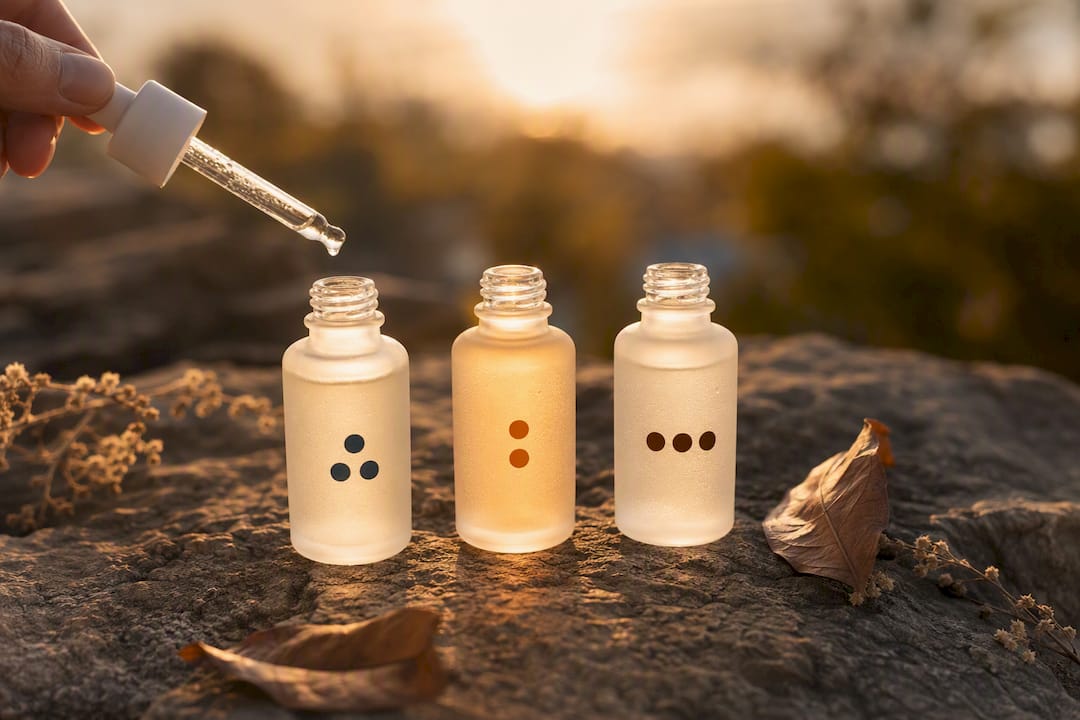
Here’s where the real conflict lives: L-ascorbic acid, the purest and most potent form of vitamin C, can chelate copper, meaning it binds to and strips the copper ion right out of GHK-Cu. That’s not a theoretical concern. It’s a documented chemical interaction that neutralizes the very thing that makes copper peptides functional.
Matrixyl and Argireline don’t share this vulnerability. Both are stable across typical cosmetic pH ranges and hold up fine alongside acids, vitamin C, and retinoids when you sequence them with basic care.
If GHK-Cu is part of your routine, you have three workarounds:
- Use copper peptides at night and reserve L-ascorbic acid for morning.
- Swap to a stabilized vitamin C derivative like sodium ascorbyl phosphate or ascorbyl glucoside, which are less acidic and far less prone to chelating copper.
- Give at least a few hours of separation if you insist on using both in the same day.
Topical peptide evidence overall is modest but genuinely supportive, with copper peptides and Matrixyl variants showing up consistently in formulations aimed at fine lines and texture. Worth noting: topical peptides work through a different mechanism and safety profile than injectable versions, so don’t expect injectable-level results from a serum.
How Acid pH Affects Peptide Layering and Timing
AHAs and BHAs work by temporarily dropping your skin’s surface pH, usually into the 3 to 4 range, which is what allows them to loosen the bonds holding dead skin cells together. That drop is not permanent. Your skin’s own buffering mechanisms restore surface pH within minutes, which is exactly why the standard 10 to 20 minute wait exists.
That window isn’t arbitrary caution. It’s a pragmatic compromise grounded in how skin actually behaves, not a rigid lab threshold that assumes your face is a test tube.
Here’s how to apply that in practice:
- Cleanse and apply your acid on dry skin for maximum effectiveness.
- Set a timer for 10 to 20 minutes. Use this time to let the product fully absorb rather than rushing to the next step.
- Check for tightness or residual tingling. If your skin still feels reactive, extend the wait or move your peptide to the next night instead.
- Layer peptides and moisturizer once skin feels calm and pH has normalized.
PHAs (polyhydroxy acids like gluconolactone) are the gentler cousins of AHAs and BHAs. Their larger molecular size means slower penetration and less aggressive pH shifts, which makes them a better daily companion for peptides if you want exfoliation without the wait-and-worry routine.
Pro Tip: If you’re combining a strong acid with a retinoid on top of peptides, don’t try to fit all three into one session. Move the acid to a separate night entirely, and let peptides bridge the gap between active nights to support recovery.
Copyable AM and PM Routines for Layering Peptides and Acids
Theory is fine, but what you actually need is a routine you can follow tomorrow morning without overthinking it.
Morning routine:
- Cleanser
- Stabilized vitamin C derivative or another antioxidant serum
- Peptide serum, if your formula doesn’t already include one
- Moisturizer
- SPF
Peptides work well applied before moisturizer, since that sequencing lets the smaller peptide molecules reach skin before you seal everything with a heavier cream.
Evening routine, option A (peptide-forward, low irritation):
- Cleanser
- Peptide serum
- Moisturizer
This is your recovery-night routine, the one you reach for after a heavier active night or when your skin needs a break.
Evening routine, option B (active anti-aging night):
- Cleanser
- Acid, then wait 10 to 20 minutes
- Peptide serum (or save your retinoid for a separate night if you’re using both)
- Moisturizer
For most people juggling acids, retinoids, and peptides, a weekly alternating schedule looks like this: acid night, peptide-only recovery night, retinoid night, peptide-only recovery night, repeat. That gives your skin barrier real downtime between stronger actives instead of stacking stress night after night.
Sensitive skin needs a lighter touch. Swap AHAs and BHAs for PHAs, cut acid frequency to twice a week instead of nightly, and lean harder on the peptide-only recovery nights to rebuild tolerance before reintroducing anything stronger.
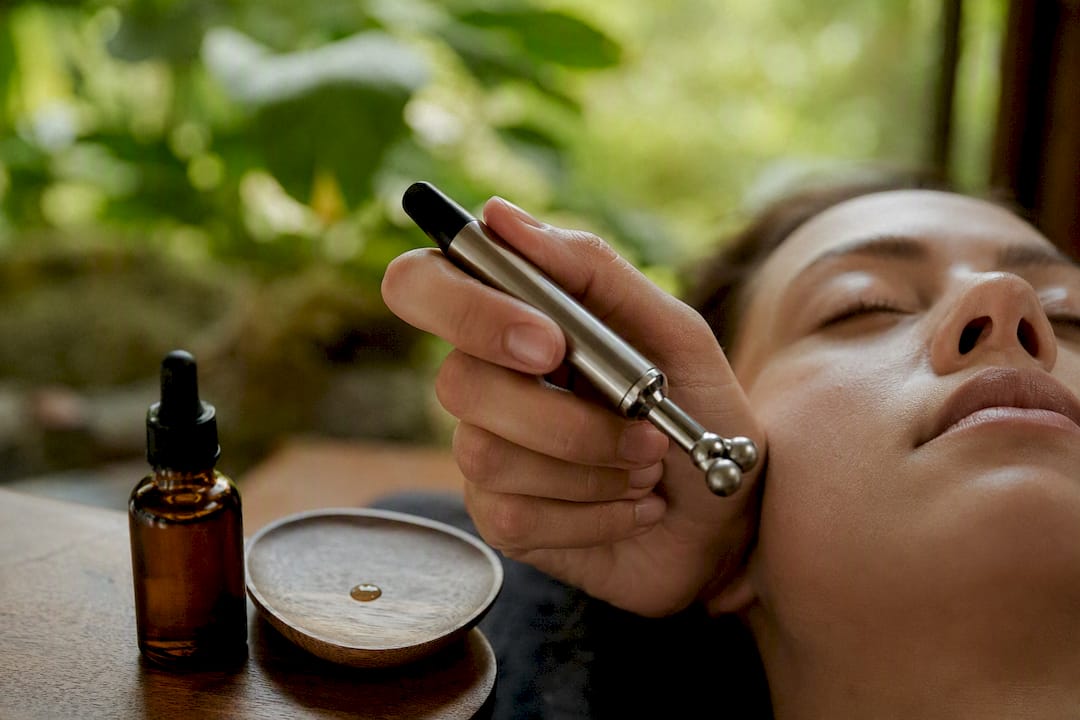
One more note if you use skincare devices like microcurrent tools or microneedling rollers: keep your sequencing simple on those days. Apply peptides according to the device manufacturer’s guidance rather than your usual full stack, since devices change how actives penetrate and layering too much on top can overwhelm skin that’s already more permeable than usual.
How to Patch Test and Recover From a Layering Mistake
Before adding any new acid or peptide to an existing routine, patch test on your inner forearm or behind your ear for 48 to 72 hours. No redness, itching, or bumps means you’re likely clear to move to your face.
From there, introduce actives gradually rather than all at once. A reasonable pace is one new active every 2 to 4 weeks, giving your skin barrier time to adjust before you add the next variable.
- Patch test for 48 to 72 hours before facial application.
- Introduce one active and monitor for a full 2 to 4 weeks.
- Watch for barrier damage signs: persistent redness, stinging with normally mild products, flaking, or a tight feeling that doesn’t ease with moisturizer.
- Stop all actives immediately if you spot these signs, and simplify to a bare-bones routine of gentle cleanser, ceramide-rich moisturizer, and hyaluronic acid.
- Reintroduce peptides first once skin calms, since they’re generally low-irritation and can actively support barrier recovery rather than working against it.
Pro Tip: If irritation lingers past two weeks of stripping back your routine, that’s your signal to see a dermatologist rather than keep troubleshooting on your own.
Why Cellure’s Formulation Approach Backs These Layering Rules
Cellure builds its serums and kits around the same chemistry this article just walked through: sequencing that respects pH, ingredient pairings that support rather than undercut each other, and peptide concentrations chosen for stability, not just marketing claims.
That shows up in specific formulation choices:
- Polynucleotides and peptides are paired to support both structural repair and visible firmness.
- Tranexamic acid is used for tone correction without the pH volatility of harsher brightening acids.
- Ceramides and hyaluronic acid appear alongside actives to keep the skin barrier reinforced while peptides do their work.
The chemistry only works if the formulation respects it. A peptide that’s structurally sound but poorly paired in a routine won’t perform any better than a cheap one, and a well-paired but unstable peptide won’t either.
Readers who want to go deeper into product-level choices can look at Cellure’s breakdown of top peptides in skincare or its guide on applying peptide serums for step-by-step technique.
The Myth-Busting Take on Peptide and Acid Layering
The blanket warning to “never mix peptides with acids or vitamin C” is lazy advice, and it’s been repeated so often that people avoid perfectly good combinations out of misplaced caution. The actual conflict is narrow: copper peptides and high-concentration L-ascorbic acid. That’s it. Everything else, Matrixyl variants, Argireline, most acids at reasonable concentrations, works together fine with basic sequencing.
What gets overlooked constantly is that peptides aren’t the fragile ingredient in most routines. Acids and retinoids are the ones that need careful handling. Peptides are the workhorses that clean up after them, supporting barrier recovery on the nights your skin needs a break from stronger actives.
If I had to pick the one thing readers should prioritize first, it’s not memorizing every possible conflict. It’s building the patience to wait those 10 to 20 minutes after an acid before layering anything else. That single habit prevents more irritation than avoiding any specific ingredient combination ever will.
— Sara
Get Peptide and Acid Layering Right From the Start
Cellure formulates around the exact chemistry this guide covers, so you’re not stuck guessing which vitamin C derivative won’t strip your copper peptides or which peptide concentration actually holds up next to an acid. That groundwork is already done in the formula.

The Complete Skin Repair Kit bundles peptide-forward serums with barrier-supporting actives designed to be layered correctly out of the box, no separate purchases required to figure out sequencing on your own. It suits anyone who’s read this far and wants a routine that’s already solved the pH and timing puzzle rather than one more product to slot into an existing lineup and hope for the best.
If you’re rebuilding your routine around these layering rules, start by browsing the full product range to see which formulations match your specific concerns, whether that’s firmness, tone, or barrier repair.
Key Takeaways
Layering peptides and acids works safely for most routines when you sequence by texture and pH, and the only major chemistry conflict is copper peptides with strong L-ascorbic acid.
| Point | Details |
|---|---|
| Order by texture and pH | Apply thin, water-based products before thick creams, and acids before peptides. |
| Wait after acids | Give skin 10 to 20 minutes after an acid before applying peptides or retinoids. |
| Watch the GHK-Cu exception | Separate copper peptides from high-concentration L-ascorbic acid by time of day. |
| Alternate strong actives | Space acid and retinoid nights apart, using peptide-only nights to recover. |
| Choose formulas built for this | Cellure’s Complete Skin Repair Kit pairs peptides with barrier-supporting actives already sequenced correctly. |
Sources
- How to Layer Peptides With Retinol, Vitamin C, and Acids Without Conflicts | Glowstice
- Dermatologist Guide: Layering New Serums (2026)
- 10 Best Peptides for Skin: Wrinkles, Collagen & Anti-Aging (FormBlends)
- Vitamin C serum guide — Cleveland Clinic
- What do peptides do for skin? — Ulta Beauty