


Firmness Boosting Techniques: A Science-Backed 8-12 Week Plan
The fastest evidence-backed route to firmer skin is a consistent 8 to 12 week protocol built around targeted serums (peptides, polynucleotides, retinoids) plus optional oral collagen peptides, with a clear escalation path to clinician-delivered polynucleotide boosters if progress stalls. Expect three stages: hydration and surface smoothing at 1 to 2 weeks, visible texture and tone shifts at 4 to 8 weeks, and measurable structural change at 8 to 12-plus weeks. Dermatology researchers track that structural change with instrumental tools, not guesswork: clinical instruments such as Cutometer, Corneometer, and high-frequency ultrasound image elasticity, hydration, and dermal density respectively.
Here’s what that timeline looks like in practice:
- Weeks 1 to 2: surface hydration improves, skin feels plumper and looks smoother in the mirror.
- Weeks 4 to 8: peptide and retinoid activity starts remodeling collagen; fine lines soften.
- Weeks 8 to 12+: measurable gains in firmness and elasticity show up on clinical instruments, not just in the mirror.
The real signal to watch: a randomized controlled trial on oral bioactive collagen peptides found firmness improvements were still present four weeks after participants stopped taking them, evidence that this is structural change, not a temporary plumping effect.
Key Takeaways
Firmer skin comes from consistent 8 to 12 week use of fibroblast-stimulating actives (polynucleotides, peptides, retinoids, collagen peptides), not from any single product applied once.
| Point | Details |
|---|---|
| Commit to 8-12 weeks | Structural firmness change requires consistent daily use for at least 8 weeks before judging results. |
| Layer actives correctly | Antioxidants and HA in the morning, peptide or PN-targeting treatments and retinoids at night. |
| Track real progress | Photos and how skin feels matter, but Cutometer, Corneometer, and HFUS measure actual structural change. |
| Know your escalation point | Consider clinician PN boosters only after a full 12 weeks of topical use shows limited improvement. |
| Choose kits with disclosed actives | Cellure’s Complete Skin Repair Kit sequences peptide and PN-targeting serums around this exact protocol. |
Table of Contents
- What Are the Best Firmness Boosting Techniques for Aging Skin?
- Which Ingredients Actually Improve Skin Firmness?
- How Do You Build a Daily Routine for Firmer Skin?
- Should You Try At-Home Serums or See a Clinician for Injections?
- What Should You Look for When Buying a Firmness Serum or Kit?
- How the Complete Skin Repair Kit Fits This Protocol
- Frequently Asked Questions
- Sources
What Are the Best Firmness Boosting Techniques for Aging Skin?
Skin loses firmness because the scaffolding underneath it breaks down faster than your body can rebuild it. That scaffolding, the extracellular matrix (ECM), is made of collagen, elastin, and hyaluronic acid held together by fibroblasts, the cells responsible for producing new structural protein. As you age, fibroblast activity slows, and enzymes called matrix metalloproteinases, MMP-1 in particular, chew through existing collagen faster than replacement fibers can form.
Several forces converge on this decline at once:
- ECM degradation: collagen and elastin fibers fragment and lose their organized structure.
- Fibroblast decline: fewer active fibroblasts means slower collagen and elastin synthesis.
- Rising MMP activity: these enzymes accelerate the breakdown of existing structural protein.
- Hyaluronic acid loss: the dermis holds less water, so skin loses volume and bounce.
- Ligament and fat pad shifts: support structures beneath the skin loosen with intrinsic aging, while UV exposure and smoking accelerate extrinsic damage.
This is why a hydrating serum can make skin look tighter within a day, that’s water binding to HA in the upper skin layers, while actual structural firming, fibroblasts producing new collagen and MMPs being held in check, takes weeks of consistent input to show up.
Which Ingredients Actually Improve Skin Firmness?
The ingredients with the strongest evidence behind them work on different parts of the same problem: some calm the enzymes breaking collagen down, some feed the fibroblasts building it back up, and some just hold water in the dermis so skin looks plumper while the slower repair work happens underneath.
Polynucleotides (PN) and PDRN sit at the top of that list for structural firmness. These DNA-derived fragments create a hydrating gel-like environment in the dermis while directly stimulating fibroblasts and inhibiting MMP-1, the enzyme most responsible for collagen breakdown. Reviews of PN and PDRN treatments describe meaningful gains in elasticity, hydration, and texture, and the effect gets stronger when PN is paired with hyaluronic acid rather than used alone. Onset for topical PN products tends to run parallel to other regenerative actives: some hydration within days, structural remodeling over several weeks.
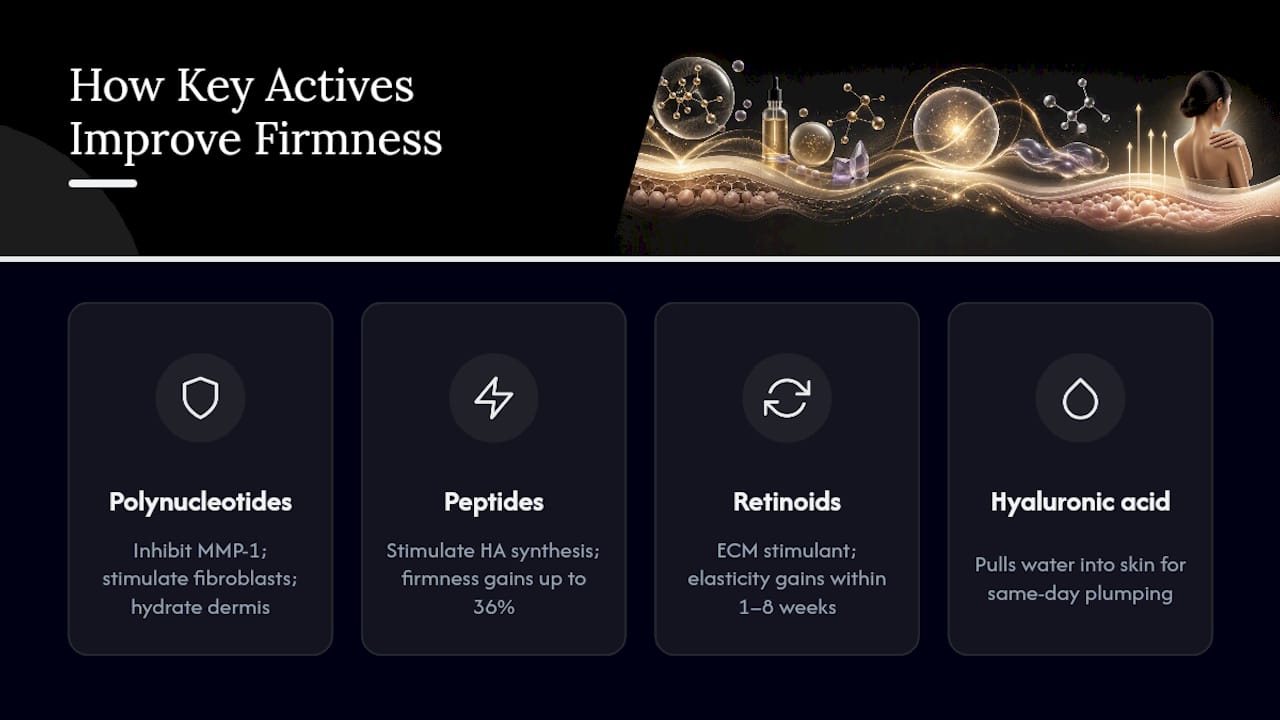
Bioactive peptides are a broader category, and not all peptides do the same job. Tripeptides that stimulate hyaluronic acid synthesis work by prompting skin to make more of its own moisture-binding matrix, improving both firmness and volume. A trifunctional peptide cream tested over 28 days produced measurable Cutometer improvements along with histologic evidence of collagen reorganization, and 80% of volunteers saw improvement on at least one objective measure. A separate serum combining acetyl hexapeptide-8, a dipeptide neuromodulator, and gluconolactone showed firmness gains up to 36% over 8 to 12 weeks of consistent use.
Retinoids, including gentler options like HPR (hydroxypinacolone retinoate), remain a foundational ECM stimulant. A formulation combining low-dose HPR with pea peptide and antioxidants produced elasticity gains within one to eight weeks without reported irritation, useful for readers who’ve found stronger retinoids too harsh.
Topical hyaluronic acid does the immediate work: pulling water into the skin for that same-day plumping effect, while structural actives work in the background.
Oral collagen peptides address firmness from inside. The clinical trial referenced above found molecular weight influenced absorption efficiency, with smaller collagen peptide fragments crossing into circulation better than larger molecules, meaning concentration alone doesn’t predict results.
Niacinamide and antioxidant blends round out the list, supporting barrier function and limiting the oxidative stress that accelerates MMP activity in the first place. None of these work in isolation as well as they work stacked, which is the logic behind combination serums and multi-step kits rather than single-ingredient products.
How Do You Build a Daily Routine for Firmer Skin?
The daily framework is simpler than the ingredient list suggests. Mornings protect, evenings repair:
- Cleanse with a gentle, pH-balanced formula. Skip anything that strips the barrier.
- Morning serum: antioxidants plus hyaluronic acid, followed by broad-spectrum sunscreen. UV exposure directly accelerates the MMP activity discussed earlier, so this step isn’t optional.
- Evening cleanse, then a treatment serum built around peptides or PN-targeting actives, or a retinoid on ramp-up nights.
- Moisturizer to lock in actives and support the barrier while fibroblasts do their work overnight.
For introducing potent actives, go slow rather than fast:
- Weeks 0 to 2: introduce your peptide or PN-targeting serum nightly; add oral collagen peptides now if you’re using them, since the 12-week clinical timeline starts from day one.
- Weeks 2 to 6: if using a retinoid, ramp from two nights a week to nightly, watching for irritation.
- Weeks 6 to 12: hold the full routine steady. This is when instrumental measures typically start showing change.
Pro Tip: Apply water-based, active-rich serums before heavier creams, and give each layer sixty seconds to absorb before the next. If you’re combining a retinoid with a PN-targeting serum, don’t stack them on the same night until your skin has tolerated each independently for at least four weeks. Hold off on pairing actives with microneedling or gua sha until you’ve had 8 to 12 weeks of topical conditioning first, as introducing mechanical stimulation too early can irritate skin that hasn’t built tolerance yet.
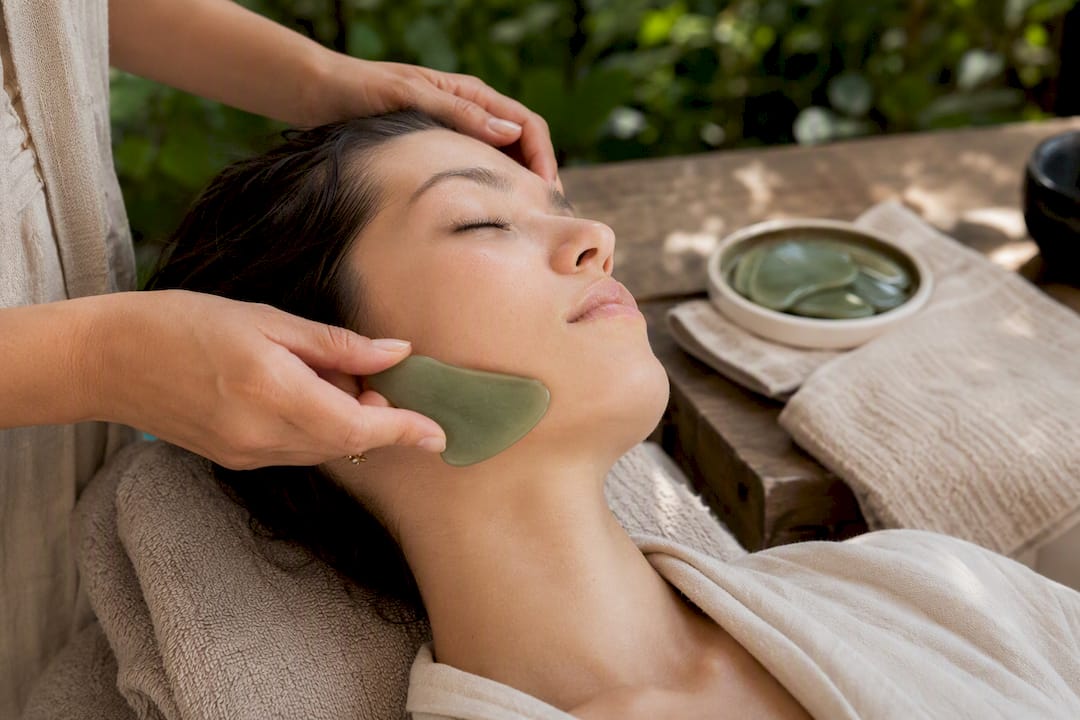
Sleep, hydration, and consistent sun protection aren’t side notes here, they’re part of the mechanism. Fibroblast repair work happens disproportionately during deep sleep, which is one reason poor sleep undermines skin regeneration even when your product routine is solid. Gentle facial massage or a gua sha tool, used after cleansing and before serum, can support lymphatic drainage and may help product absorption, though it’s a supporting habit, not a replacement for active ingredients.
Should You Try At-Home Serums or See a Clinician for Injections?
Stay with the at-home routine for the full 8 to 12 weeks before deciding whether to escalate. If Cutometer-style improvements or your own photos show limited change by week 12, or if your goals involve structural lift and volume that topicals can’t achieve, that’s when a conversation with a clinician about in-office polynucleotide boosters makes sense.
Clinician-delivered PN treatments typically follow a set cadence: three sessions spaced four weeks apart, then maintenance sessions roughly every three months. Practitioners use fine needles for intradermal delivery, which supports even distribution and better tolerability than larger-gauge injections. The rationale mirrors what topical PN does, fibroblast activation and ECM remodeling, just delivered with more direct access to deeper tissue.
Review-level evidence on PN and PDRN treatments describes them as having a favorable tolerability profile with promising efficacy for elasticity and hydration, but researchers note that long-term, multicenter registry data are still limited and protocols aren’t fully standardized across practices.
That gap matters for anyone deciding whether to escalate. Watch for these signals that it’s time to talk to a clinician rather than extend your at-home routine further:
- No visible or measured improvement after a full 12-week topical protocol.
- Laxity that persists despite consistent product use and adherence.
- A desire for contouring or volume restoration beyond what serums can realistically deliver.
Any injectable procedure calls for a qualified practitioner who can assess your skin, medical history, and goals before treatment, not a self-directed decision.
What Should You Look for When Buying a Firmness Serum or Kit?
Read the ingredient list before you read the marketing copy. A firming serum earns its price by being specific about what’s inside it, not by using words like “advanced” or “clinical grade” without backing them up.
Check for these before you buy:
- Named, dosed actives: PN or PDRN, specific peptides, a retinoid, hyaluronic acid, or collagen peptides, listed clearly, not buried behind proprietary blend names.
- Molecular weight disclosure for oral collagen peptides, since low-molecular-weight fragments absorb and act more efficiently than larger protein complexes.
- Published clinical data: look for brands that reference instrumental endpoints (Cutometer, HFUS, Corneometer) and study duration, ideally 8 weeks or longer.
- Tolerability information: clear guidance on ramp-up schedules for potent actives like retinoids.
- Transparent usage instructions covering layering order and application frequency.
- A reasonable return policy, since even well-formulated actives don’t suit every skin type.
Cellure’s Complete Skin Repair Kit is built around exactly this checklist, pairing PN-targeting and peptide actives with clear usage instructions rather than a single miracle ingredient.
A brand perspective on non-invasive firmness care
Evidence-based skincare should be the first option most adults reach for, not the fallback after something more invasive. Sara, editorial contributor at Cellure, argues that a well-sequenced topical and oral regimen deserves 8 to 12 weeks of genuine commitment before anyone assumes it isn’t working. Clinician-delivered options have their place, but they work best as a next step, not a shortcut past the foundational work topical actives do.
How the Complete Skin Repair Kit Fits This Protocol
Cellure built the Complete Skin Repair Kit to match the exact structure outlined above, not as a loose bundle of products, but as a sequenced system. The morning step pairs antioxidants with hyaluronic acid to protect and hydrate; the evening step targets peptides and PN-based actives to work on ECM remodeling while you sleep. If you’re adding oral collagen support, it slots in from day one, since the clinical timeline for oral peptides runs the full 12 weeks regardless of when you start.
Apply the evening serum nightly once your skin has adjusted, typically over the first one to two weeks, and hold off layering it with a separate retinoid until each has been tolerated independently. For a broader look at how Cellure formulates around cellular repair science, visit the Cellure homepage to see the full product range and ingredient philosophy. If you’re ready to commit to the 8 to 12 week window, the kit page has full usage instructions to get started this week.
Frequently Asked Questions
How long does it take to see results from firmness boosting techniques? Hydration and surface smoothing show up within 1 to 2 weeks. Visible texture and tone improvements typically appear between 4 and 8 weeks, while structural firmness gains measurable with clinical instruments generally take 8 to 12 weeks or longer.
Can natural firmness solutions really replace injectables? For most adults, a well-formulated topical and oral regimen can produce meaningful firmness gains without injections. Escalation to clinician-delivered polynucleotide boosters makes sense mainly when structural volume loss or persistent laxity remains after a full 12-week topical trial.
What’s the difference between hyaluronic acid and collagen peptides for firmness? Hyaluronic acid works fast, pulling water into the skin for immediate plumping, but the effect is largely surface-level and temporary. Collagen peptides work slower, supporting the fibroblasts that rebuild structural collagen, with effects that persist even after you stop using them.
Are retinoids necessary for a firmness boosting routine? Retinoids are one of the most established categories for stimulating collagen production, but gentler alternatives like HPR (hydroxypinacolone retinoate) paired with peptides can deliver elasticity improvements with less irritation, making them a reasonable substitute for sensitive skin.
How do I know if a firming serum contains enough active ingredient to work? Look for brands that disclose specific concentrations and reference clinical testing with instrumental endpoints like Cutometer or HFUS measurements, rather than relying on vague claims like “clinically proven” without published data behind them.
This article is general information, not a substitute for advice from a qualified doctor. Consult a qualified healthcare professional about your own circumstances before acting on anything here.
Sources
- The Sustained Effects of Bioactive Collagen Peptides on Skin Health: A Randomized, Double‐Blind, Placebo‐Controlled Clinical Study - PMC
- The effect of a serum containing acetyl hexapeptide‐8, dipeptide diaminobutyroyl benzylamide diacetate and gluconolactone on skin biomarkers, wrinkles and skin texture: Ex vivo and clinical studies