


The Role of Gentle Formulations in Sensitive Skincare
TL;DR:
- Gentle skincare formulations repair and protect the skin barrier by replenishing ceramides, bioactive peptides, and supporting ideal pH levels. They deliver sustained hydration, reduce irritation, and are especially effective for sensitive and aging skin through consistent, daily use. Clinical evidence confirms their ability to significantly improve barrier function and hydration with minimal adverse effects and high tolerability.
Gentle formulations are skincare products specifically engineered to repair and protect the skin barrier while minimizing irritation, making them the standard of care for sensitive and aging skin. The role of gentle formulations goes far beyond simply removing harsh ingredients. Products built around ceramides, biomimetic peptides like Tripeptide-29, and niacinamide work at the cellular level to restore hydration, reduce transepidermal water loss (TEWL), and rebuild structural integrity. Clinical evidence from 2026 confirms that hydration can improve by up to 72.5% with consistent use of a well-designed gentle formulation. That number matters because it tells you barrier repair is not a passive process. It requires the right ingredients, the right delivery system, and daily commitment.
How do gentle formulations work to repair and protect the skin barrier?
The skin barrier is a lipid-rich matrix in the stratum corneum, and its health depends on the precise balance of ceramides, fatty acids, and cholesterol. When this balance breaks down, as it does with age, environmental stress, or genetic sensitivity, the barrier loses its ability to retain moisture and resist irritants. Gentle formulations address this directly by replenishing the lipids the skin can no longer produce in sufficient quantities.
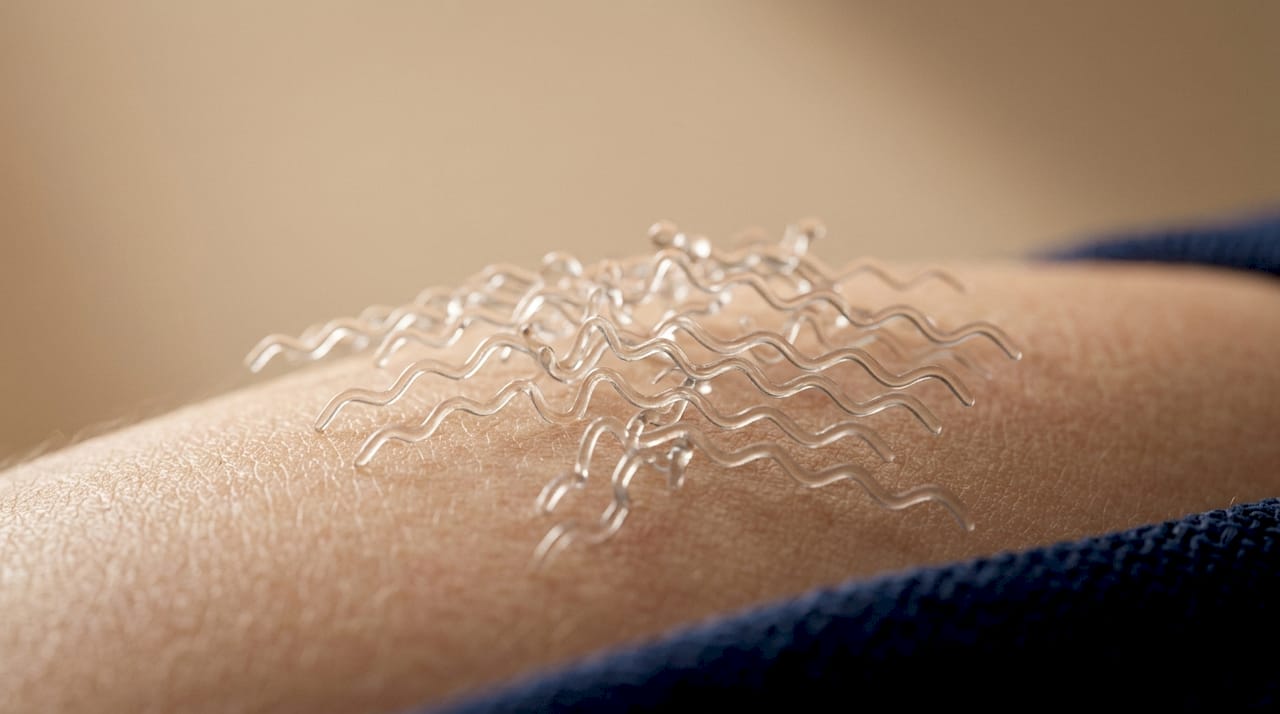
Ceramides are the most studied component in this repair process. Ceramide acyl chain length directly determines how effectively a formulation restores barrier function. Formulations containing ceramides with 39% C24 CER NP showed the strongest barrier enhancement effects in human in vivo testing, while shorter chain variants (C16 to C24) primarily improved hydration. This distinction matters for product selection because not all ceramide-containing products deliver the same outcome.
Biomimetic collagen peptides, specifically Tripeptide-29, work differently. They signal fibroblasts to increase collagen synthesis without triggering the inflammatory response that more aggressive actives like retinoids can cause. Niacinamide complements this by reinforcing the lipid envelope and reducing water loss through the epidermis. Together, these actives create a synergistic repair environment rather than a single-ingredient fix.
Here is what the mechanism looks like in practice:
- Ceramide replenishment restores the lipid bilayer, reducing TEWL and preventing moisture from escaping through compromised skin.
- Biomimetic peptides stimulate collagen production at the fibroblast level without irritation, supporting structural firmness over time.
- Niacinamide reinforces the skin’s lipid envelope and reduces redness by calming inflammatory pathways.
- Mild surfactant systems cleanse without stripping the acid mantle, preserving the pH range (4.5 to 5.5) where barrier enzymes function optimally.
- Ultra-micro liquid crystal emulsions encapsulate actives in structures that mimic the skin’s own lipid organization, improving penetration and reducing irritation risk.
Pro Tip: When reading an ingredient label, look for ceramide NP, AP, or EOP alongside a fatty acid source. A ceramide listed without a complementary lipid system will deliver far less barrier benefit than a complete lipid complex.
The holistic system approach to formulation design means cleanser pH, moisturizer lipid strategy, and application frequency must all work together. Barrier improvements depend on reducing cumulative stress across every step of a routine, not just one product.
What are the benefits of gentle formulations compared to traditional skincare?
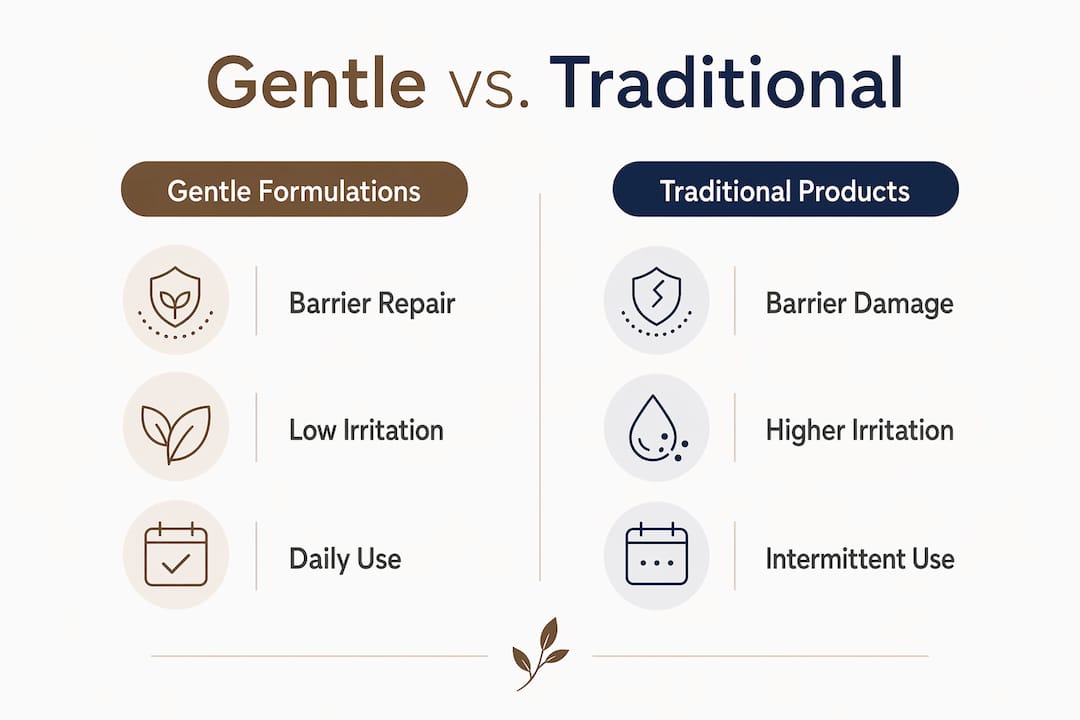
Traditional skincare products, particularly those built around high-concentration acids, sulfate cleansers, or alcohol-based toners, deliver visible short-term results by accelerating cell turnover or removing surface oil. The trade-off is chronic barrier disruption, which in sensitive and aging skin leads to persistent dryness, redness, and reduced tolerance over time. Gentle formulations take the opposite approach: they build barrier resilience so the skin can tolerate more over time, not less.
The clinical evidence for this approach is concrete. A ceramide-based moisturizer tested in children showed zero adverse reactions across 35 pediatric participants over 15 days, with 100% parental agreement on gentleness. If a formulation is safe and effective for pediatric skin, which is thinner and more reactive than adult skin, its tolerability profile for sensitive adult skin is well established. This is the kind of evidence that separates a genuinely gentle product from one that simply markets itself as such.
| Feature | Gentle formulations | Traditional products |
|---|---|---|
| Barrier impact | Repairs and reinforces lipid matrix | Often strips or disrupts barrier integrity |
| Irritation risk | Clinically validated low irritation | Higher risk, especially with acids and surfactants |
| Hydration outcome | Sustained improvement in TEWL and moisture | Short-term hydration, often followed by rebound dryness |
| Tolerability | Suitable for sensitive, pediatric, and aging skin | Requires skin adaptation period; not suitable for all types |
| Long-term adherence | High, due to comfort and absence of flare-ups | Lower, due to irritation-induced breaks in routine |
The adherence advantage is underappreciated. Consistent barrier maintenance depends on uninterrupted daily application. Products that cause flare-ups force breaks in routine, which undo accumulated barrier progress. Gentle formulations remove that obstacle entirely.
Which key ingredients define gentle formulations in 2026?
The science of gentle skincare has moved well past basic moisturizers. The most effective formulations in 2026 combine multiple bioactive systems, each targeting a specific aspect of barrier function or skin aging. Understanding what these ingredients do and why they are selected gives you a reliable framework for evaluating any product.
Ceramides with optimized acyl chain length remain the foundation. Ultra-long-chain ceramides (C24 to C30) show the strongest barrier recovery effects, particularly for sensitive dry skin where LC-MS/MS lipid profiling has confirmed elevated C24 species linked to barrier impairment. A product that specifies ceramide chain length in its formulation documentation is one that has been designed with this research in mind.
Tripeptide-29 combined with niacinamide represents the most clinically validated peptide pairing for aging skin. In a four-week study involving 47 women aged 36 to 65, twice-daily application of a dual-purpose lotion with 0.1% biomimetic collagen tripeptide and niacinamide reduced facial dryness by up to 93.7% and improved elasticity, wrinkle depth, and texture without adverse effects. The combination works because niacinamide addresses the lipid envelope while Tripeptide-29 targets the dermal matrix.
Ultra-micro liquid crystal emulsions are an advanced delivery technology worth knowing. An emulsion containing 4.5% Emulgade PL 68/50, 2.0% pumpkin seed oil, and 0.1% Japanese pumpkin polysaccharides demonstrated statistically significant TEWL reduction and skin hydration improvement in human volunteers. The liquid crystal structure mimics the lamellar organization of the stratum corneum, allowing actives to integrate into the barrier rather than sitting on top of it.
Pro Tip: A product’s pH matters as much as its active ingredients. Formulations outside the skin’s natural pH range of 4.5 to 5.5 can disrupt barrier enzyme activity even when every individual ingredient is gentle. Look for brands that publish their formulation pH or explicitly state pH-balanced design.
The importance of gentle formulations also extends to what is left out. Fragrance, denatured alcohol, and high-concentration preservatives are common irritants that undermine barrier function even in otherwise well-designed products. Genuinely gentle formulations avoid these not as a marketing claim but as a measurable formulation decision.
How can you incorporate gentle formulations into your daily skincare routine?
Building a routine around gentle formulations requires consistency more than complexity. Barrier repair is cumulative. A twice-daily application regimen of a biomimetic collagen tripeptide formulation showed initial hydration improvements within the first week, with deeper structural benefits emerging over four weeks. Skipping days resets that progress.
Follow these steps to build a routine that actually delivers results:
- Start with a pH-balanced cleanser. Choose a sulfate-free formula with a pH between 4.5 and 5.5. This preserves the acid mantle and prevents the barrier disruption that makes subsequent products less effective.
- Apply your active serum to damp skin. Ingredients like niacinamide and Tripeptide-29 penetrate more effectively when the stratum corneum is hydrated. Apply within 60 seconds of cleansing.
- Layer a ceramide-rich moisturizer immediately after. This seals in the actives and provides the lipid matrix the barrier needs. Look for ceramide NP or EOP alongside cholesterol and fatty acids.
- Use SPF every morning without exception. UV exposure degrades ceramides and accelerates TEWL. No gentle formulation can compensate for unprotected sun exposure.
- Limit exfoliation to once weekly maximum. Over-exfoliation is the single most common cause of barrier breakdown in people who already use gentle products. If your skin feels tight or reactive after exfoliating, extend the interval.
For practical guidance tailored to sensitive skin, Cellure’s anti-aging tips for sensitive skin covers how to sequence these steps for maximum barrier benefit.
Pro Tip: Track your skin’s TEWL response indirectly by monitoring how quickly your skin feels tight after cleansing. If tightness resolves within five minutes of applying moisturizer, your barrier is responding well. Persistent tightness beyond ten minutes signals ongoing barrier stress.
The importance of gentle formulations for long-term skin health comes down to one principle: a product you can use every day without interruption will always outperform a more aggressive product used inconsistently.
Key takeaways
Gentle formulations repair the skin barrier through ceramide replenishment, biomimetic peptides, and pH-compatible delivery systems, with clinical evidence confirming up to 93.7% reduction in facial dryness and zero adverse effects in sensitive populations.
| Point | Details |
|---|---|
| Ceramide chain length matters | C24 to C30 ceramides provide stronger barrier recovery than shorter-chain variants. |
| Peptide and niacinamide synergy | Tripeptide-29 with niacinamide improved hydration by 72.5% in a four-week clinical trial. |
| Tolerability drives adherence | Products with zero irritation enable daily use, which is required for sustained barrier repair. |
| Delivery system is part of the formula | Ultra-micro liquid crystal emulsions reduce TEWL significantly by mimicking stratum corneum structure. |
| Routine consistency is non-negotiable | Twice-daily application is the minimum frequency for measurable barrier and hydration improvements. |
What I’ve learned after years of watching gentle skincare evolve
The phrase “gentle” has been so overused in skincare marketing that it has nearly lost meaning. I have reviewed hundreds of formulations, and the gap between a product labeled gentle and one that is clinically validated as gentle is enormous. Most products earn the label by removing a handful of known irritants. The best ones earn it by actively rebuilding what compromised skin has lost.
What surprises most people is that gentle does not mean weak. The clinical data on Tripeptide-29 and ceramide-based systems shows outcomes that rival more aggressive actives, without the barrier disruption that forces users to take breaks. That consistency is where the real benefit accumulates.
The misunderstanding I see most often is treating gentle formulations as a temporary fix for reactive skin. They are not a bridge to something stronger. For aging and sensitive skin, they are the destination. The skin’s barrier capacity declines with age, and the goal of any serious skincare regimen should be to support that barrier indefinitely, not to push through it in pursuit of faster results.
The next frontier in this space is personalized ceramide profiling. Research using LC-MS/MS lipidomics to map individual ceramide deficits is already informing formulation design at the clinical level. Within a few years, the idea of a one-size-fits-all ceramide complex will feel as outdated as single-ingredient moisturizers do today.
— Sara
Gentle skincare solutions built on clinical evidence
Cellure formulates every product around the same principles this article covers: ceramide-based barrier repair, biomimetic peptides, and delivery systems validated by clinical measurement. The Complete Skin Repair Kit brings together targeted serums and treatment products designed specifically for sensitive and aging skin, with actives including Tripeptide-29, niacinamide, and polynucleotides. Each product in the kit is designed for twice-daily use without irritation, which means you can maintain the consistent application schedule that barrier repair requires. If you are ready to move from reactive skincare to a regimen built on barrier science, this kit is the place to start.
FAQ
What is the role of gentle formulations in skincare?
Gentle formulations repair and protect the skin barrier by replenishing ceramides, supporting lipid balance, and delivering bioactive ingredients without triggering irritation or inflammation. Their primary function is to restore barrier integrity and hydration, particularly in sensitive and aging skin.
How do ceramides in gentle formulations work?
Ceramides integrate into the stratum corneum’s lipid bilayer to reduce transepidermal water loss and strengthen barrier cohesion. Ultra-long-chain ceramides (C24 to C30) provide the strongest barrier recovery effects, as confirmed by human in vivo studies.
Are gentle formulations effective for aging skin?
Clinical studies confirm that gentle formulations with Tripeptide-29 and niacinamide reduced facial dryness by up to 93.7% and improved hydration by up to 72.5% in women aged 36 to 65 over four weeks. Efficacy is well established when formulations are applied consistently twice daily.
How do I know if a product is genuinely gentle?
Look for clinical evidence of TEWL reduction and hydration improvement, a stated pH between 4.5 and 5.5, and the absence of fragrance, denatured alcohol, and high-concentration preservatives. Marketing claims alone are not sufficient verification.
Why choose gentle products over stronger actives for sensitive skin?
Stronger actives like high-concentration retinoids or acids accelerate cell turnover but disrupt the barrier, causing flare-ups that interrupt routine use. Gentle formulations deliver measurable results without interruption, and consistent daily application produces greater cumulative benefit than periodic aggressive treatments.