


How Often Should You Use a Polynucleotide Serum?
Use a topical polynucleotide serum once nightly for maintenance, and only move to twice daily if the formulation supports it and your skin tolerates it well. Most people should start slow: every other night for the first week, then nightly once your skin adjusts. That’s the core of any sound polynucleotide serum frequency plan.
A few things change that answer:
- Sensitive skin should ramp up gradually and patch test before committing to nightly use.
- Any daytime active routine needs sunscreen layered on top, no exceptions.
- Topical delivery is not injectable delivery. PDRN serums support and maintain skin; they don’t replicate what a needle can do at the dermal level.
- Formulation quality (concentration, molecular weight, vehicle) determines whether once or twice daily makes sense for a given product.
Key Takeaways
Consistent daily application, nightly at minimum, drives more reliable results from a topical polynucleotide serum than sporadic or high-concentration use.
| Point | Details |
|---|---|
| Start nightly, ramp slowly | Begin every other night for a week, then move to nightly if skin tolerates it well. |
| Twice-daily is conditional | Only add a morning application if the formulation and your skin both support it. |
| Formulation transparency matters | Favor products that disclose concentration, molecular weight, and clinical backing. |
| Timelines vary by outcome | Expect hydration gains in 2 to 4 weeks; structural change often takes 6 to 12 weeks or more. |
| Cellure supports daily use | Cellure’s serums and the Complete Skin Repair Kit are formulated for sustainable nightly routines. |
Table of Contents
- How formulation and delivery affect polynucleotide serum frequency
- What’s the right routine for starting a polynucleotide serum?
- Where does a polynucleotide serum go in your routine?
- When will you actually see results?
- Is it safe to use a polynucleotide serum every day?
- Building a routine around Cellure’s polynucleotide formulas
- Sources
How formulation and delivery affect polynucleotide serum frequency
Not all polynucleotide serums are built the same, and that’s exactly why a blanket “use twice a day” rule doesn’t work across the category. Molecular weight and fragment length change how much of the active actually gets past the stratum corneum. Lower-weight PDRN fragments have shown more consistent topical signals in small trials, while larger, undegraded polynucleotide chains tend to sit closer to the surface and behave more like a hydration and barrier-support layer than a deep-penetrating treatment.
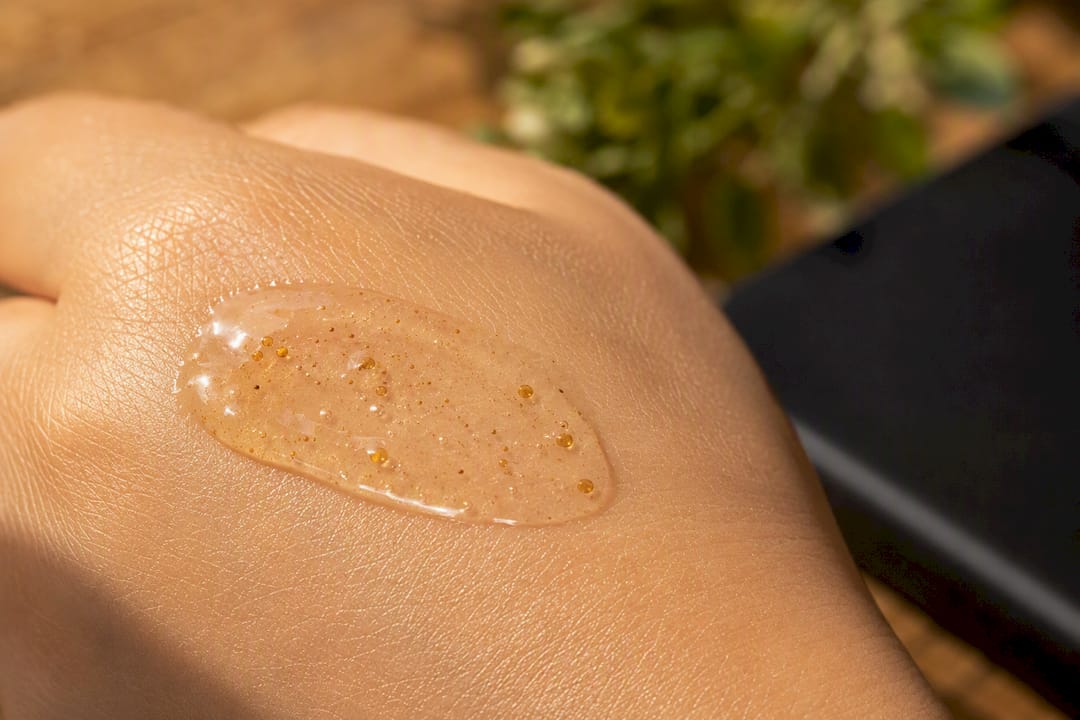
The vehicle matters just as much as the molecule. A lightweight hydrogel or serum base tends to move faster into skin than a heavy cream, which is one reason serums are the dominant format in this category. Some brands add encapsulation or delivery-enhancing tech specifically to make more frequent, even daytime, use practical without overwhelming the skin barrier.
Here’s the honest complication: injectable PDRN has a real evidence base behind it, and topical products don’t automatically inherit that credibility. Dermatology Times has flagged this directly, warning that topical PDRN faces a genuine delivery problem and that many products on shelves don’t disclose molecular weight or delivery data at all. That’s the single most practical thing to check before deciding how aggressively to use a product.
Statistic Callout: A randomized, double-blind, split-face study found that a topical PDRN-850K formula produced greater improvements in periocular dermal thickness and density than an identical-strength retinol formula over a few weeks, per research published in PLOS ONE. That’s a meaningful early signal, but it applied to one specific molecular weight and one specific application schedule, not to polynucleotide serums as a category.
What to actually look for before setting your frequency:
- Published clinical data tied to the specific formula, not just the ingredient name
- Stated concentration (vague “polynucleotide complex” labeling is a red flag)
- Clear usage instructions from the brand, and a willingness to follow them over guessing
Cellure’s own breakdown of how polynucleotides work in skin goes deeper into the mechanism if you want the formulation science behind this section.
What’s the right routine for starting a polynucleotide serum?
You don’t need a complicated regimen, just a sequence that respects how your skin barrier adjusts to a new active. Here’s a practical path:
- Week 1: Apply every other night to gauge tolerance. Watch for redness, tightness, or breakouts.
- Weeks 2 to 4: If skin looks calm, move to nightly application. This is where most people should stay long term.
- After 4 weeks: If your product is formulated for daytime use and your skin has adjusted well, consider adding a morning application for extra hydration support.
- Short intensified course (optional): For a specific concern like under-eye texture, some people run twice-daily application for 4 to 8 weeks, then step back down to nightly maintenance.
Nightly use alone is enough for most barrier-repair goals, as seen with products like the Medicube PDRN Pink One Day Serum. Twice daily is a decision you make based on product design and visible tolerance, not a default setting.
Pro Tip: Keep a simple notes app log of when you started, any irritation, and what you noticed each week. Two months from now, you won’t remember if week 3 or week 5 was when things actually improved, and that record is what tells you whether to keep the schedule or change it.

Where does a polynucleotide serum go in your routine?
Order matters more than people assume, especially once you’re layering multiple actives. The standard sequence:
- Cleanse
- Polynucleotide serum (on slightly damp skin, per common regimen guidance from PDRN product instructions)
- Thinner hydrating serums, peptides, or niacinamide
- Moisturizer
- Sunscreen (AM only, always)
If you’re also using retinoids or exfoliating acids, don’t stack them with your PN serum on the same night unless your skin is well-adjusted to both. Alternating nights, or buffering the acid with a moisturizer first, cuts down on unnecessary irritation. If your barrier already feels compromised, cut the acid entirely for a week or two and let the polynucleotide serum do maintenance work instead.
For sensitive skin, pairing your PN serum with straightforward barrier-support ingredients like hyaluronic acid or ceramides tends to work better than adding more active ingredients into the mix. Cellure’s guide on correct serum application technique covers drop counts and absorption timing if you want the mechanics dialed in.
When will you actually see results?
Set your expectations by timeline, not by week one. Early cosmetic changes, better hydration, a smoother surface, tend to show up in the first 2 to 4 weeks. Structural changes, the kind tied to dermal density and firmness, need longer. Narrative reviews on polynucleotides in aesthetic medicine put that window at 6 to 12 weeks or more, and note that study designs vary enough that “typical” results are still hard to pin down precisely.
| Timeframe | What to expect |
|---|---|
| 2 to 4 weeks | Hydration improves, texture feels smoother, minor redness may calm |
| 6 to 12 weeks | Firmness and density changes become more measurable, if they’re going to happen |
| 8 to 12 weeks, no change | Reassess the product, its formulation transparency, or talk to a dermatologist |
If you’ve been consistent for 8 to 12 weeks with nothing to show for it, the issue is more likely the product’s formulation or concentration than your skin.
Is it safe to use a polynucleotide serum every day?
Daily use is generally well tolerated, but a patch test isn’t optional if you’re new to PDRN or polynucleotide actives. Apply a small amount to your inner forearm or behind your ear and wait 48 to 72 hours.
- Mild, temporary redness or tingling that fades within an hour is usually fine.
- Persistent redness, itching, or small bumps after 24 to 48 hours means stop and reassess.
- Severe reactions, blistering, intense burning, or swelling, mean stop immediately and seek medical advice.
If you’re pregnant or breastfeeding, topical PN safety data is limited. That’s not the same conversation as injectable safety, and one shouldn’t be assumed to cover the other. Talk to a clinician before adding it to your routine. Expert commentary on PDRN serums reinforces this exact point: caution and ramp-up matter more than enthusiasm here.
Pro Tip: If you’re layering a new PN serum with an existing retinoid routine, introduce only one new variable at a time. Trying to troubleshoot irritation when you’ve changed two things at once wastes weeks you don’t need to lose.
Why trust this guide on polynucleotide serum frequency
This guide was written by Sara, a Cellure content author focused on cellular repair science and how it translates into real routines. It draws on:
- A 2026 randomized split-face clinical trial on topical PDRN
- Expert dermatology commentary addressing topical delivery limits
- A 2024 narrative review of polynucleotides in aesthetic medicine
- Cellure’s own formulation notes on safe ramp-up and maintenance scheduling
What we actually recommend to customers
We steer most people toward nightly-only use to start, adding a morning step only once tolerance is proven and the formula supports it. Sensitive-skin customers tend to do best with slow ramp-ups and simple pairings, not aggressive stacking. And compared to clinic procedures, a consistent topical routine is the lower-cost, lower-commitment way to maintain results between more intensive treatments, not a replacement for them.
— Sara
Building a routine around Cellure’s polynucleotide formulas
Cellure formulates its polynucleotide serums for daily use, with lightweight vehicles designed to support consistent nightly application without overwhelming the skin barrier. That’s the frequency this entire guide has been building toward: steady, sustainable use over sporadic high-concentration experiments.

If you’re starting from scratch, the Complete Skin Repair Kit is built around exactly the ramp-up-then-maintain approach outlined above, pairing a polynucleotide serum with complementary barrier-support actives so you’re not guessing at product order or timing. It’s a practical starting point if you’d rather follow a structured system than assemble one product at a time. Browse the full Cellure lineup to see how the serums, kits, and routines fit together, and start with the kit if you want the ramp-up schedule built in from day one.
Sources
- Topical PDRN-850K clinical study (PLOS ONE)
- Polynucleotides in aesthetic medicine: narrative review (MDPI, 2024)