


3-Step Hyaluronic Acid Layering That Actually Hydrates
The simplest version: apply hyaluronic acid to damp skin, then seal it immediately with a moisturizer before the water evaporates. Layer everything else from thinnest texture to thickest, and use HA at both the morning and night steps as your hydrating serum. Some serums are built around this exact sequence, and a randomized clinical trial backs the reasoning behind it.
TL;DR:
- Applying hyaluronic acid to damp skin and sealing it with a moisturizer is essential, especially in dry or heated environments, to prevent dehydration.
- Layer water-based serums before gel serums, then apply gel serums before creams, and seal everything with moisturizer to optimize absorption and hydration.
- Using high molecular weight HA provides immediate plumping while low molecular weight HA supports longer-lasting hydration, which can be combined for best results.
- Applying multiple HA products generally offers no benefit for already hydrated skin and can cause pilling or stickiness unless targeting severe dryness.
- Environmental conditions like humidity and temperature influence HA performance, so adjustments such as humidifiers or richer moisturizers are recommended in dry seasons.
Table of Contents
- The Two Rules Behind Hyaluronic Acid Layering
- Where HA Fits in Your Morning and Night Routine
- What You Can (and Can’t) Layer With HA
- Why Molecular Weight Changes How HA Layering Works
- Simple and Advanced HA Layering Routines You Can Copy
- Mistakes That Undo Your HA Layering Routine
- The Clinical Evidence and Expert Guidance Behind These Rules
- How to Patch Test Layered HA Products to Avoid Irritation
- How Humidity and Temperature Change HA Layering Results
- What Formulation Work Taught Us About HA Layering
- Follow These Rules With a Kit Built Around Them
- Sources
The Two Rules Behind Hyaluronic Acid Layering
Everything about hyaluronic acid layering comes down to two mechanical facts about how the ingredient behaves on skin.
Hyaluronic acid is a humectant. It grabs water molecules and holds onto them, but it needs a water source to grab from. Apply it to dry skin, especially in a heated or air-conditioned room, and it can pull moisture from the deeper layers of your skin instead of the air, leaving you drier than before you started. That’s why the standard advice from Healthline is to mist or splash your face first, then apply HA while skin is still damp.
The second rule is texture order. Water-based serums go on before gel serums, gel serums go on before creams, and creams go on before facial oils. Applying a heavy cream first blocks anything thinner from penetrating afterward.
- Damp skin gives HA something to bind to instead of borrowing water from your skin barrier.
- Thin-to-thick order lets each product actually reach the surface it’s designed for.
- A moisturizer or occlusive on top locks that hydration in instead of letting it evaporate within minutes.
Skip that last step and you’ve done half the job. HA without a seal is a humectant with nowhere to put the water it just attracted.
Where HA Fits in Your Morning and Night Routine
Hyaluronic acid works at both ends of the day, but the products around it change.
- Cleanse, then apply your HA serum to skin that’s still slightly damp, not dripping.
- Wait about a minute, pressing (not rubbing) the serum in with your palms rather than dragging it with fingertips.
- Layer any antioxidant or vitamin C serum next if your formula calls for it, though many vitamin C products are designed to go on before HA. Check your specific product’s instructions here.
- Moisturizer goes on immediately after, while skin still feels slightly tacky.
- Sunscreen is always the last step in the morning, applied after moisturizer has settled for a minute or two.
At night, the order shifts slightly. Apply HA after cleansing, then decide whether tonight is a retinol night or a rest night. On retinol nights, some people prefer HA first as a buffer, then retinol, then a richer moisturizer. On other nights, HA and a barrier cream is the whole routine.
Timing matters more than people assume. Rubbing a serum in fast creates friction and pilling; pressing it in with flat palms for 20 to 30 seconds gives it a chance to actually absorb. If you’re layering more than two serums, wait times of roughly 30 to 60 seconds between light layers reduce pilling noticeably. For a rushed morning, a two-step version, HA serum straight into a moisturizer with SPF, still beats skipping HA entirely.
What You Can (and Can’t) Layer With HA
Hyaluronic acid plays well with almost everything, which surprises people who assume every active needs its own separate routine. The real question isn’t compatibility, it’s sequencing.
- Vitamin C: Pure L-ascorbic acid formulas are low-pH and often need to go on before HA, since HA’s near-neutral pH can interfere with how well acidic actives absorb. Check the product label. Gentler vitamin C derivatives, like ascorbyl glucoside, are typically fine applied after HA.
- Niacinamide: One of the easiest actives to pair with HA. Apply it before or after; texture is the only real deciding factor, since niacinamide serums tend to be thin and won’t block anything.
- Retinol: HA works as a hydrating buffer on nights you use retinol, reducing the dryness and flaking retinol can cause. Apply HA, wait a few minutes, then retinol, then moisturizer. Don’t add a third strong active, like an exfoliating acid, on the same night if your skin is sensitive.
- Exfoliating acids (AHAs/BHAs): Use these before HA, since they need to work on slightly lower pH skin. Wait 10 to 15 minutes before layering HA on top.
Dermatologists quoted in Glamour point out that formulation matters more than blanket rules. Low-concentration HA products can sit flat on the surface and contribute to that greasy, pilling texture people blame on “too many serums” when the real issue is a thin, filler-heavy formula.
Pro Tip: If your layers are balling up under your fingers, the culprit is usually a silicone-heavy primer or sunscreen underneath a water-based serum. Swap one of them for a gel-based version, or add an extra 60 seconds between layers before moving on.
Why Molecular Weight Changes How HA Layering Works
Not all hyaluronic acid behaves the same way once it hits your skin, and this is the detail most routines get wrong.
High molecular weight HA sits on the surface, forming a film that plumps skin almost instantly and smooths the look of fine lines. Low molecular weight HA is small enough to move slightly deeper into skin, supporting hydration that lasts longer but shows up more gradually. Harvard Health notes that products combining multiple weights deliver both effects at once, immediate plumping plus sustained hydration, rather than forcing a choice between the two.
That’s the case for using a multi-weight formula instead of stacking three separate single-weight serums:
- Apply the thinnest, lowest-viscosity HA product first.
- Follow with a slightly thicker, higher-weight formula if you’re using a second product.
- Seal everything with moisturizer before moving to actives or sunscreen.
Stacking multiple HA products only makes sense for genuinely dehydrated or very dry skin. If your skin is already comfortable after one well-formulated HA serum, adding a second product usually adds stickiness without adding benefit. Test one change at a time for a week before deciding it’s worth keeping in rotation.
Simple and Advanced HA Layering Routines You Can Copy
Most people overcomplicate this. Here’s what actually works, from the bare minimum to a full multi-step version.
Quick 3-step routine (AM or PM):
- Cleanse, leave skin damp.
- Apply HA serum, press in for 20 to 30 seconds.
- Apply moisturizer (add SPF in the morning).
Advanced 5 to 7-step routine for enthusiasts:
- Cleanse and pat skin so it stays damp, not dry.
- Apply a toner or essence if your skin tolerates one.
- Apply HA serum, wait about a minute.
- Apply a treatment serum (vitamin C in the morning, retinol or a peptide serum at night).
- Wait 2 to 3 minutes before the next step on nights using retinol.
- Apply a barrier-repair moisturizer or cream.
- Finish with SPF in the morning or a facial oil at night if skin runs dry.
Clinical work on multi-weight HA formulas found visible improvement in dryness, roughness, and fine lines within one to two weeks of consistent use, which is a reasonable timeline to judge whether your current routine is actually working before you change it again.
Dry winter air or a heated bedroom changes the math. Running a humidifier overnight, or using a richer overnight mask instead of your usual lightweight moisturizer, keeps HA from working against you in low-humidity conditions. If you notice pilling, tightness, or a sticky film that won’t absorb no matter how long you wait, that’s your signal to pause and remove a product rather than adding another layer on top.
Mistakes That Undo Your HA Layering Routine
The most common mistake is applying HA to bone-dry skin and walking away without a moisturizer. In a heated or air-conditioned room, this can leave skin tighter than before you started, since the humectant has nothing but your own skin’s moisture to draw from.
The second mistake is over-layering. Three or four HA products stacked together doesn’t multiply hydration, it just raises the odds of pilling and blocks whatever active you apply afterward from actually absorbing.
- Skipping the damp-skin step or the moisturizer that follows it.
- Adding a second or third HA product before confirming the first one is working.
- Ignoring persistent stinging, redness, or tightness that shows up after adding a new layer.
Pro Tip: If your skin stings after adding HA under a new active, don’t assume HA is the problem. Patch test the new product alone first. Persistent redness lasting more than a day, or any sign of a compromised barrier, is worth a conversation with a dermatologist rather than more products.
The Clinical Evidence and Expert Guidance Behind These Rules
A randomized, evaluator-blinded trial testing a fluid combining hyaluronic acid, glycerin, and Centella asiatica found hydration significantly improved after one hour and stayed elevated 24 hours later, with measurably lower water loss through the skin. That’s direct support for pairing HA with a humectant and sealing it, not just applying it alone.
- Harvard Health recommends multi-weight HA formulas applied to damp skin, followed by moisturizer, for the most complete hydration effect.
- Practical dermatologist commentary in Glamour stresses that formulation and concentration, not brand names, determine whether a product actually hydrates or just sits on the surface.
- An available breakdown of what hyaluronic acid does in skin covers the ingredient science behind these formulation choices in more depth for readers who want it.
How to Patch Test Layered HA Products to Avoid Irritation
Patch testing a layered routine is different from patch testing a single product, because irritation can come from the combination, not any one ingredient alone.
Start by testing your HA serum on its own for three to five days on a small area, like behind your ear or along your jawline. Apply a small amount once daily and watch for redness, itching, or stinging that doesn’t fade within a few minutes.
Once the serum passes alone, add the next product in your intended sequence, whether that’s a vitamin C serum, retinol, or a new moisturizer, and test that combination for another three to five days before adding a third. This one-at-a-time approach is slower, but it’s the only way to know which specific pairing caused a reaction if one shows up.

Pay attention to timing, too. Some reactions show up within minutes; others build over several days of repeated use, especially with actives like retinol or exfoliating acids layered near HA. If you’re testing a full new routine at once and something goes wrong, you’ll have no way to isolate the cause.
Sensitive or compromised skin, post-procedure skin, or skin currently dealing with active breakouts or eczema flares benefits most from this slower approach. Healthy, tolerant skin can usually move faster, but even then, introducing one product at a time protects you from wasting money on a routine that turns out to irritate you as a whole.
How Humidity and Temperature Change HA Layering Results
Hyaluronic acid’s performance depends heavily on the air around you, which is why the same serum can feel completely different in July versus January.
In humid conditions, HA has ambient moisture to draw from, so it plumps skin efficiently even with a lighter seal on top. In dry climates, heated indoor air, or air-conditioned offices, there’s far less moisture available, and HA can end up pulling water from your skin’s own deeper layers instead, leaving you drier rather than more hydrated. This is the exact scenario the damp-skin-plus-moisturizer rule exists to prevent.
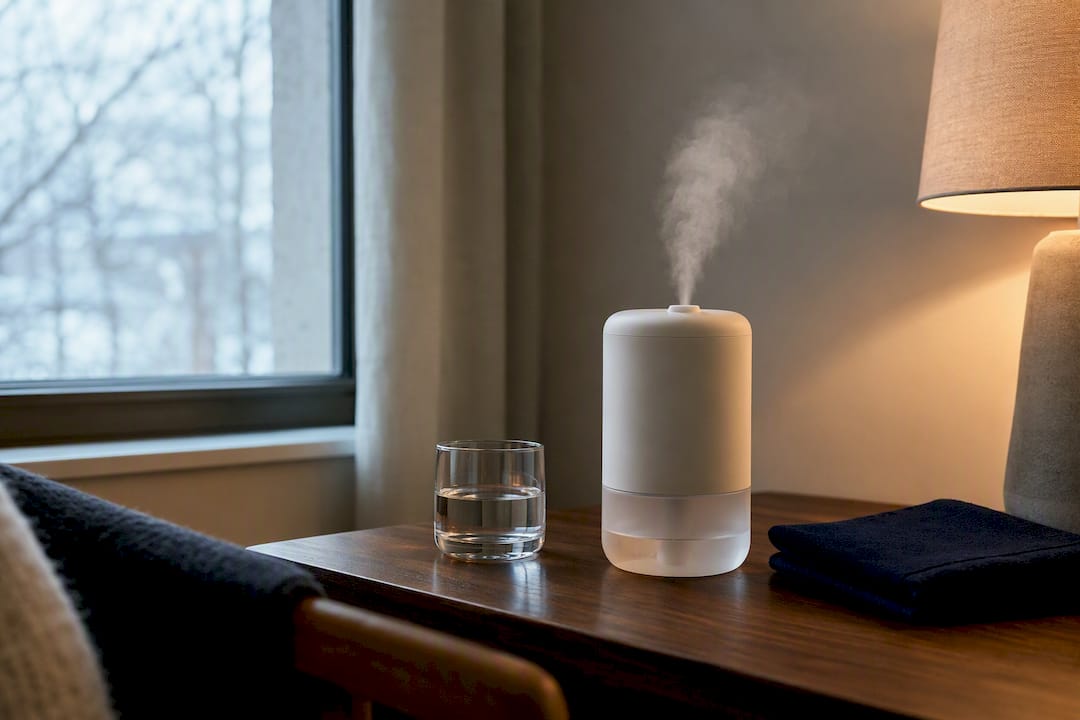
Temperature plays a secondary role. Hot showers and hot water on the face strip surface oils and can leave skin more prone to water loss right before you apply your serum, which makes the immediate moisturizer step even more important in that moment.
Practical adjustments for low-humidity seasons include running a humidifier in the bedroom overnight, switching to a slightly richer moisturizer or adding a facial oil as a final seal, and applying HA to skin that’s been misted rather than relying on residual dampness from cleansing alone. In consistently dry environments, some people find that a single well-sealed HA application at night, followed by an overnight mask, outperforms two lighter applications that never get properly locked in.
What Formulation Work Taught Us About HA Layering
Working with peptides, polynucleotides, and hyaluronic acid across different molecular weights has made one thing clear: hydration failures are usually sequencing failures, not ingredient failures. HA is often paired with barrier-repair actives in kits specifically because the two jobs, attracting water and keeping it there, need to happen together, not as separate steps you might skip.
Multi-weight HA earns its place in a routine when skin shows both surface dullness and deeper dehydration at once. Texture choices matter more than marketing claims. For readers building out a full routine, our notes on serum layering order go deeper into sequencing beyond HA alone.
— Sara
Follow These Rules With a Kit Built Around Them
Getting the sequence right matters more than which individual serum you buy, but having a hydrating serum and a sealing moisturizer formulated to work together removes most of the guesswork. The Complete Skin Repair Kit pairs a multi-weight hyaluronic acid serum with a barrier-repair moisturizer built to lock that hydration in, so the damp-skin-then-seal rule this article covers is already built into how the two products are formulated to interact.
That matters because a mismatched serum and moisturizer, even good ones individually, can still pill, sit heavy, or fail to seal properly if their textures weren’t designed with each other in mind. A curated kit skips that trial and error. Check the Complete Skin Repair Kit page for the full formulation breakdown, or browse Cellure’s full range if you want to build a routine around a specific concern like firmness or tone.
Sources
- A randomized evaluator-blinded comparison of a topical hyaluronic acid-containing fluid vs control (PMC)
- Hyaluronic acid for skin: Benefits, how to use it, and side effects - Harvard Health
- How to Use Hyaluronic Acid: Tips, Product to Try, and More - Healthline
- How to Use Hyaluronic Acid in Your Skin Care Routine, According to a Dermatologist | Glamour
Recommended
Share